These are not two settings on a spectrum. They are different machines with different outputs and different obligations, and most people who own both use each for what it is good at.
How this page is funded. Buy links go to Amazon and we earn a commission on qualifying purchases at no extra cost to you. Commission never decides an order or a score, we accept no free products or sponsored placements, and every roundup names something to skip. Full disclosure.
The picks, ranked
The picks, ranked
#
Product
Best for
Score
Price
1
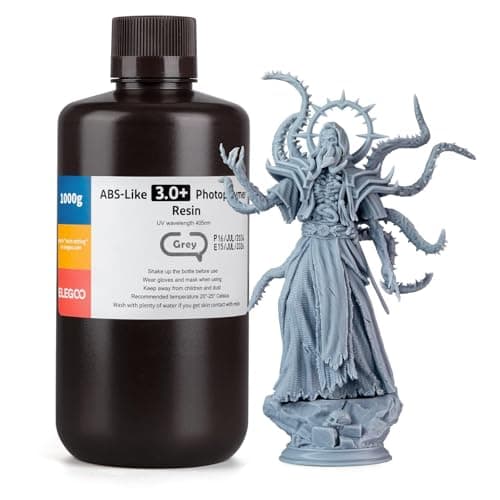
ELEGOO ABS-Like ResinThe right first bottle, because the most common first-resin disappointment is a print that snapped.Toughened standard resin
Live prices verified October 16, 2026. Scores are our own fit rating for the stated use, not a measurement and not a customer rating.
A resin printer with a model on the build plate.
They are not alternatives
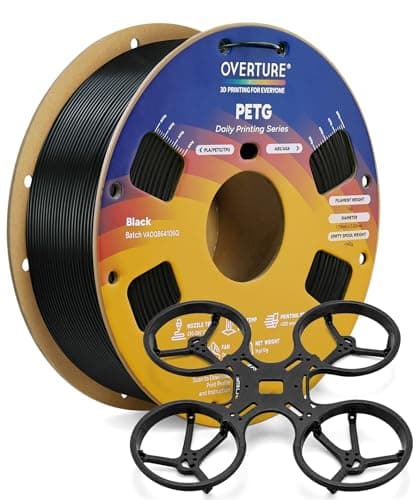
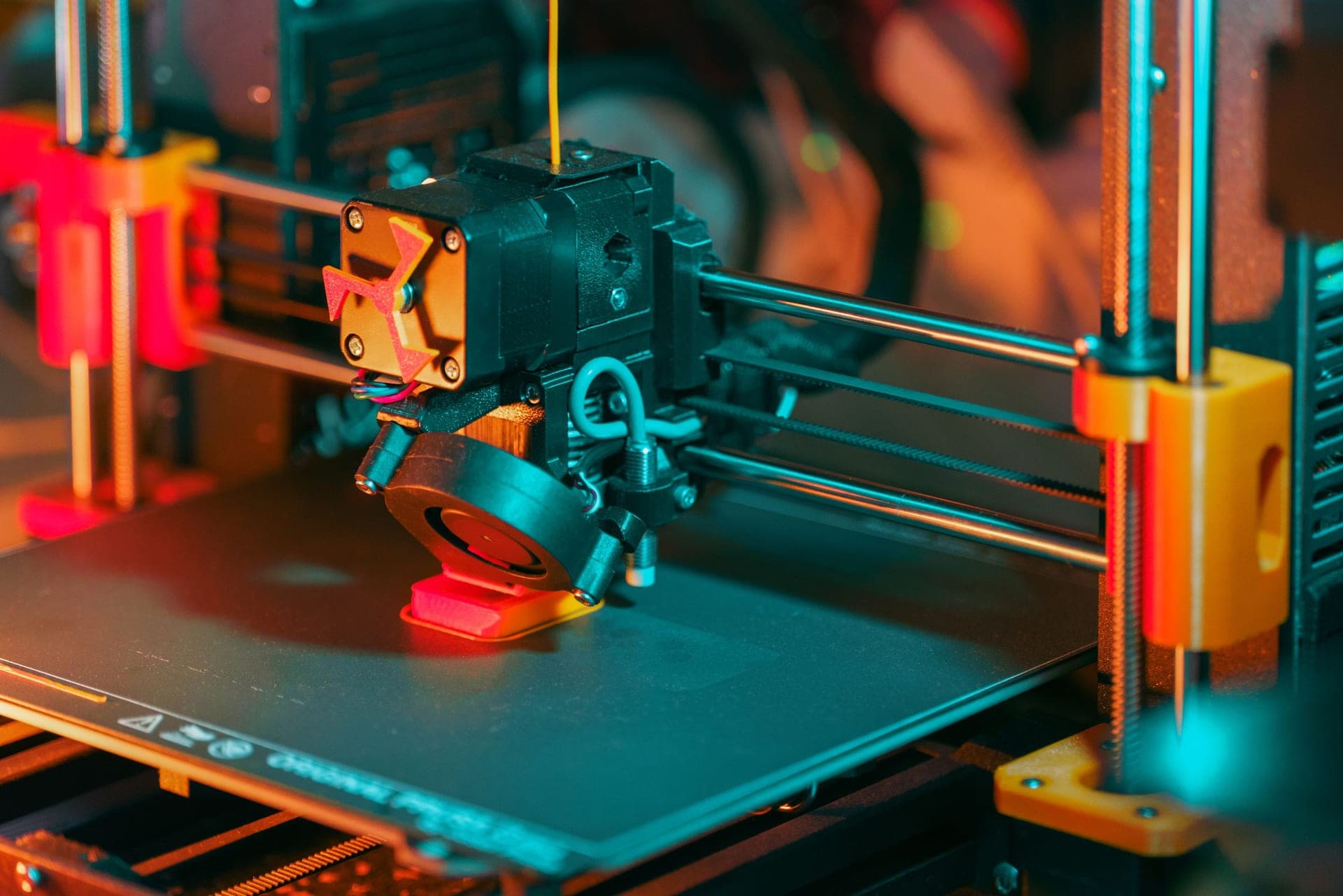
A filament printer melts plastic and lays it down in lines. A resin printer cures liquid photopolymer layer by layer with UV light. The outputs differ so much that treating them as competing options misframes the decision.
The useful question is not which is better. It is which one makes the thing you want to make.
What resin is genuinely better at
Fine detail. Faces on a 28 mm miniature, engraved text, fabric folds. Not reachable with a 0.4 mm nozzle at any settings.
Surface finish. A resin part comes off the plate smoother than a filament part comes off a sander.
Isotropic strength. No layer-boundary weakness, so a resin part is similarly strong in every direction. For geometry that would have to be printed in a bad orientation in filament, that matters.
Small precise features. Thin walls, small holes, tight internal geometry.
What filament is genuinely better at
Toughness. Standard resins shatter. PETG and nylon deform. For a functional part this is decisive.
Size. Filament build volumes are larger and large resin prints are expensive and failure-prone.
Cost per part. Filament is cheaper per gram, and the consumables around it cost far less.
Material choice. Flexible, high-temperature, UV-stable, low-friction — see the material ledger. Resin has nothing equivalent to TPU or nylon.
Outdoors. Resin keeps curing in sunlight and gets progressively brittle. ASA is a filament answer.
Workflow. Pick the part off the plate and you are done.
The obligation that comes with resin
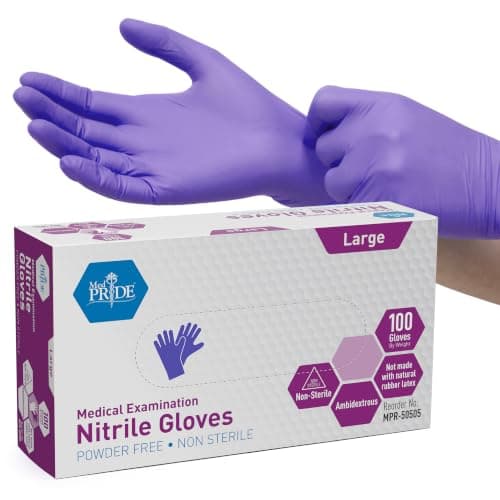
Liquid resin is a skin sensitizer, and Formlabs' safety guidance is explicit that handling it requires non-reactive nitrile or neoprene gloves Formlabs. Sensitization develops over repeated exposure rather than on first contact, which is what makes it easy to under-rate.
Uncured resin and contaminated wash solvent are chemical waste Formlabs. Ventilation is a requirement, not a comfort. And every print needs washing, drying, curing and support removal before it is finished.
None of that is a reason not to own one. It is a reason to know what you are taking on — see resin safety and is resin worth it.
Cost, properly counted
The printers are comparably priced at the entry level. What differs is everything after.
Material: resin costs more per gram than filament.
Consumables: alcohol, gloves, paper towels, vat films. Filament has no equivalent recurring list.
Equipment: a wash and cure setup on the resin side.
Time: post-processing per print, every print.
Owning both
This is what most people who print a lot end up doing, and it is the honest recommendation if the budget allows: a filament printer for functional parts and a resin printer for detail work. They are complementary rather than competing, and neither replaces the other.
If you can only have one, start with filament. It is more forgiving, more broadly useful, and does not come with a chemical handling routine attached.
Every pick, in detail
01
ELEGOO ABS-Like Resin
ELEGOO
If you go resin · 8.6/10 our fit score
The default first bottle. Tougher than standard resin, cheap, and stocked everywhere.
Published specifications for ELEGOO ABS-Like Resin
Better at detail, surface finish and small precise features. Worse at toughness, size, cost per part and material variety. They are different machines rather than competing options.
+ − Which should I buy first?
Filament, unless you specifically want to print miniatures. It is more forgiving, more broadly useful, and it does not come with a chemical handling routine and a disposal obligation.
+ − Are resin parts stronger than filament parts?
Standard resins are brittle and shatter under load. What resin does have is isotropic strength, with no weak layer-boundary direction. Toughened resins narrow the gap without closing it.