The specification that decides whether a dryer is right for you is its maximum temperature, and it is the one buried furthest down the listing. Nylon's published drying figures are above what several popular dryers can reach.
How this page is funded. Buy links go to Amazon and we earn a commission on qualifying purchases at no extra cost to you. Commission never decides an order or a score, we accept no free products or sponsored placements, and every roundup names something to skip. Full disclosure.
The picks, ranked
The picks, ranked
#
Product
Best for
Score
Price
1
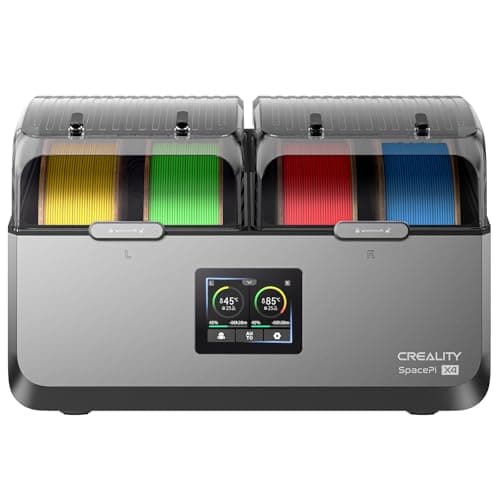
Creality Space Pi X4The only mainstream consumer dryer in this list that reaches the temperatures nylon's published figures ask for.Highest maximum temperature here
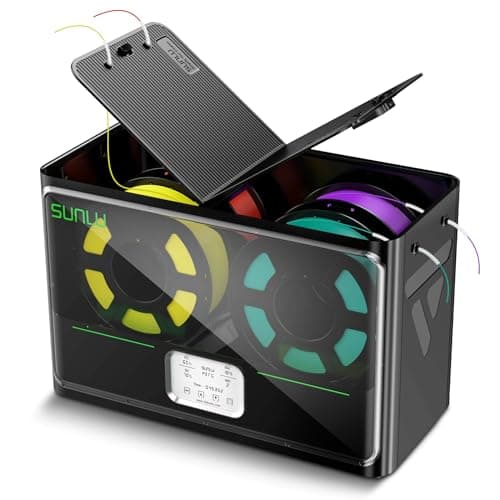
SUNLU FilaDryer S4Four spools, a humidity setpoint rather than a bare timer, and enough temperature for everything short of nylon.Up to 70 C, four spools
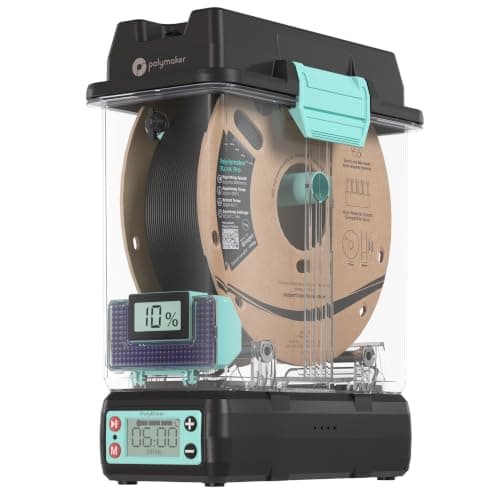
Polymaker PolyDryerStorage and drying in one unit, from the brand that publishes data sheets for the filament going into it.Modular dry box with detachable heater
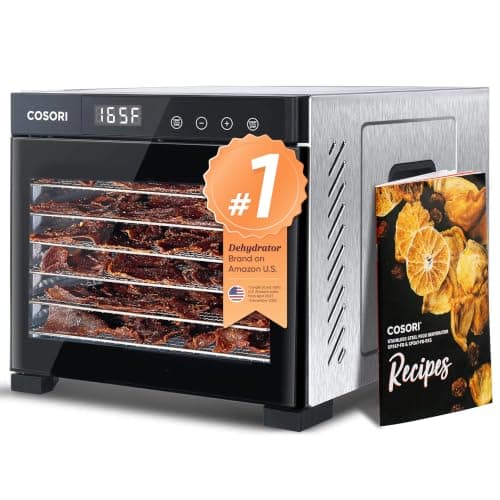
COSORI Food DehydratorCheapest real capacity if you will pull the trays out and accept no humidity display. Check its maximum temperature.Food dehydrator, no humidity readoutSkip this
Published drying temperatures and times. Prusa Research and Overture disagree on several materials; both figures are shown rather than averaged. A dash means that manufacturer does not publish a figure for that material. Where they differ, the lower temperature for longer is the safer starting point. Figures from Prusa Research, Overture, Prusa Research, retrieved 2026-09-06.
The specification that decides it
Filament dryers are marketed on spool capacity and on whether they have a screen. The number that actually determines whether a dryer can do the job you bought it for is maximum temperature.
Compare it against the published drying figures. Prusa publish 45 C for PLA, 55 C for PETG, 60 C for TPU, 80 C for ASA, 85 C for PC and 95 C for PCCF Prusa Research; Overture publish 95 C for seven hours for nylon Overture; Prusa publish drying below 90 C for polyamide Prusa Research.
A dryer that tops out at 55 C covers PLA and PETG and nothing else. A dryer that reaches 70 C adds TPU and gets close to ASA. Reaching nylon's figures needs meaningfully more than that, and most consumer units do not.
Humidity readout versus a timer
A dryer with a bare timer runs for the time you set. A dryer with a humidity sensor tells you what is happening inside the chamber, which is what you actually want to know: the point at which the reading stops falling is the point at which further drying is achieving nothing.
It is not essential — a timer plus the published figures works fine — but it converts a guess into an observation, and it stops you running a spool at temperature for hours after it was already dry.
Capacity, and drying while printing
Multi-spool dryers exist for two different reasons. One is batch drying several spools overnight. The other is feeding the printer directly from the heated box during a long print, which is the only reliable approach for nylon: Bambu's published re-wetting figures show a dried spool in 55 percent humidity is compromised within hours Bambu Lab Wiki, so a 20-hour nylon print from an open spool finishes with wet filament regardless of how dry it started.
If you print hygroscopic materials, a dryer you can feed from matters more than one that dries faster. Prusa's own dry box design exists for this use Prusa Research, and it is the same reasoning behind dry boxes.
The food dehydrator route
A food dehydrator is a heated box with a fan, which is what a filament dryer is. It is usually cheaper per unit of capacity and it usually has a higher maximum temperature than budget filament dryers.
What you give up: no humidity readout, no filament pass-through, and you have to remove the trays to fit spools. Some models have a rated maximum temperature that is optimistic in practice. We put it in the skip row because it is the right answer for a specific person — someone drying many spools in batches — and the wrong one for most, but the full comparison is on dryer versus dehydrator.
What not to do
Do not use a kitchen oven. Domestic ovens overshoot their setpoint substantially and cycle widely around it. PLA softens near the low end of drying temperatures, and a spool welded into a solid block is unrecoverable.
Do not dry above the published figure. More heat is not faster in a useful sense; it is the point at which the spool deforms.
Do not dry a spool and leave it out. The published re-wetting figures make that a same-day loss.
Whether to buy one of these at all is a separate, mostly economic question, and for a lot of people the honest answer is to buy sealed storage first — the arithmetic is on is a filament dryer worth it.
The unit with the highest published ceiling here gets its own write-up, including what the second chamber is actually for and where it falls short of Overture's nylon figure — Creality Space Pi X4 review.
Every pick, in detail
01
Creality Space Pi X4
Creality
Nylon and high-temperature materials · 8.9/10 our fit score
The only mainstream consumer dryer here that reaches the temperature nylon actually needs. That single number is the whole argument for it.
+ − What temperature should a filament dryer reach?
It depends what you print. Published figures run from 45 C for PLA to 95 C for carbon-filled polycarbonate and nylon. A 55 to 70 C dryer covers PLA, PETG and TPU; nylon needs substantially more than most consumer dryers provide.
+ − Is a filament dryer worth it?
If you print PETG, TPU or nylon, yes. If you print only PLA and store spools sealed with desiccant, vacuum bags will do more for you than a dryer will.
+ − Can I dry filament in the oven?
We would not. Domestic ovens overshoot their setpoint and cycle widely around it, and PLA softens near the low end of drying temperatures. A spool welded into a block is not recoverable.
+ − Should I print directly from the dryer?
For nylon and TPU, yes. Published re-wetting figures show a dried spool in ordinary indoor air is compromised within hours, so a long print from an open spool finishes with wet filament however dry it started.