A food dehydrator is mechanically the same thing as a filament dryer and often cheaper per spool. The three things it lacks are worth understanding before you save the money.
How this page is funded. Buy links go to Amazon and we earn a commission on qualifying purchases at no extra cost to you. Commission never decides an order or a score, we accept no free products or sponsored placements, and every roundup names something to skip. Full disclosure.
The picks, ranked
The picks, ranked
#
Product
Best for
Score
Price
1
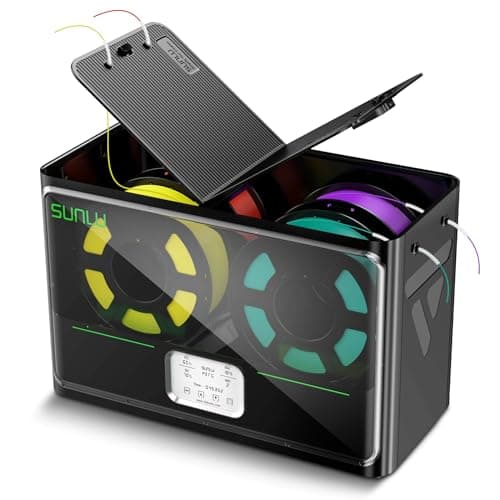
SUNLU FilaDryer S4Buy this if you want to load a spool, press a button and print from it without thinking.Humidity setpoint, pass-through, 4 spools
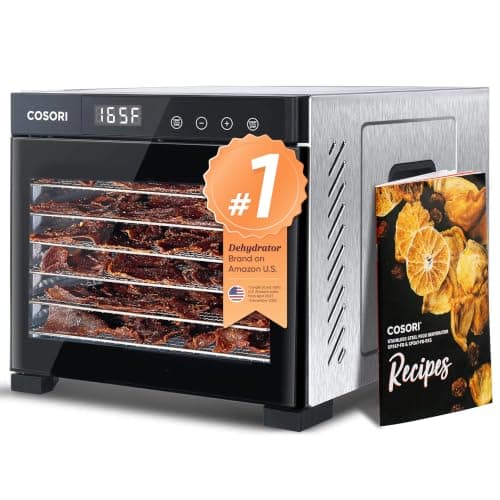
COSORI Food DehydratorThe cheapest route to drying several spools at once, if you accept no humidity display and no pass-through.Food dehydrator, tray removal required
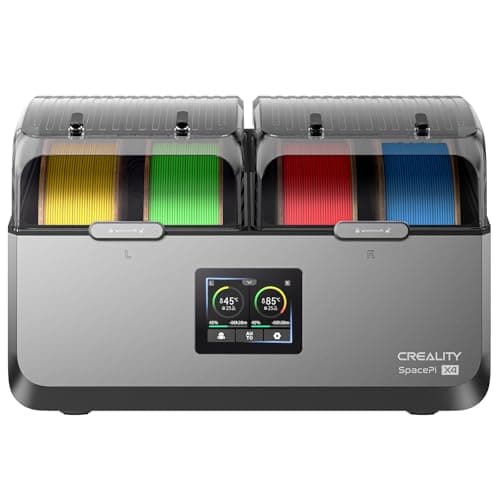
Creality Space Pi X4The case for a purpose-built unit is strongest here: a verified high ceiling with a controller you can trust.Reaches nylon drying temperatures
Published drying temperatures and times. Prusa Research and Overture disagree on several materials; both figures are shown rather than averaged. A dash means that manufacturer does not publish a figure for that material. Where they differ, the lower temperature for longer is the safer starting point. Figures from Prusa Research, Overture, Prusa Research, retrieved 2026-09-06.
Mechanically, they are the same thing
Both are an insulated box with a heating element, a fan and a thermostat. Warm air passes over the filament, water leaves the plastic and is carried away. There is no magic in a filament-branded version of that.
So the comparison is entirely about features and about whether the temperature control is trustworthy.
The three real differences
1. Humidity readout
Filament dryers commonly show chamber humidity; dehydrators do not. That readout is genuinely useful — when the number stops falling, the spool has given up what it will at that temperature, and you can stop.
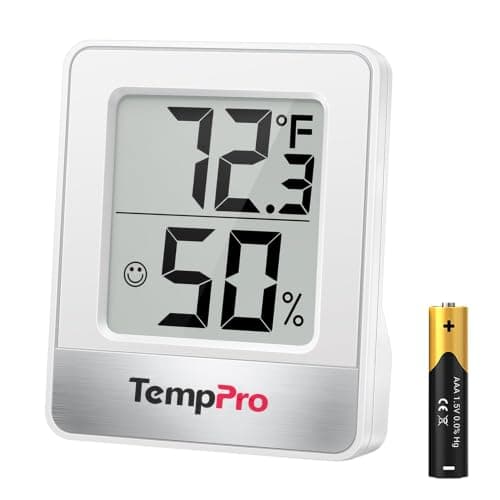
This is also the easiest gap to close: drop a cheap hygrometer into the dehydrator chamber and you have the reading.
2. Filament pass-through
A filament dryer usually lets you print directly from it. A dehydrator does not, and for nylon and TPU that matters — Bambu's published re-wetting figures give a dried spool 2 to 12 hours in room air Bambu Lab Wiki, so a long print from an unprotected spool finishes wet.
You can modify a dehydrator to add one. Whether you want to is a different question, and if the answer is no, this is the difference that decides the purchase.
3. Temperature accuracy at the top of the range
A dehydrator's dial is calibrated for drying fruit, not for holding 80 C precisely. Some hold their setpoint well and some overshoot, and the rated maximum is sometimes optimistic. Since published drying figures run up to 95 C for nylon and carbon-filled polycarbonate Prusa ResearchOverture, an inaccurate ceiling is the difference between drying nylon and not.
Where the dehydrator clearly wins
Capacity per dollar. Remove the trays and a mid-size dehydrator holds several spools for less than a two-spool filament dryer costs. If your use case is batch-drying a backlog of neglected spools rather than printing directly from a heated box, that is a real advantage.
It is also useful as a general workshop tool, which a filament dryer is not.
Which to buy
PLA and PETG, occasional drying: either works. Cheapest wins, and vacuum bags matter more than the dryer does — see desiccant and vacuum bags.
TPU or PETG regularly, long prints: filament dryer, for the pass-through.
Nylon: filament dryer with a verified high temperature ceiling. This is the case where the purpose-built unit earns its price.
Many neglected spools to rescue: dehydrator, for the capacity, plus a hygrometer dropped in the chamber.
The full dryer comparison, sorted on maximum temperature, is on filament dryers.
Every pick, in detail
01
SUNLU FilaDryer S4
SUNLU
The purpose-built option · 8.7/10 our fit score
Four spools at once, 70 C, and a humidity setpoint rather than a bare timer. The right shape for someone who buys filament by the case.
Yes, mechanically it is the same thing: a heated box with a fan. What it lacks is a humidity readout, a filament pass-through, and reliably accurate temperature at the top of its range.
+ − Can a dehydrator reach nylon drying temperatures?
Some can and some cannot, and rated maximums are sometimes optimistic. Put an independent thermometer in the chamber at the highest setting and measure it, because published nylon figures run up to 95 C.
+ − Which is better value?
A dehydrator for batch capacity, a filament dryer for printing directly from the box and for a trustworthy high temperature. Which matters depends on whether you print nylon.