A dried spool in ordinary indoor air is back to being a problem in hours, not weeks. Bambu Lab publish the numbers, and once you have seen them the case for a sealed box with desiccant stops being a matter of opinion.
How this page is funded. Buy links go to Amazon and we earn a commission on qualifying purchases at no extra cost to you. Commission never decides an order or a score, we accept no free products or sponsored placements, and every roundup names something to skip. Full disclosure.
The picks, ranked
The picks, ranked
#
Product
Best for
Score
Price
1
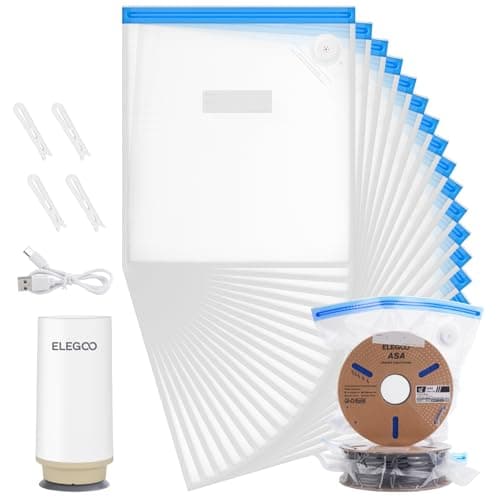
ELEGOO Filament Vacuum Storage BagsThe cheapest thing on this site that will measurably improve print quality. Cheaper than one failed print.Vacuum bags with valve
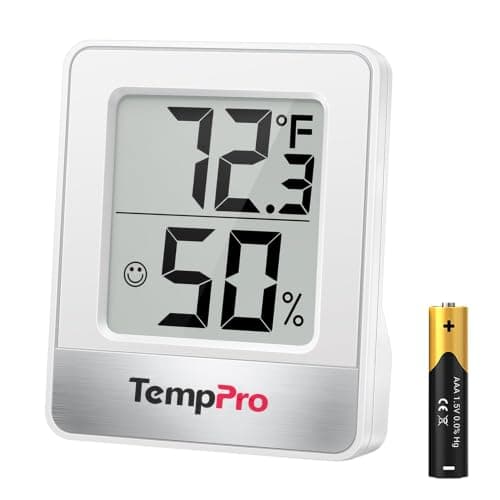
Digital HygrometerA few dollars that turns storage from a belief into a measurement. Everything else on this page is easier to decide once you own one.Reads ambient relative humidity
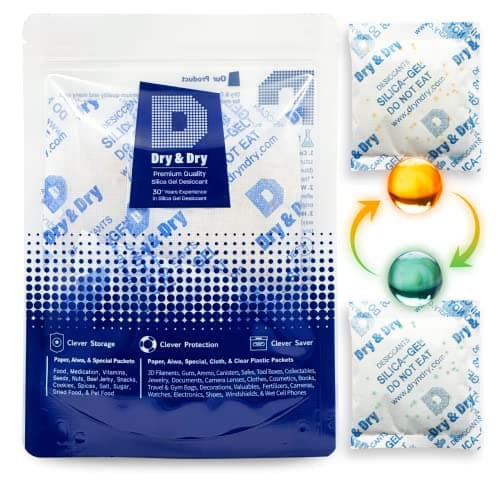
Indicating Silica Gel Desiccant PacketsBuy the color-changing kind. Desiccant whose state you cannot see is desiccant you will forget to regenerate.Color-indicating silica gel
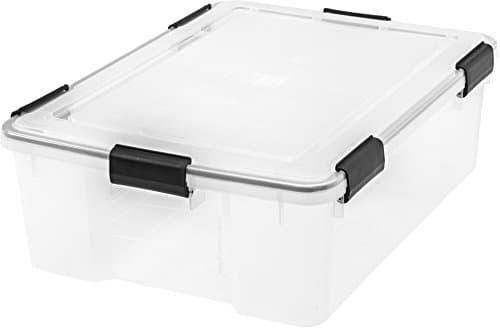
Airtight Weathertight Storage BoxOne gasketed tub, a bag of desiccant and a hygrometer is the dry box most people should build.Gasketed weathertight box
Published drying temperatures and times. Prusa Research and Overture disagree on several materials; both figures are shown rather than averaged. A dash means that manufacturer does not publish a figure for that material. Where they differ, the lower temperature for longer is the safer starting point. Figures from Prusa Research, Overture, Prusa Research, retrieved 2026-09-06.
How long a freshly dried spool stays print-ready, by the humidity of the room it sits in.
Ambient humidity
How long it stays dry
What that means in practice
Below 20% RH (sealed box with desiccant)
2-7 days
The published storage target for most filaments
About 55% RH (ordinary indoor air)
2-12 hours
Enough moisture to affect print quality, depending on how hygroscopic the type is
How long a freshly dried spool stays print-ready, by the humidity of the room it sits in. Both figures are Bambu Lab's, published as ranges across filament types rather than per material. Figures from Bambu Lab Wiki, retrieved 2026-09-01.
The number that changes how you store filament
Bambu Lab publish the only figures we have found for how long a freshly dried spool stays print-ready: 2 to 7 days below 20 percent relative humidity, and 2 to 12 hours at around 55 percent — which is ordinary indoor air Bambu Lab Wiki.
Hours. Not weeks. That single pair of figures is why drying a spool and then leaving it on a shelf is close to pointless, and why the storage question comes before the dryer question rather than after it.
Storage and drying are different jobs
They get conflated constantly and they are separate.
Storage lowers the humidity around a spool so it stops absorbing more water. Desiccant does this. It is passive, cheap, and it does not remove water already inside the filament.
Drying drives water out of the filament with heat. This needs a heated box at a controlled temperature. Desiccant alone will not do it in any useful time frame.
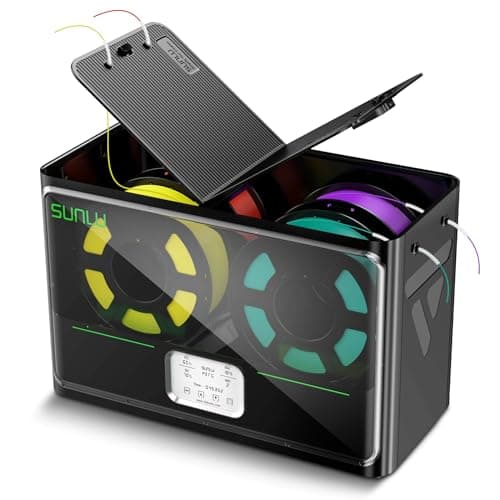
A sealed box with desiccant is a storage solution, and so is the desiccant compartment in a multi-material system — Bambu's own newer hardware adds an actively heated drying function precisely because the passive box was not doing that job Bambu Lab Wiki.
Which materials actually care
The published drying figures below show the spread. Prusa and Overture disagree on several materials, sometimes by ten degrees Prusa ResearchOverture, and both figures are shown rather than averaged into one nobody published.
The rough ordering of how much moisture matters, worst first: nylon, TPU, PETG, ASA, ABS, then PLA. Nylon absorbs enough water from room air to matter within hours. PLA can sit out for weeks and often prints fine — which is why does PLA need drying has a more nuanced answer than most guides give it.
What wet filament looks like
Learning to recognize it saves the evenings people spend re-tuning profiles that were never wrong.
Popping or hissing from the nozzle while printing
Steam or visible vapor at the nozzle
A rough, matte surface where it should be smooth
Stringing that no retraction setting fixes
Weak, easily split layers
Bubbles or voids visible in the extruded line
The diagnostic that matters: did prints get worse over time with the same profile? That is moisture. A profile that was never right is a settings problem. Full detail on wet filament signs.
What to buy, in order
A hygrometer. Cheapest item here and it tells you whether you have a problem at all.
Vacuum bags with desiccant for spools you are not currently using. This is where most of the benefit is.
A gasketed box if you have more spools than bags makes sense for.
A dryer, once you have spools that are already wet — and check its maximum temperature against the materials you print. Several popular dryers cannot reach nylon's published figures. See filament dryers.
Every pick, in detail
01
ELEGOO Filament Vacuum Storage Bags
ELEGOO
Buy these first · 9.2/10 our fit score
The cheapest thing on this site that will measurably improve your print quality. Buy these before you buy a dryer.
Published specifications for ELEGOO Filament Vacuum Storage Bags
Bambu Lab publish 2 to 7 days below 20 percent relative humidity, and 2 to 12 hours at around 55 percent — which is ordinary indoor air. That is why storage matters more than drying frequency.
+ − Does desiccant dry filament?
No. Desiccant lowers the humidity around a spool so it stops absorbing more water. Removing water already inside the filament needs heat, which is what a dryer does.
+ − What humidity should I store filament at?
Below 20 percent relative humidity is the published storage target in Bambu Lab's figures, and it is where a dried spool stays usable for days rather than hours. A hygrometer in the box is how you know.
+ − Can I use a food dehydrator to dry filament?
Yes, with caveats about maximum temperature and the lack of a humidity readout. It is the cheapest route to real capacity. We compare the two directly on dryer versus dehydrator.