Most of the time, no. PLA absorbs water slowly enough that a reasonably stored spool prints fine for months. The cases where it genuinely matters are specific and worth knowing.
How this page is funded. Buy links go to Amazon and we earn a commission on qualifying purchases at no extra cost to you. Commission never decides an order or a score, we accept no free products or sponsored placements, and every roundup names something to skip. Full disclosure.
The picks, ranked
The picks, ranked
#
Product
Best for
Score
Price
1
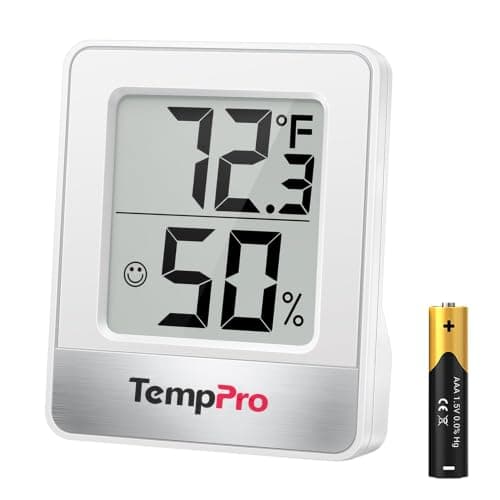
Digital HygrometerFor PLA specifically, knowing your ambient humidity answers this question better than any general rule can.Relative humidity readout
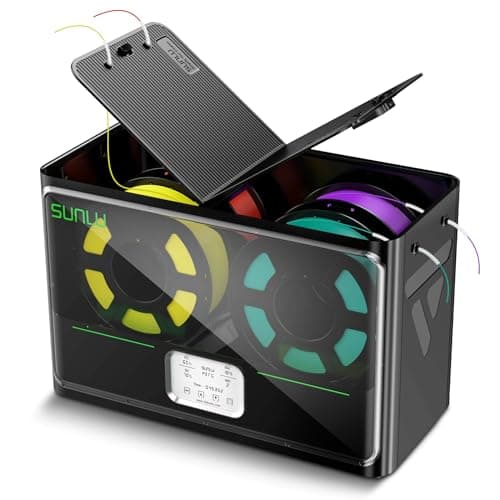
SUNLU FilaDryer S4PLA's published drying figures are low, and controlled low heat is exactly what an oven cannot give you.45-70 C range covers PLA safely
Published drying temperatures and times. Prusa Research and Overture disagree on several materials; both figures are shown rather than averaged. A dash means that manufacturer does not publish a figure for that material. Where they differ, the lower temperature for longer is the safer starting point. Figures from Prusa Research, Overture, Prusa Research, retrieved 2026-09-06.
The short answer
A fresh vacuum-sealed PLA spool does not need drying. A PLA spool stored sealed with desiccant does not need drying. A PLA spool that has been open on a shelf for months in a humid room might.
PLA is the least hygroscopic of the common printing materials by a wide margin, which is why it tolerates the storage neglect that would ruin nylon within a day.
When it genuinely matters
Humid climate. A coastal workshop at 70 percent ambient humidity is a different situation from an inland one at 30 percent. Same spool, different outcome.
Months of open storage. Absorption is slow, not absent. A spool left out through a humid summer will show it.
Silk and some filled PLA grades. Additives change the absorption behavior, and silk PLA in particular tends to show moisture symptoms sooner than plain PLA.
Symptoms are already present. Popping at the nozzle, a matte surface where it used to be glossy, stringing that got worse over time — see wet filament signs.
The temperature, and the trap
Prusa publish 45 C for six hours for PLA Prusa Research; Overture publish 50 C for seven Overture. Both are low, and that is the point: PLA softens at temperatures not far above them.
This is why a kitchen oven is a bad idea for PLA specifically. Domestic ovens overshoot their setpoint and cycle widely, and a spool that softens on the reel welds into a solid block that cannot be unwound. That is a scrapped spool, and it is the single most common way people damage filament while trying to improve it.
Spend the money on storage instead
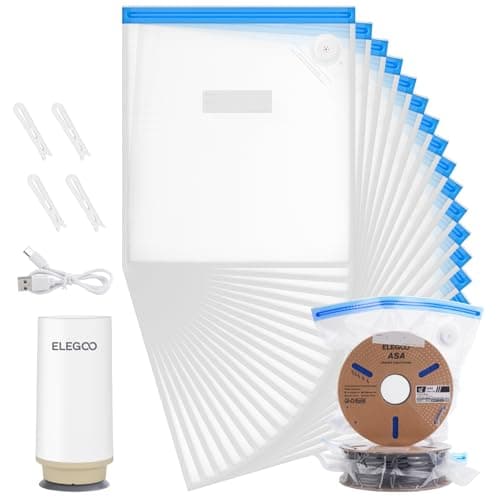
If you print only PLA, the highest-value purchase is not a dryer. It is vacuum bags with indicating desiccant and a hygrometer — cheaper, and it prevents the problem rather than reversing it.
Bambu's published figures give a dried spool 2 to 7 days below 20 percent relative humidity against 2 to 12 hours at around 55 percent Bambu Lab Wiki. For PLA, which absorbs slowly, staying in the first regime means the question rarely comes up. Details on how to store filament.
Where the answer changes
Every other material on this site is more moisture-sensitive than PLA. PETG shows it clearly, TPU more so, and nylon dramatically — see nylon, where drying is not optional and the published temperatures exceed what many dryers reach.
If you are about to buy a dryer, buy it for the material you will print next year rather than for the PLA you print today, and check the maximum temperature column on filament dryers.
Every pick, in detail
01
Digital Hygrometer
TempPro
Deciding without guessing · 8.9/10 our fit score
A few dollars of instrument that turns filament storage from a belief into a measurement. Everything else on this page is guesswork without one.
No. A fresh vacuum-sealed spool with an intact desiccant pack is dry. If the first print strings unusually, check the seal was intact rather than assuming the material was wet.
+ − What temperature do I dry PLA at?
Prusa publish 45 C for six hours and Overture publish 50 C for seven. Do not exceed these — PLA softens not far above them and a spool that welds to itself is unrecoverable.
+ − Can I dry PLA in the oven?
We would recommend against it. Domestic ovens overshoot and cycle widely around their setpoint, and PLA's published drying temperature is low enough that the overshoot can soften and weld the spool.