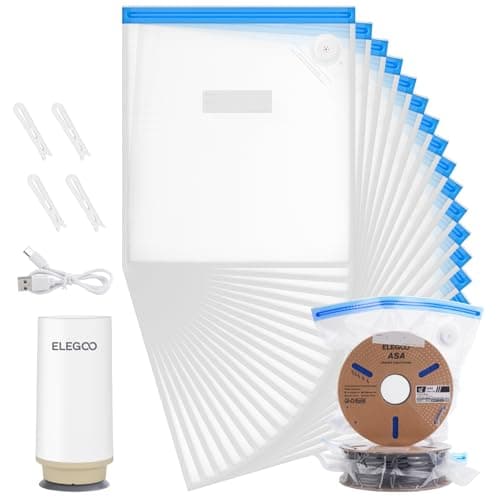
Storage is the cheapest quality improvement available in 3D printing, and it is almost entirely solved by two purchases that together cost less than one failed print.
How this page is funded. Buy links go to Amazon and we earn a commission on qualifying purchases at no extra cost to you. Commission never decides an order or a score, we accept no free products or sponsored placements, and every roundup names something to skip. Full disclosure.
The picks, ranked
The picks, ranked
#
Product
Best for
Score
Price
1
ELEGOO Filament Vacuum Storage BagsThe highest return per dollar on this whole site. Bag every spool that is not currently loaded.Vacuum bags with one-way valve
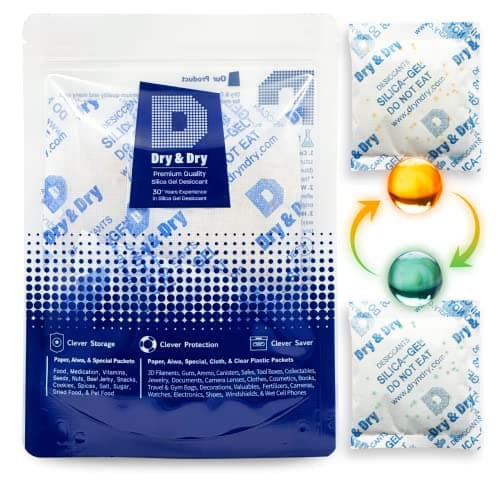
Indicating Silica Gel Desiccant PacketsColor-changing desiccant is the difference between a system that works and one you assume works.Color-indicating, regenerable
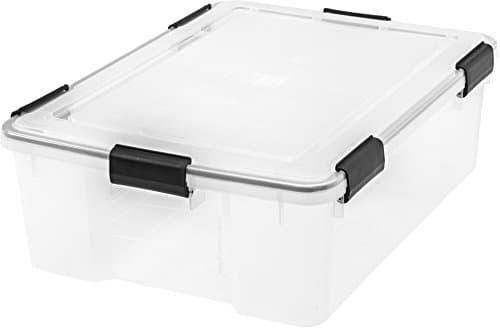
Airtight Weathertight Storage BoxOne gasketed tub with desiccant and a hygrometer is a better dry box than most purpose-built products.Gasketed weathertight box
Live prices verified October 17, 2026. Scores are our own fit rating for the stated use, not a measurement and not a customer rating.
Labeled storage boxes on a shelf.
How long a freshly dried spool stays print-ready, by the humidity of the room it sits in.
Ambient humidity
How long it stays dry
What that means in practice
Below 20% RH (sealed box with desiccant)
2-7 days
The published storage target for most filaments
About 55% RH (ordinary indoor air)
2-12 hours
Enough moisture to affect print quality, depending on how hygroscopic the type is
How long a freshly dried spool stays print-ready, by the humidity of the room it sits in. Both figures are Bambu Lab's, published as ranges across filament types rather than per material. Figures from Bambu Lab Wiki, retrieved 2026-09-01.
The target
Bambu Lab publish 2 to 7 days of print-readiness below 20 percent relative humidity, against 2 to 12 hours at around 55 percent Bambu Lab Wiki. Below 20 percent is therefore the number to aim at, and 55 percent — which is what a normal room is — is the state you are trying to get spools out of.
The system, in order of value
Vacuum bags for spools not in use. Each spool goes into a bag with a desiccant pack, air pulled out, valve closed. This is where most of the benefit lives because most of your spools are not loaded at any moment.
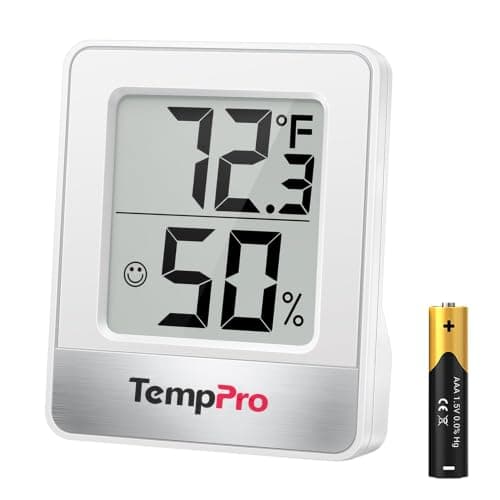
A gasketed box for the working set. Spools you rotate through go in one sealed tub with a generous quantity of desiccant and a hygrometer visible through the lid.
A dry box for the loaded spool, if you print hygroscopic materials. A spool feeding the printer through a long print is exposed the whole time — Prusa's dry box design exists for exactly this Prusa Research.
A dryer for spools that are already wet. Storage prevents; only heat reverses.
Getting desiccant right
Three things people get wrong:
Not enough of it. The little sachet that came in the filament bag is sized for that bag, not for a tub with six spools in it. Buy desiccant by weight.
Not regenerating it. Silica gel saturates. Once saturated it does nothing at all, and a saturated packet in a sealed box is just an object. Indicating gel changes color when it is spent, which is the entire reason to buy that kind.
Regenerating it wrong. Silica gel is dried by heating it, and the temperature and time depend on the type — follow the manufacturer's instructions rather than a general rule, and do it away from the filament.
What does not work
A cardboard box. Not sealed, and cardboard itself absorbs and releases moisture.
A plastic tub without a gasket. The lid clipping shut is not the same as sealing. If it does not have a rubber seal, it is a dust cover.
The bag the spool came in, reused. Once opened, most filament bags do not reseal to anything like their original state.
A dehumidifier in the room. Room dehumidifiers move the ambient number a few points. The published target is below 20 percent, which is not a room-scale condition — it is a sealed-container condition.
The habit that matters most
Bag the spool the moment you take it off the printer, not at the end of the week. Bambu's published figure is 2 to 12 hours of print-readiness at 55 percent humidity Bambu Lab Wiki, so a spool left out for a weekend has absorbed most of what it is going to.
The corollary: if you are switching materials for one print and going straight back, do not leave the first spool sitting on the machine while you do it.
Climate changes the answer
Someone printing in a dry inland climate at 25 percent ambient humidity has a genuinely smaller problem than someone on a humid coast at 70 percent. The gear is the same; the urgency is not. This is the strongest argument for buying the hygrometer first — it tells you which of those two situations you are in, and the answer changes what is worth spending.
Every pick, in detail
01
ELEGOO Filament Vacuum Storage Bags
ELEGOO
Spools you are not using · 9.2/10 our fit score
The cheapest thing on this site that will measurably improve your print quality. Buy these before you buy a dryer.
Published specifications for ELEGOO Filament Vacuum Storage Bags
It benefits from it but tolerates neglect better than any other common material. If you print PETG, TPU or nylon as well, the same box covers everything and there is no reason to treat PLA differently.
+ − How much desiccant do I need?
More than the sachet that came in the filament bag, which was sized for that bag. Buy by weight, use indicating gel so you can see when it is spent, and regenerate it per the manufacturer's instructions.
+ − Will a room dehumidifier keep filament dry?
Not to the published target. Room dehumidifiers shift ambient humidity by a few points; below 20 percent relative humidity is a sealed-container condition rather than a room-scale one.