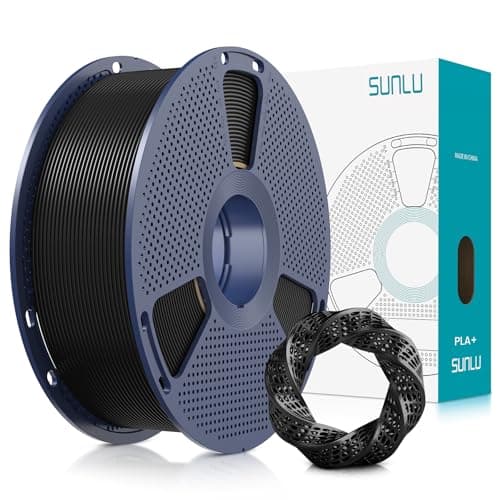
SUNLU PLA+ is the spool most people should buy: it costs about the same as plain PLA and it stops parts snapping when you drop them. Polymaker PolyLite is the upgrade if your problem is spool-to-spool variation, and Prusament is worth it only when a failed print costs more than the filament.
How this page is funded. Buy links go to Amazon and we earn a commission on qualifying purchases at no extra cost to you. Commission never decides an order or a score, we accept no free products or sponsored placements, and every roundup names something to skip. Full disclosure.
The picks, ranked
The picks, ranked
#
Product
Best for
Score
Price
1
SUNLU PLA+PLA+ toughness at plain-PLA money. The default recommendation and the hardest one to argue with.1.75 mm +/- 0.02 mm published
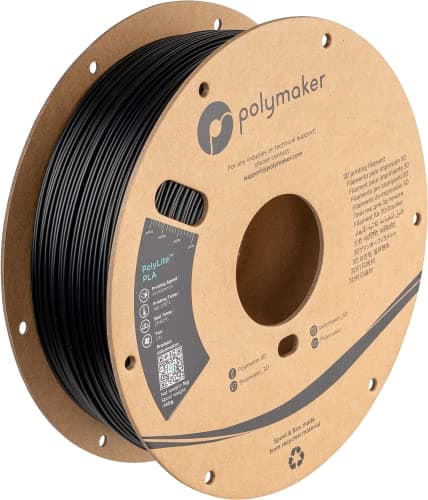
Polymaker PolyLite PLAYou are paying for the next spool behaving like this one, which is the only premium in PLA that reliably shows up in prints.1.75 mm +/- 0.02 mm published
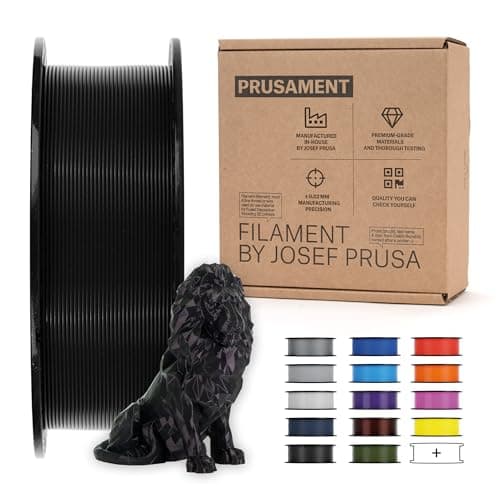
Prusament PLAA published measurement record for your exact spool. Worth the premium precisely when a 30-hour failure hurts.1.75 mm +/- 0.02 mm, per-spool record
Overture PLA ProfessionalPlain PLA, wide color range, consistently in stock. Brittle on impact compared with the PLA+ grades above it.1.75 mm +/- 0.02 mm published
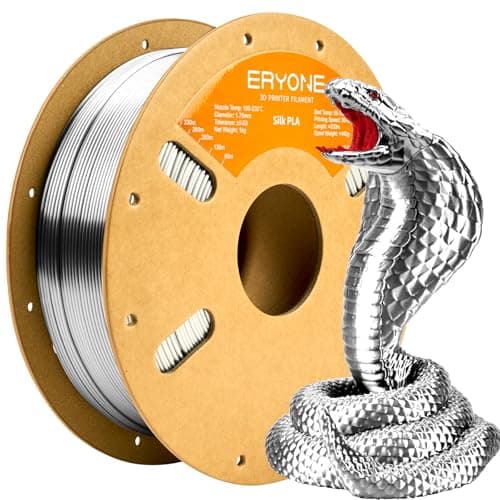
ERYONE Silk PLADo not buy silk PLA for anything structural. The finish comes from additives that make layer adhesion worse than the plain PLA underneath it.Silk finish, no published toleranceSkip this
Published printing parameters by material, from Prusa Research's filament material guide. Ranges are the manufacturer's published envelopes, not a recommendation for your specific spool — every brand publishes its own narrower window inside these. Figures from Prusa Research, retrieved 2026-09-01.
What actually decides which PLA to buy
PLA is the easiest material in consumer 3D printing and the one with the least meaningful variation between brands. Prusa Research publish a single nozzle range of 185 to 235 C and a bed range of 50 to 60 C for the entire material class Prusa Research, and almost every spool sold as PLA prints somewhere inside that window on a stock machine. That is the honest starting point: brand choice in PLA is not the difference between a print working and failing.
What brand choice does change is three things, in descending order of how much they will affect you.
Whether it is PLA or PLA+. PLA+ is a marketing name, not a standard, but the grades sold under it are consistently less brittle on impact. If you have ever had a printed bracket snap when you dropped it, this is the variable that matters and it costs almost nothing to change.
Whether the brand publishes a diameter tolerance. A spool sold with a stated +/- 0.02 mm is a spool the manufacturer is willing to be held to. Most budget brands publish nothing, which does not make them bad, but it does mean any variation you get is yours to absorb.
How the spool arrives. Vacuum sealed with desiccant is the difference between opening a dry spool and opening one that has been sitting in a warehouse absorbing water. PLA is the least hygroscopic of the common materials, so this matters less here than it does for PETG or nylon, but it is not nothing.
Where PLA prices actually sit
PLA is the cheapest filament in wide production, and the useful comparison is not sticker price but price per kilogram against what you get. A budget PLA+ and a premium PLA typically differ by a factor of two to three, and the gap buys measurement and documentation rather than a different material. We keep the arithmetic on a dedicated page rather than repeating a stale number here — see filament price per kilogram for the live comparison and whether cheap filament is actually cheaper for the failure-rate side of it.
Settings, drying and the two things that go wrong
Two failure modes account for most PLA problems, and neither is a filament fault.
Heat
PLA softens at a lower temperature than any other common printing material. A part left on a car dashboard in summer will deform, and no brand of PLA changes that — it is the polymer. If the part needs to survive heat, the answer is a different material, which is what the heat-resistance guide is for.
Moisture
PLA absorbs less water than PETG or nylon, but it is not immune. Prusa publish a drying figure of 45 C for six hours for PLA Prusa Research, and Overture publish 50 C for seven Overture. Both are below the temperature at which PLA starts to soften on the spool, which is why a food dehydrator set too high can weld a spool solid. We cover exactly when a PLA spool is worth drying in does PLA need drying.
PLA is also where the decorative and speed variants live, and each changes a different thing: a stone-look speckle that hides layer lines on marble PLA, light transmission on translucent PLA, real metal powder that polishes like cast metal on metal filled filament, a heat or UV trigger on color changing filament, and melt rate rather than appearance on high speed PLA.
Where PLA stops being the right answer
The most useful thing a PLA page can tell you is when to stop buying it. PLA is the wrong material when the part will live outdoors, when it will get hot, when it needs to flex without cracking, or when it will take repeated impact. In those four cases the upgrade is PETG, ASA, TPU and PETG respectively. The PLA versus PETG comparison is the one most people need, and the master material ledger puts every material on one table so the jump is a row rather than a search.
Every pick, in detail
01
SUNLU PLA+
SUNLU
Almost everyone · 9.1/10 our fit score
The cheapest filament we would load without flinching, and the reason most people never need to spend more.
There is no standard behind the plus, so it means whatever the brand wants it to mean. In practice the grades sold as PLA+ are modified for impact toughness, and the difference is real enough that a dropped part survives where plain PLA snaps. It is not a heat-resistance upgrade and it does not change the printing temperature window.
+ − Does expensive PLA print better than cheap PLA?
Not in the way people expect. The polymer is much the same. What the premium buys is diameter consistency and, in Prusament's case, a published measurement record for your specific spool. That matters on a 30-hour print where a failure is expensive and matters very little on a two-hour bracket.
+ − What temperature should I print PLA at?
Prusa Research publish 185 to 235 C at the nozzle and 50 to 60 C at the bed for PLA as a class. Start in the middle of your brand's own stated range and run a temperature tower — the correct number is a property of your hotend and your spool together, not a number someone else can give you. Our PLA print settings page walks through it.
+ − Do I need to dry PLA before printing?
Usually not, if the spool is fresh and has been stored sealed. PLA is the least hygroscopic of the common materials. If a spool has sat open for months in a humid room and you are seeing surface popping or stringing that was not there before, Prusa publish 45 C for six hours as the drying figure.
+ − Which PLA is best for a Bambu Lab printer?
Any of the spools on this page will print on a Bambu machine. The real question is whether you need the RFID spool recognition that Bambu's own filament carries, and whether third-party spools fit your AMS. We work through that on PLA for Bambu Lab printers.