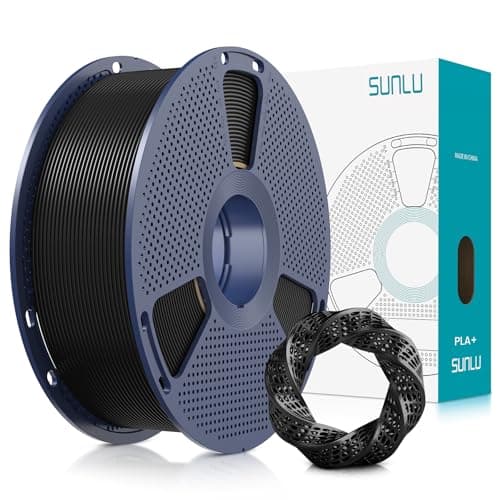
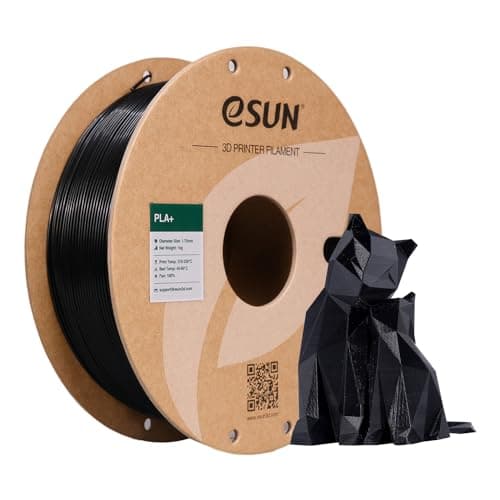
eSUN PLA+ and SUNLU PLA+ occupy the same position so precisely that we do not think there is a defensible quality ordering between them. Buy whichever is cheaper today and re-run a temperature tower when you switch.
How this page is funded. Buy links go to Amazon and we earn a commission on qualifying purchases at no extra cost to you. Commission never decides an order or a score, we accept no free products or sponsored placements, and every roundup names something to skip. Full disclosure.
The picks, ranked
The picks, ranked
#
Product
Best for
Score
Price
1
eSUN PLA+Tougher than plain PLA at plain-PLA money. Buy it when it undercuts SUNLU.PLA+ grade
Live prices verified October 17, 2026. Scores are our own fit rating for the stated use, not a measurement and not a customer rating.
A row of filament spools in different colors.
Why we treat these two as one decision
eSUN and SUNLU are separate companies making separate products, and both sell a toughened PLA compound at close to plain-PLA prices, in similar packaging, with similar published diameter figures, into the same market. Nothing we can verify from published documentation separates them on quality.
What we will not do is invent a ranking to make the page more decisive. Two products that are genuinely close should be presented as genuinely close, and the tiebreak that actually helps you is the one you can check yourself: which is cheaper, delivered, today. Our price per kilogram page is built for exactly that comparison.
What changes when you switch between them
Expect to re-run a temperature tower. Two toughened PLA compounds from different manufacturers will not have identical optimum temperatures, and the difference is usually five to ten degrees. That is a twenty-minute test print, not a project.
Expect flow calibration to shift slightly too. Budget filament holds diameter less tightly than premium filament — that is definitionally what the premium buys — so a flow test on the first spool of any new brand is time well spent.
Beyond PLA+
eSUN also sells a competent budget PETG, which is worth knowing because PETG is where the budget-versus-premium question gets more interesting. PETG is more hygroscopic than PLA and more sensitive to being printed wet, so the packaging quality that barely matters in PLA starts to matter there. We cover that on the PETG hub.
Who should buy something else
The same people who should skip SUNLU: anyone whose problem is spool-to-spool consistency rather than price. That is the Polymaker case, and further up, the Prusament case. Budget PLA+ is the right answer to “what should I print with”. It is the wrong answer to “why does every new spool need re-tuning”.
Every pick, in detail
01
eSUN PLA+
eSUN
Budget toughened PLA · 8.4/10 our fit score
The other half of the budget PLA+ duopoly. Tougher than plain PLA, and the one to buy when SUNLU is out of the color you want.
Nothing we can verify from published documentation separates them. They are competing products at the same position in the market, and the sensible tiebreak is delivered price on the day you buy.
+ − Do I need to retune when switching between eSUN and SUNLU?
Run a temperature tower and a flow test. Two toughened PLA compounds from different manufacturers usually differ by five to ten degrees at the optimum, and budget filament varies enough in diameter that flow calibration is worth twenty minutes.