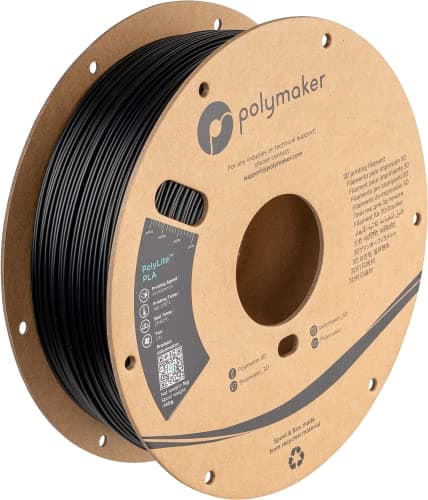
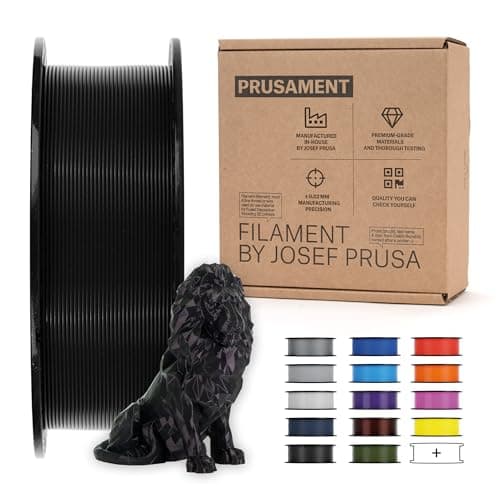
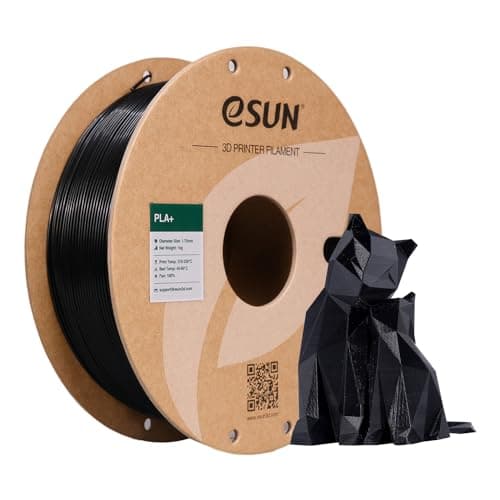
Brand matters less in PLA than in any other material, but it is not nothing. Here is what each of the seven brands people actually buy is good at, ranked by how much of what you pay reaches the print.
How this page is funded. Buy links go to Amazon and we earn a commission on qualifying purchases at no extra cost to you. Commission never decides an order or a score, we accept no free products or sponsored placements, and every roundup names something to skip. Full disclosure.
The picks, ranked
The picks, ranked
#
Product
Best for
Score
Price
1
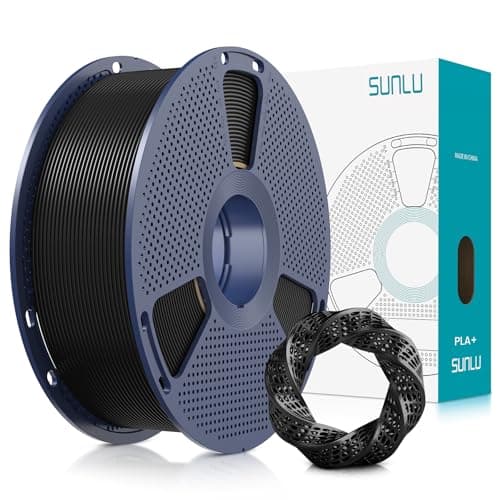
SUNLU PLA+The brand that made premium PLA hard to justify. Buy this unless you have a specific reason not to.PLA+ grade, published tolerance
Polymaker PolyLite PLAPolymaker publish real technical data sheets, which is rare at this price and is most of why the brand is worth the step up.Published data sheet per grade
Prusament PLAEvery spool has a published QR-linked measurement record. That is the product; the polymer is ordinary good PLA.Per-spool measurement record
Overture PLA ProfessionalWidest reliably stocked color range of the budget brands, at the cost of being plain PLA rather than PLA+.1.75 mm +/- 0.02 mm published
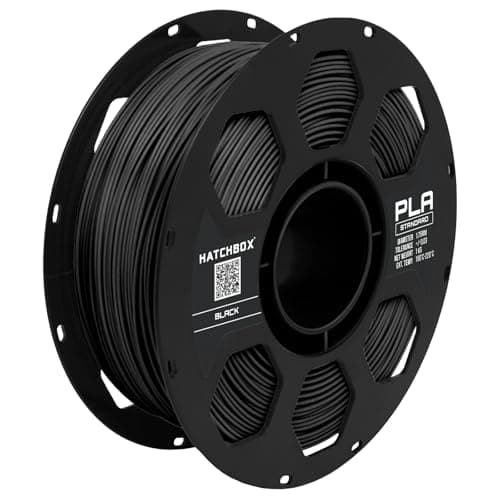
HATCHBOX PLAA lot of printers were tuned on HATCHBOX and it still works. It is no longer the cheapest or the tightest, so there is no longer a reason to seek it out.1.75 mm +/- 0.03 mm publishedSkip this
Live prices verified October 17, 2026. Scores are our own fit rating for the stated use, not a measurement and not a customer rating.
A row of filament spools in different colors on a shelf.
How to read a filament brand
Almost no filament brand manufactures its own polymer. Most buy resin pellets from a small number of suppliers and extrude, spool and package them. That is why budget PLA from different brands frequently prints identically: it frequently is identical. The brand is buying and controlling four things, and those four things are the whole basis on which one is worth more than another.
Extrusion tolerance. How tightly the diameter is held, and whether the brand publishes the figure at all.
Spool construction. Cardboard sheds dust into the drive gear; poorly wound spools tangle and stall a print at hour nine. Neither is visible when you buy.
Packaging. Vacuum sealed with desiccant, or a bag with a sticker on it.
Stock consistency. Whether the color you tuned for is still purchasable in three months.
The budget duopoly: SUNLU and eSUN
These two brands dominate budget PLA+ and are close enough that we do not think there is a defensible ordering between them on quality. Both sell a modified PLA that is noticeably less brittle than plain PLA, both publish a 1.75 mm diameter with a stated tolerance, and both ship vacuum sealed. Buy whichever is cheaper on the day. If you have tuned a profile on one, the switching cost to the other is a temperature tower.
The step up: Polymaker
Polymaker is the cheapest brand in this list that publishes proper technical data sheets per grade rather than a marketing range. That is worth paying for if you are ever going to make an engineering decision from a number — and it is the reason PolyLite appears throughout this site as the reference spool. PolyTerra, the matte line, is the same story with a finish that genuinely hides layer lines rather than a finish that catches the light differently.
The documentation brand: Prusament
Prusament's product is a published per-spool measurement record. Every spool carries a code that resolves to the actual measured diameter trace for that spool. Nobody else at consumer scale does this. Whether it is worth the premium is a straightforward question: what does a failed print cost you? On a 30-hour print in an expensive color, the answer justifies it easily. On a two-hour bracket it does not.
Prusa also publish the most complete public material documentation of anyone in the industry, which is why their figures are cited more often than any other source on this site Prusa Research. That is genuinely useful to you even if you never buy a Prusament spool.
The one we no longer recommend seeking out
HATCHBOX earned its reputation when the alternatives were much worse, and a large number of printer profiles floating around the internet were tuned on it. It still prints fine. But it publishes a looser tolerance than the budget PLA+ brands, it is not cheaper than them, and it is plain PLA rather than a toughened grade. There is no remaining category in which it is the best answer, which is what puts it in the skip row rather than any defect.
In-store brands and rebadged spools
Inland is the clearest example of a rebadged budget spool: excellent value if you have a Micro Center within driving distance, ordinary value if you are paying to have it shipped. The same logic applies to most house-brand filament. It is generally competent, it is generally not distinguishable from the budget brand it was made alongside, and the deciding factor is nearly always the delivered price. Our where to buy filament page works through the delivered-price maths.
The newer budget brands compete on spool weight rather than on documentation — JAYO ships 1.1 kg where the standard is 1 kg, which is a ten percent discount expressed as filament. Whether that is enough to move you off an established brand is worked through in the JAYO PLA+ review.
Every pick, in detail
01
SUNLU PLA+
SUNLU
Best value overall · 9.1/10 our fit score
The cheapest filament we would load without flinching, and the reason most people never need to spend more.
They are different companies and different products, but they compete so directly on the same budget PLA+ positioning that we do not think there is a defensible quality ordering between them. Buy whichever is cheaper on the day and expect to re-run a temperature tower when you switch.
+ − Is Prusament worth the extra money?
It depends entirely on what a failed print costs you. Prusament's product is a published per-spool measurement record, not a better polymer. On long, expensive prints that record is real insurance. On short prints you are paying for documentation you will not read.
+ − Does the spool material matter?
More than people expect. Cardboard spools shed fibrous dust that ends up in the extruder drive gear, and a badly wound spool of any material can tangle and stall a print hours in. Neither problem is visible at purchase, which is why brand consistency is worth something even when the polymer is identical.