Filament is the obvious repeat purchase and the smallest one. Nozzles wear invisibly, build surfaces have a finite life, and the cheapest items on this page prevent the most expensive failures.
How this page is funded. Buy links go to Amazon and we earn a commission on qualifying purchases at no extra cost to you. Commission never decides an order or a score, we accept no free products or sponsored placements, and every roundup names something to skip. Full disclosure.
The picks, ranked
The picks, ranked
#
Product
Best for
Score
Price
1
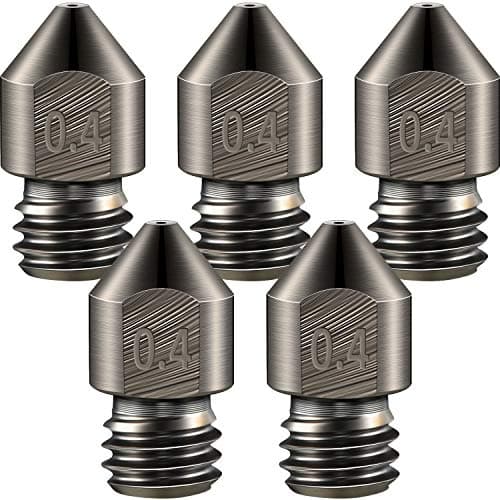
Hardened Steel NozzleA few dollars against a failure mode that is invisible until your dimensions have already drifted.Hardened steel, abrasion resistant
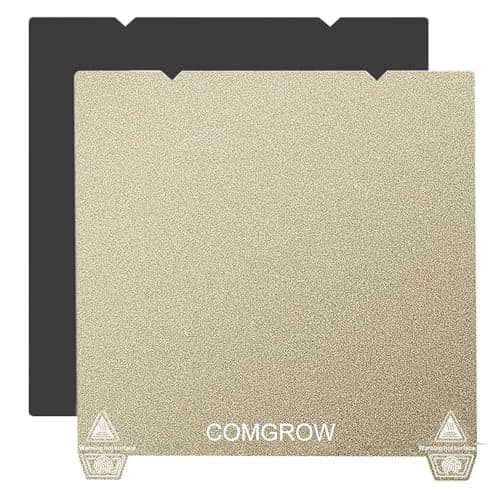
Textured PEI Spring Steel PlateGrips PETG without bonding to it, which removes the single most expensive mistake available in this hobby.Textured PEI spring steel
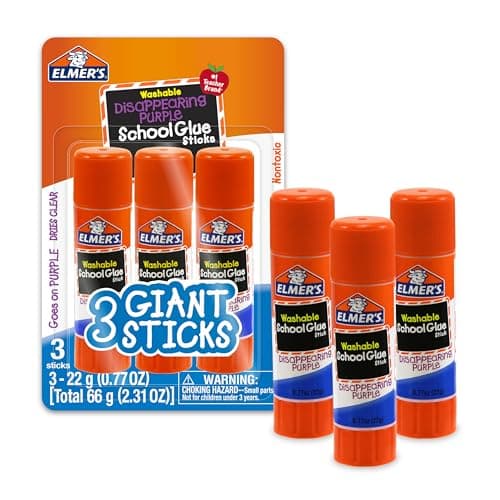
Disappearing Purple Glue StickA dollar of school glue is the correct answer more often than any specialty product, and it doubles as a release agent.Water-soluble, washes off
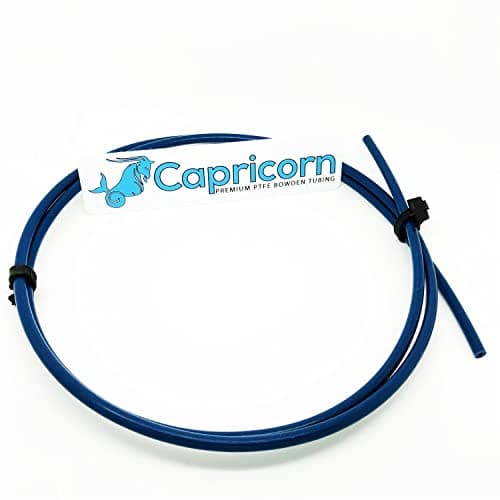
Capricorn XS PTFE Bowden TubingA real improvement on a Bowden machine and close to pointless on a direct-drive one. Check which you have first.Tighter internal boreSkip this
Live prices verified October 17, 2026. Scores are our own fit rating for the stated use, not a measurement and not a customer rating.
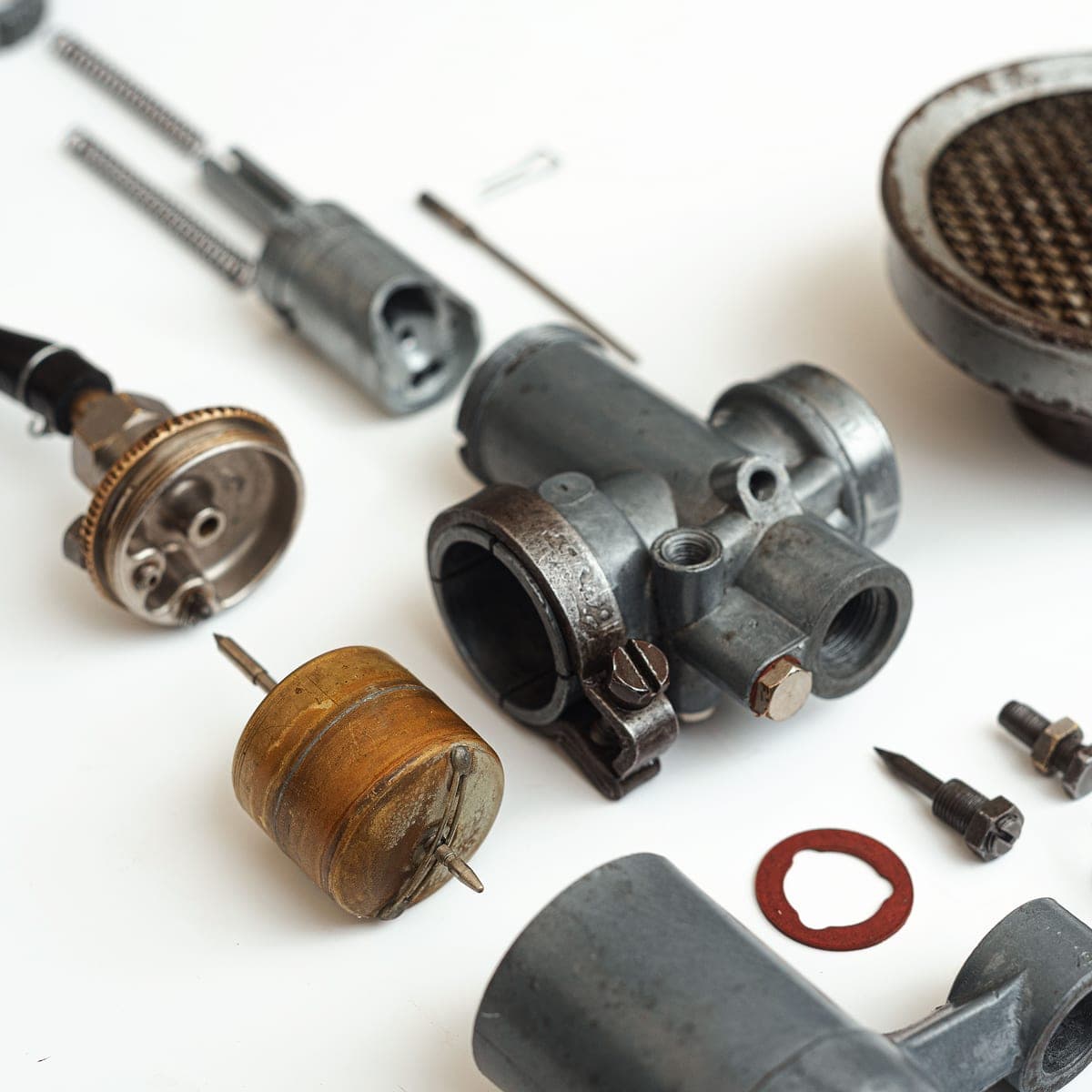
Nozzles, tubing and printer spares laid out on a bench.
Nozzle material against filament type. The wear failure is invisible until dimensions start drifting.
Filament
Brass
Hardened steel
Why
PLA, PETG, ABS, ASA, TPU
Fine
Fine
Unfilled polymers do not abrade the bore
Carbon fiber filled
No
Required
E3D document substantial wear after 250 g
Glass fiber filled
No
Required
Same abrasion mechanism as carbon fiber
Glow in the dark
No
Required
The phosphorescent filler is abrasive
Metal filled
No
Required
Metal powder is the most abrasive filler in common use
Matte / silk PLA
Acceptable
Preferred
Matting agents are mildly abrasive over long runs
Nozzle material against filament type. The wear failure is invisible until dimensions start drifting. Figures from E3D, Prusa Research, retrieved 2026-09-01.
What actually wears out
Three categories, with very different failure behavior.
Things that wear invisibly. Nozzles. The bore widens gradually and print quality drifts, and every symptom looks like a calibration problem. This is the category that costs people the most time.
Things that wear visibly. Build surfaces lose their texture and their grip in patches you can see. PTFE tubing discolors and deforms at the hot end.
Things that get consumed. Glue sticks, isopropyl alcohol, gloves, desiccant. Ordinary running costs.
Nozzles: the material decision
Brass is the default, conducts heat well, and is soft. E3D document that abrasive filaments cause substantial wear to brass nozzles within a few hundred grams E3D, which is a very small amount of filament.
Abrasive means anything with a filler: carbon fiber, glass fiber, metal-filled, glow-in-the-dark, and to a much milder degree matte finishes. If you print any of those, hardened steel is not a preference. The table below is the whole decision, and the nozzle roundup covers the options.
Build surfaces: match the surface to the material
The expensive mistake in this category is printing PETG on smooth PEI. PETG bonds chemically to it and can tear material off the sheet when the part is removed — the plate is damaged, not the print.
Textured PEI keys mechanically rather than bonding chemically. The safe default, and the right answer for PETG.
Smooth PEI gives a glass-smooth first layer for PLA and ASA. Keep PETG off it, or use glue as a deliberate release layer.
PEX and other coated surfaces release PETG easily and are worth it if PETG is most of what you print.
Most adhesion problems are a dirty plate, and washing it with dish soap and water is free. After that, a purple glue stick handles almost everything — and on smooth PEI with PETG it is doing double duty as a release agent that protects the plate.
Specialty adhesives earn their price on materials that warp hard: ASA, ABS, nylon. For PLA on a clean plate they are money spent on a non-problem. See bed adhesion.
Resin consumables are a separate basket
If you print resin, the consumable list is different and the safety requirements are real: nitrile gloves are specified in Formlabs' published safety guidance for handling liquid resin Formlabs, and used wash alcohol is chemical waste Formlabs. That basket is on resin cleanup.
The one resin consumable with a published service life is the vat film: ELEGOO rate theirs at up to 60,000 releases, and a release is one layer. Which film fits which vat, and the signs that yours is finished, are on best FEP film for resin printers.
When to replace things
There is no useful hour-meter for any of this. Replacement is symptom-driven, and the symptoms are specific enough to be diagnostic — which is what when to replace consumables is for. The short version: replace a nozzle when dimensional accuracy drifts and cleaning does not restore it, replace a plate when adhesion fails in patches after washing, and replace PTFE when the hot end shows a deformed or discolored tube.
Every pick, in detail
01
Hardened Steel Nozzle
Creality / generic MK8
Anyone printing anything filled · 9.2/10 our fit score
The five-dollar part that stops abrasive filament from quietly widening your nozzle mid-print. Buy one before your first carbon fiber spool, not after.
Published specifications for Hardened Steel Nozzle
Common size
0.4 mm
Required for
Carbon fiber, glass filled, glow in the dark, metal filledE3D
Trade-off
Lower thermal conductivity than brass
What it does well
E3D document substantial wear on a brand new brass nozzle after only 250 g of carbon-fiber-filled filament
Cheap enough to keep a spare in the drawer
What it does not
Conducts heat worse than brass, so very high flow rates need a few degrees more
Hardened steel tempers and softens at extreme temperatures — E3D make this point explicitly
By symptom, not by schedule. Replace when dimensional accuracy drifts and cleaning does not restore it. With abrasive filament that can be within a few hundred grams on brass; with unfilled filament a brass nozzle lasts a very long time.
+ − What consumables do I actually need to keep in stock?
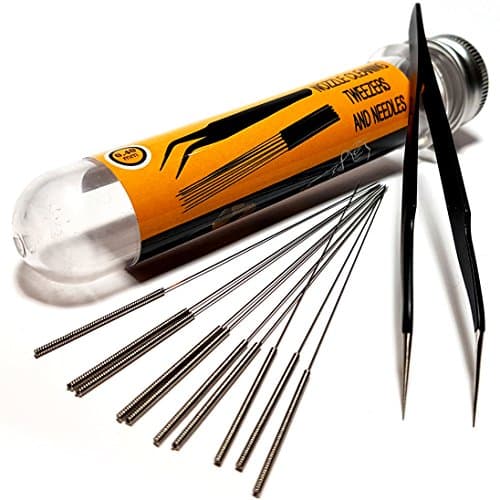
A spare nozzle in your usual size, a nozzle cleaning needle kit, a glue stick, and desiccant. Those four cover most of the situations where a print stops and you cannot continue.
+ − Is a hardened nozzle worth it if I only print PLA?
Not for plain PLA. Brass conducts heat better and unfilled polymers do not abrade the bore. Buy hardened when you buy your first filled filament, not before.