A worn nozzle does not break. Its bore widens gradually, so prints drift out of tolerance while everything appears to be working — which sends people off to re-tune flow against a diameter the slicer no longer knows.
How this page is funded. Buy links go to Amazon and we earn a commission on qualifying purchases at no extra cost to you. Commission never decides an order or a score, we accept no free products or sponsored placements, and every roundup names something to skip. Full disclosure.
The picks, ranked
The picks, ranked
#
Product
Best for
Score
Price
1
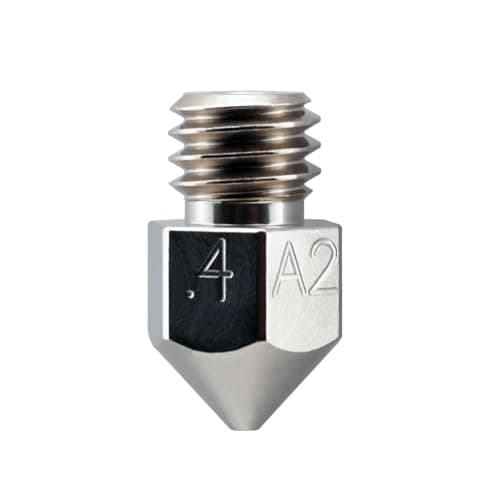
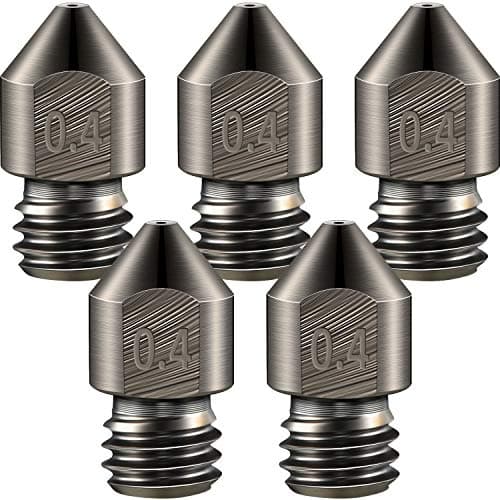
Hardened Steel NozzleFitted before the first filled spool rather than after the damage. A few dollars against weeks of misdiagnosis.Hardened steel
Live prices verified October 17, 2026. Scores are our own fit rating for the stated use, not a measurement and not a customer rating.
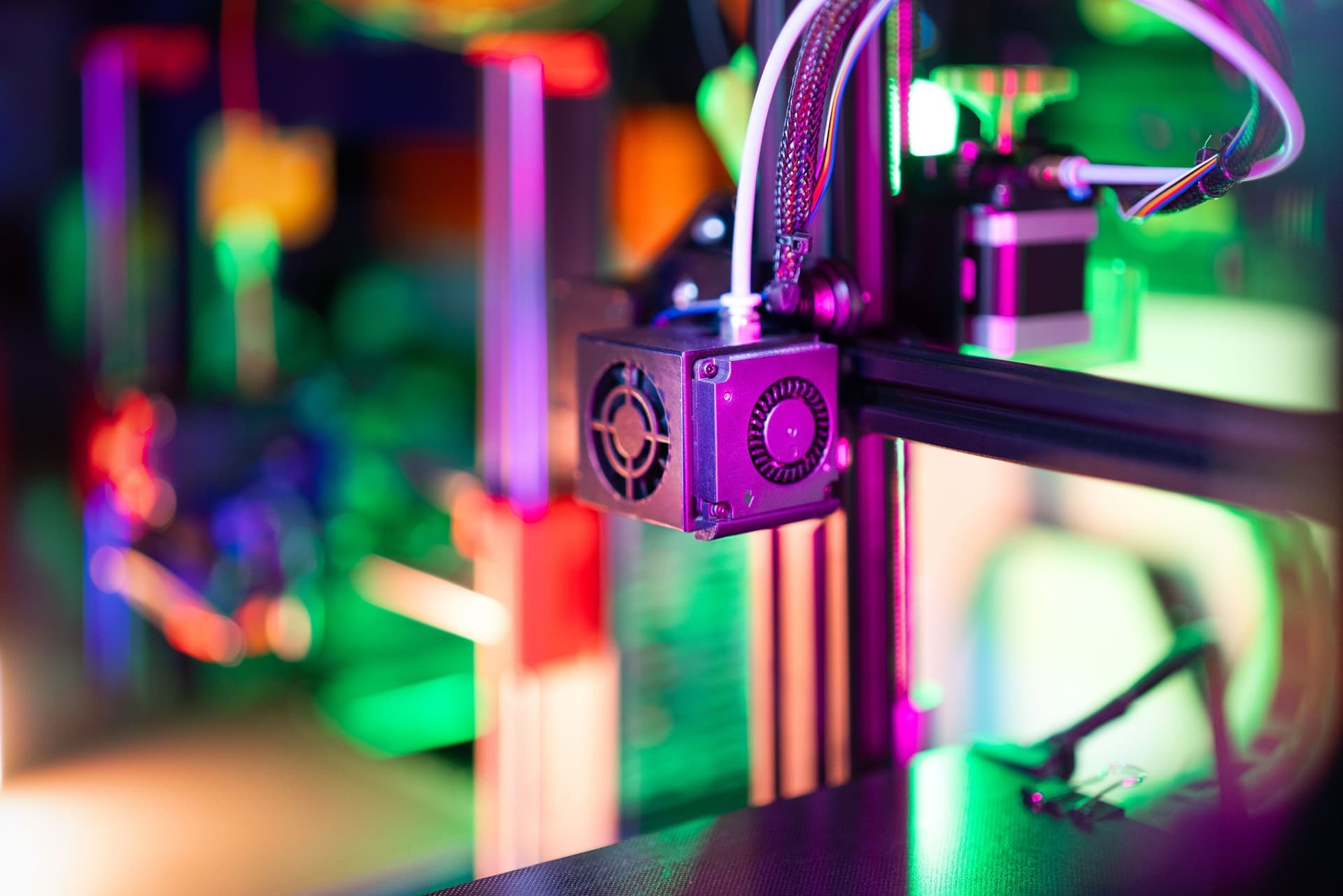
A disassembled hotend during 3D printer maintenance.
Nozzle material against filament type. The wear failure is invisible until dimensions start drifting.
Filament
Brass
Hardened steel
Why
PLA, PETG, ABS, ASA, TPU
Fine
Fine
Unfilled polymers do not abrade the bore
Carbon fiber filled
No
Required
E3D document substantial wear after 250 g
Glass fiber filled
No
Required
Same abrasion mechanism as carbon fiber
Glow in the dark
No
Required
The phosphorescent filler is abrasive
Metal filled
No
Required
Metal powder is the most abrasive filler in common use
Matte / silk PLA
Acceptable
Preferred
Matting agents are mildly abrasive over long runs
Nozzle material against filament type. The wear failure is invisible until dimensions start drifting. Figures from E3D, Prusa Research, retrieved 2026-09-01.
What actually wears
The nozzle orifice. Abrasive particles in the filament — chopped carbon fiber, glass fiber, metal powder, phosphorescent filler — scour the bore as they pass through it, and the hole gets bigger.
E3D document substantial wear to brass nozzles from abrasive filaments, measurable after a few hundred grams E3D. That is one spool, not one year. Their hardened-and-coated nozzle design exists specifically to address this class of wear E3D.
Symptoms of a worn nozzle
Consistent over-extrusion. A wider hole passes more plastic at the same commanded flow. Walls come out thicker than the slicer intended.
Dimensional drift. Parts that used to fit stop fitting, and holes come out undersized because the extra material has to go somewhere.
Rougher surfaces and blobbier corners, from the extra material.
First-layer behavior changes with the Z offset unchanged.
Flow calibration keeps needing to go down. This is the tell. If you have reduced flow twice in two months, you are compensating for a widening hole.
Wear versus a clog
They are opposites and they get confused constantly.
A clog under-extrudes, inconsistently, and often recovers briefly before returning. Cleaning fixes it.
Wear over-extrudes, consistently, and gets slowly worse. Cleaning does nothing.
So the diagnostic is: clean the nozzle first. If cleaning restores normal behavior, it was a clog. If cleaning changes nothing and the part is still oversized, the bore has widened.
Which filaments cause it
The table below is the full picture. In short: anything with a filler. Carbon fiber and glass fiber are the obvious cases; metal-filled is the most abrasive in common use; glow-in-the-dark is the one that surprises people, because the phosphorescent additive is genuinely abrasive.
Matte and silk PLA are mildly abrasive — enough to matter over a long working life in a shop printing them daily, not enough to change your nozzle for. Plain PLA, PETG, ABS, ASA and TPU do not wear brass in any practical time frame.
Prevention
Fit hardened steel before the first filled spool. Not after you notice a problem, because by then the damage is done and it is not reversible.
Keep separate nozzles if you switch between abrasive and non-abrasive work. Brass for the good surface finish, hardened for the filled filament.
Use 0.6 mm for filled filament. A larger orifice takes proportionally longer to become badly out of tolerance, and it clogs less — see carbon fiber filament.
Log it. Write the date on the nozzle change. When flow calibration starts drifting, knowing how much filled filament has gone through since then answers the question immediately.
Checking a suspect nozzle
Take it out and look at the tip under magnification, against a new one of the same size. A worn nozzle shows a visibly larger and often out-of-round orifice, and the flat around it is scored. Once you have seen the comparison once it is unmistakable, which is a good argument for keeping the old nozzle when you replace it.
Wear and blockage are different faults with different fixes, and they get confused constantly. If your symptom is starved or inconsistent extrusion rather than drifting dimensions, work through why your nozzle keeps clogging instead.
Every pick, in detail
01
Hardened Steel Nozzle
Creality / generic MK8
Preventing it · 9.2/10 our fit score
The five-dollar part that stops abrasive filament from quietly widening your nozzle mid-print. Buy one before your first carbon fiber spool, not after.
Published specifications for Hardened Steel Nozzle
Common size
0.4 mm
Required for
Carbon fiber, glass filled, glow in the dark, metal filledE3D
Trade-off
Lower thermal conductivity than brass
What it does well
E3D document substantial wear on a brand new brass nozzle after only 250 g of carbon-fiber-filled filament
Cheap enough to keep a spare in the drawer
What it does not
Conducts heat worse than brass, so very high flow rates need a few degrees more
Hardened steel tempers and softens at extreme temperatures — E3D make this point explicitly
+ − How long does a brass nozzle last with carbon fiber filament?
E3D document substantial wear after a few hundred grams of abrasive filament — roughly one spool. That is why a hardened nozzle should be fitted before the first filled spool rather than after a problem appears.
+ − How do I tell a worn nozzle from a clog?
A clog under-extrudes inconsistently and cleaning fixes it. Wear over-extrudes consistently and cleaning changes nothing. If you have reduced flow calibration twice recently, that points to wear.
+ − Is glow-in-the-dark filament abrasive?
Yes, and it surprises people. The phosphorescent additive is a hard particulate and it wears brass much like carbon fiber does. Use a hardened nozzle.
+ − Does matte PLA wear nozzles?
Mildly. Matting agents are abrasive but far below carbon or glass fiber. It matters for a shop printing matte daily and does not justify a nozzle change for ordinary use.