Matte PLA is a genuine upgrade that costs you almost nothing. Silk PLA is a decorative material with worse layer adhesion than the plain PLA it is made from. Those two facts should decide which one you buy.
How this page is funded. Buy links go to Amazon and we earn a commission on qualifying purchases at no extra cost to you. Commission never decides an order or a score, we accept no free products or sponsored placements, and every roundup names something to skip. Full disclosure.
The picks, ranked
The picks, ranked
#
Product
Best for
Score
Price
1
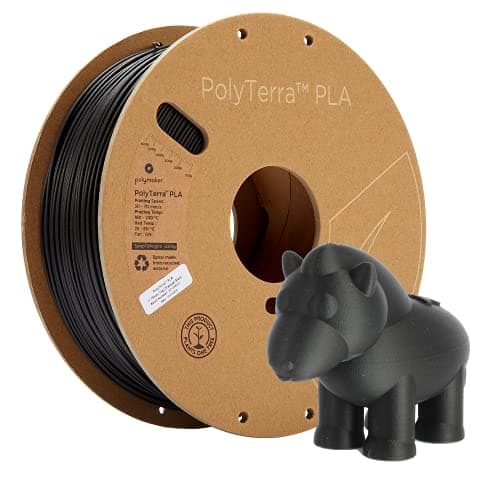
Polymaker PolyTerra PLAThe matte that actually diffuses layer lines rather than just dulling the surface, and it costs about what plain PLA costs.Matte PLA, ordinary PLA price
Bambu Lab PLA-CFA matte finish that also stiffens the part. It abrades brass nozzles, so budget for a hardened one before the first spool.Carbon fiber filled, hardened nozzle required
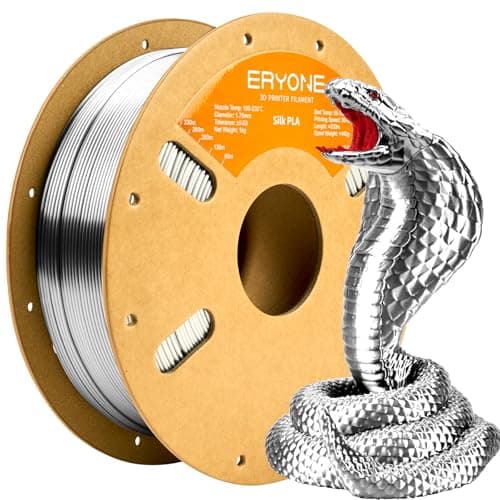
ERYONE Silk PLABuy it for vases and display pieces. Do not buy it for anything that has to hold, and do not expect it to print like the PLA on your shelf.Silk finish, no published toleranceSkip this
Live prices verified October 17, 2026. Scores are our own fit rating for the stated use, not a measurement and not a customer rating.
Two printed plastic objects photographed side by side.
What matte PLA actually does
Layer lines are visible because each layer catches the light as a separate glossy band. A matte additive scatters that reflection, so the eye stops resolving the individual layers even though they are physically unchanged. This is why matte PLA looks like a smaller layer height without being one — you are getting the visual benefit of a finer print at the speed of a coarser one.
The cost is small and worth naming: matting agents are mildly abrasive. Not carbon-fiber abrasive, but enough that over a long working life a brass nozzle will wear faster on matte than on plain PLA. E3D document that filled and loaded filaments are where nozzle wear becomes measurable E3D, and matte sits at the very mild end of that spectrum. We would not change nozzles for it; we would notice it in a shop printing matte all day. The nozzle wear guide has the full picture.
Silk PLA gets its sheen from additives that make the polymer flow differently, and the same additives reduce the strength of the bond between layers. A silk print is measurably easier to snap along a layer line than the same geometry in plain PLA. That is not a defect in any particular brand — it is what the finish is.
Silk also strings more, prints better hot, and shows every travel move on the surface because the glossy finish reflects them. If you are going to print it, print it slower than your PLA profile, raise the nozzle temperature toward the top of the range, and accept that you will spend an evening on retraction. It is a material for vases, display models and gifts. It is not a material for brackets.
Why we put silk in the skip row
Not because it is bad at what it does. Because a large fraction of people who buy silk PLA buy it as a general-purpose spool on the strength of a photograph, and then print functional parts with it and conclude their printer has a problem. If you want the look, buy it knowing what it is. If you wanted a nice-looking strong part, buy matte instead.
The third option: carbon-filled matte
Carbon-fiber-filled PLA is a matte finish that also stiffens the part. It is genuinely rigid, it looks excellent, and it comes with a real requirement: a hardened nozzle. E3D's testing found substantial wear on brass nozzles from filled filaments within a few hundred grams E3D, and a widening nozzle produces prints that drift dimensionally in ways that are very hard to diagnose.
Carbon fill does not add heat resistance. A PLA-CF part softens at the same temperature a PLA part does — the filler makes it stiffer, not more thermally stable. If heat is the problem, see heat-resistant filament instead.
The place these two finishes matter most is small decorative work, where the piece is inspected at arm's length rather than bolted to something. Which finish suits which piece is worked through on best filament for 3D printed jewelry.
The third decorative option is a filled one rather than a finish: wood fiber mixed into PLA, which sands and stains in a way no matte spool does. Published fiber percentages and the nozzle it needs are on best wood filament.
The fourth is a filler that does something no finish can: phosphorescent powder, which makes a print glow after it has been charged. Body color versus glow color, and why thin walls barely glow, are on best glow in the dark filament.
Every pick, in detail
01
Polymaker PolyTerra PLA
Polymaker
Matte finish · 8.9/10 our fit score
The matte finish that actually hides layer lines, on a spool priced with ordinary PLA rather than as a specialty.
Published specifications for Polymaker PolyTerra PLA
Yes, in the way that matters most for printed parts: layer adhesion. The additives that produce the sheen interfere with the bond between layers, so a silk print splits along a layer line more readily than the same geometry in plain PLA. It is a decorative material.
+ − Does matte PLA need a hardened nozzle?
Not for normal use. Matting agents are mildly abrasive, far below carbon or glass fiber, and a brass nozzle will outlast most hobbyists' interest in the color. If you print matte continuously, a hardened nozzle is cheap insurance.
+ − Why does silk PLA string so much?
Because it prints best hot and flows more freely than plain PLA, and both of those make oozing worse. Raise retraction distance, lower travel-time thresholds for retraction, and expect to spend more time tuning than you would on a standard PLA profile.