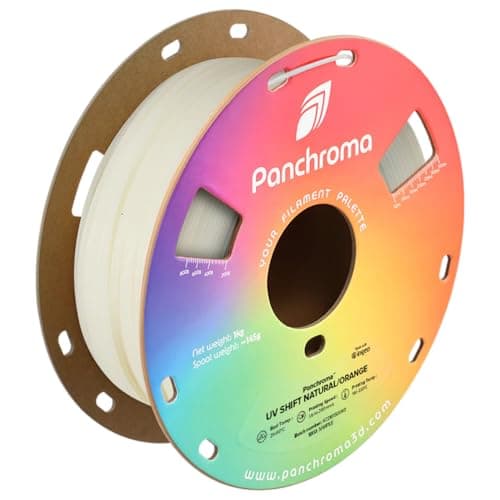
There are two unrelated effects sold under one name. Thermochromic filament changes color with heat from a hand or warm water; UV-reactive filament changes in sunlight or under a black light. Buying the wrong one is the most common mistake in this category, and the second is printing the UV type through a brass nozzle.
How this page is funded. Buy links go to Amazon and we earn a commission on qualifying purchases at no extra cost to you. Commission never decides an order or a score, we accept no free products or sponsored placements, and every roundup names something to skip. Full disclosure.
The picks, ranked
The picks, ranked
#
Product
Best for
Score
Price
1
Polymaker Panchroma UV Shift PLANatural indoors, orange under UV, with a full published settings table. Polymaker are explicit that the additive is abrasive enough to require a hardened nozzle.190-230 C, hardened nozzle required
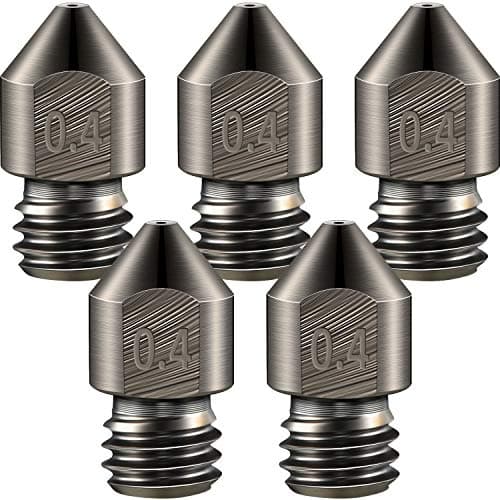
Hardened Steel NozzlePolymaker say not to print their UV materials without one, and warn against running them through an AMS with plastic gears and tubes.Hardened steel, fits most hotends
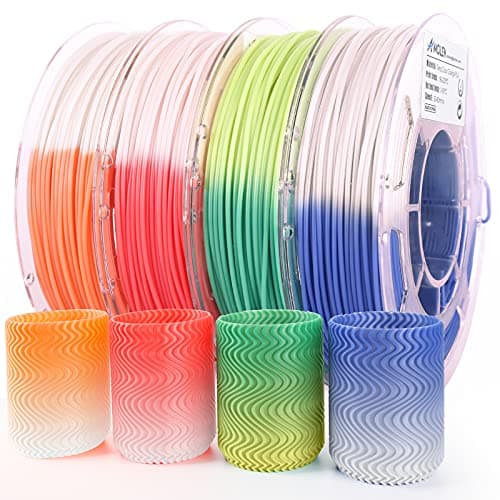
AMOLEN Temperature Change PLAA bundle is the right way to buy thermochromic: the effect is the novelty, and 200 g of three colors beats a kilogram of one you tire of.Changes with temperature, multi-color bundle
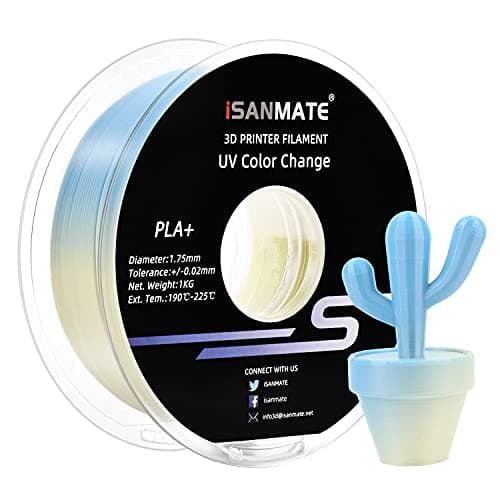
iSANMATE UV Color Change PLA+Sold on a PLA+ base with a published diameter tolerance. Less documentation than Polymaker, and the same abrasive additive, so the nozzle rule still applies.PLA+, changes to blue in sunlight
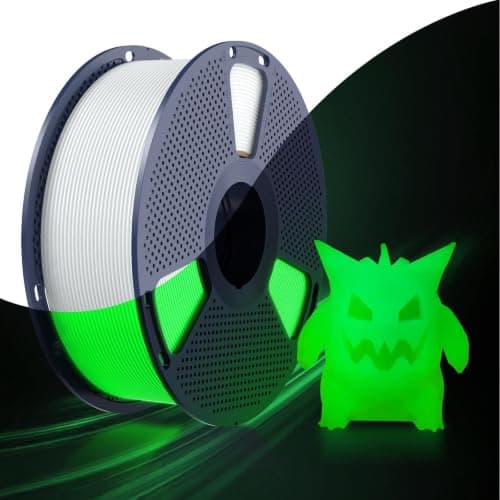
SUNLU Glow PLA, White BodyGlow filament emits light in darkness; color-change filament shifts hue under a trigger. Different effects, and the glow page is the right page for that one.Glows green in the darkSkip this
Live prices verified September 21, 2026. Scores are our own fit rating for the stated use, not a measurement and not a customer rating.
Brightly colored printed parts on a workbench.
The two effects, and how to tell them apart
Thermochromic filament contains a pigment that changes color above a threshold temperature — often close to body heat, so the print shifts where a hand touches it or when it goes into warm water. The effect is reversible, and it works indoors, at night, in a drawer.
UV-reactive filament does nothing until light hits it. Polymaker describe their UV Shift PLA as appearing natural in regular light and shifting to a vibrant orange under UV or black light Polymaker. Outdoors in sunlight it changes; indoors under a lamp it usually does not.
The requirement the listings bury
UV-reactive additives are abrasive. Polymaker say directly that these materials have an additive that makes them very abrasive, that you should not print them without a hardened nozzle, and that they do not recommend running them in an AMS with plastic gears and tubes Polymaker.
That is a specific, unusual warning and it is worth taking literally. E3D document measurable brass wear within a few hundred grams of abrasive filament, and the failure is invisible until parts start drifting out of tolerance E3D. A hardened nozzle costs less than the spool — the options are on best 3D printer nozzle and the symptoms of a worn one are on the nozzle wear guide.
Printing either type
Both are ordinary PLA underneath. Polymaker publish 190 to 230 C at the nozzle, a 25 to 60 C bed, the fan on, speeds up to 200 mm/s and no chamber, with drying at 55 C for 6 hours only if the spool has taken on moisture Polymaker. No special hardware beyond the nozzle.
Print the effect on the outside. Color change happens at the surface. Wall thickness barely matters, unlike glow filament where it decides brightness.
Keep the fan on. Polymaker recommend full cooling for surface quality on these PLA lines Polymaker.
Test the trigger before committing to a big print. Thermochromic thresholds differ by product, and a 31 C pigment behaves very differently from one that needs hot water.
Expect the base color to matter. Both effects shift from one color to another; the “before” state is what the part looks like most of the time.
How long does the effect last
Neither manufacturer in this category publishes a cycle count or a fade rate, and we are not going to invent one. What is documented is the general mechanism: these pigments respond to light and heat, which are the same two things that age them. Parts kept in prolonged direct sunlight are the ones we would expect to fade first.
That points at an honest limitation: color-change filament is for things people pick up and put down, not for permanent outdoor signage. For a sign that lives outside, the material choice is on outdoor and UV — and the answer there is ASA or PETG in a color that was never supposed to change.
What these are actually good for
Things that get handled. Fidget toys, mug handles, door pulls, phone stands — anywhere a hand leaves a visible mark for a few seconds.
Temperature tells. A thermochromic sleeve that signals when a drink is still too hot is a genuinely useful object, not a gimmick.
Outdoor reveals. UV Shift makes a print that looks plain indoors and loud in the garden, which is a good party trick and a good garden marker.
Cosplay under stage lighting. Black lights are common in event lighting, and a UV-reactive part reads dramatically under them — the rest of that build is on filament for cosplay.
What they are not good for: functional parts. These are PLA, so Prusa put the softening point at around 60 C Prusa Research, and a thermochromic part in a hot car is both deformed and permanently the wrong color.
Buying without regretting it
Buy small. Sample bundles exist because most people print two or three novelty objects and move on. A kilogram is a big commitment to a single trick.
Check which direction the change goes. Cold-to-warm and dark-to-light are marketed identically; the listing photo is usually the “after” state.
Fit the nozzle first. For the UV type this is not optional by the manufacturer’s own instruction Polymaker.
Do not expect it on a multi-material system. Polymaker warn against running these through an AMS with plastic gears and tubes Polymaker.
Every pick, in detail
01
Polymaker Panchroma UV Shift PLA
Polymaker
Sunlight and black-light effects · 8.5/10 our fit score
Natural indoors, orange under UV, with the abrasiveness warning printed where you can actually find it.
Published specifications for Polymaker Panchroma UV Shift PLA
Effect
Natural in normal light, orange under UV or black lightPolymaker
Buy this before the UV spool · 8.6/10 our fit score
The five-dollar part that stops abrasive filament from quietly widening your nozzle mid-print. Buy one before your first carbon fiber spool, not after.
Published specifications for Hardened Steel Nozzle
Common size
0.4 mm
Required for
Carbon fiber, glass filled, glow in the dark, metal filledE3D
Trade-off
Lower thermal conductivity than brass
What it does well
E3D document substantial wear on a brand new brass nozzle after only 250 g of carbon-fiber-filled filament
Cheap enough to keep a spare in the drawer
What it does not
Conducts heat worse than brass, so very high flow rates need a few degrees more
Hardened steel tempers and softens at extreme temperatures — E3D make this point explicitly
+ − What is the difference between thermochromic and UV color changing filament?
The trigger. Thermochromic pigment changes with heat — a hand, warm water, a hot drink — and works indoors. UV-reactive filament changes only when ultraviolet light reaches it: Polymaker describe their UV Shift PLA as natural in normal light and orange under UV or a black light.
+ − Do I need a hardened nozzle for color changing filament?
For the UV-reactive type, yes. Polymaker state the additive makes these materials very abrasive and that you should not print them without a hardened nozzle, and they warn against an AMS with plastic gears and tubes. Thermochromic PLA carries no such warning.
+ − What settings does color changing PLA need?
Standard PLA settings. Polymaker publish 190 to 230 C at the nozzle, a 25 to 60 C bed, cooling on, speeds up to 200 mm/s and no enclosure, with drying at 55 C for 6 hours only if the spool has absorbed moisture.
+ − Does the color change effect wear out?
No manufacturer in this category publishes a cycle count or fade rate, so we will not quote one. The pigments respond to light and heat, which are also what ages them, so treat prolonged direct sunlight as the thing most likely to dull the effect.