Best filament for cosplay armor, helmets and props
Print the bulk of the armor in cheap PLA+, the helmet in a foaming lightweight PLA, and anything that has to bend in TPU. The three decisions that actually matter are weight on the body, the surface you are going to paint, and heat.
How this page is funded. Buy links go to Amazon and we earn a commission on qualifying purchases at no extra cost to you. Commission never decides an order or a score, we accept no free products or sponsored placements, and every roundup names something to skip. Full disclosure.
The picks, ranked
The picks, ranked
#
Product
Best for
Score
Price
1
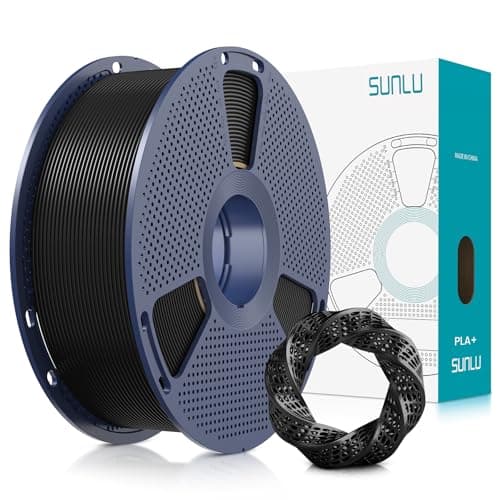
SUNLU PLA+A chest plate is several kilograms of plastic before it is a costume. Buy the cheapest spool that is tough enough to survive being sanded and handled.185-235 C nozzle, no enclosure
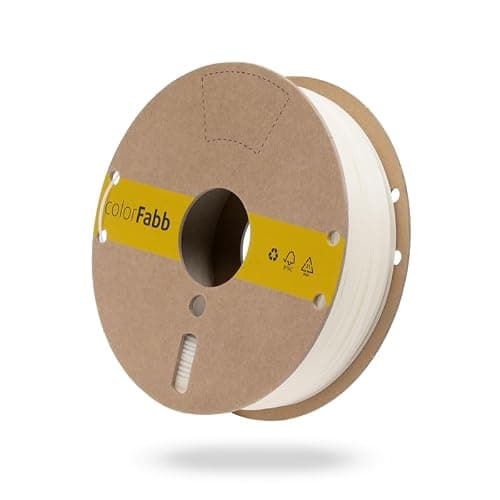
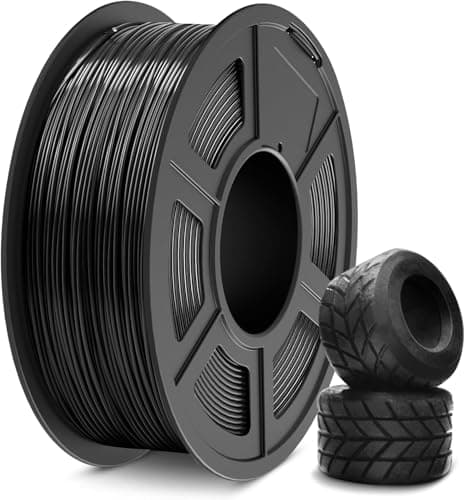
colorFabb LW-PLAThe only foaming PLA here that publishes what its density becomes, which is the number that decides whether a helmet is wearable for eight hours.0.403-0.476 g/cm3 fully foamed
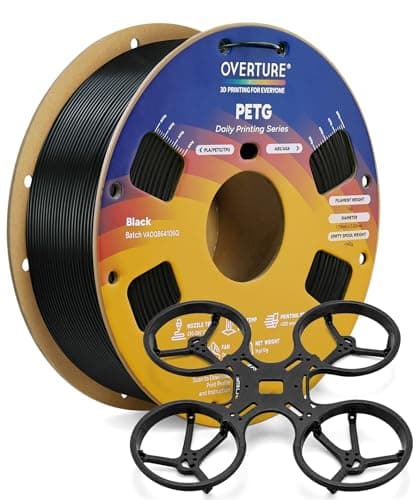
Overture PETGThe hinges, buckles and mounting tabs are what break at a convention. PETG takes the abuse PLA snaps under.215-270 C nozzle, noted for impact resistance
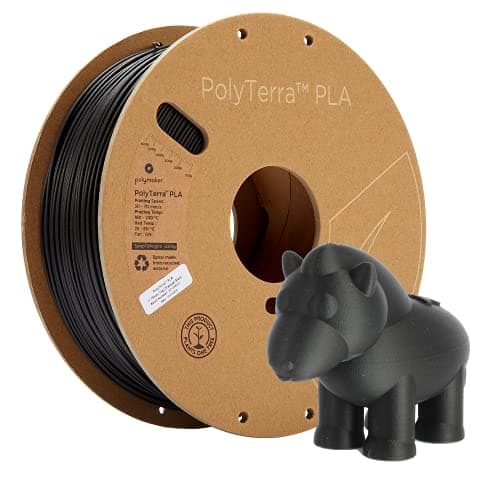
Polymaker PolyTerra PLAA matte surface hides layer lines under primer, so the same finish takes fewer coats and less sanding than a glossy spool.Matte finish, standard PLA price
SUNLU LW-PLAPublishes a weight saving but no density, no foaming temperature and no tolerance. Fine for a first lightweight print, thin on data.About 30% lighter, 0.8 kg spool
Bambu Lab PLA-CFCarbon fill buys stiffness you do not need, wears your nozzle, and leaves a fibrous surface that fights primer. It adds no heat resistance either.Hardened nozzle required, still PLA underneathSkip this
Live prices verified October 19, 2026. Scores are our own fit rating for the stated use, not a measurement and not a customer rating.
Painted miniature figures in close-up, showing a hand-finished paint surface.
What a cosplay build asks of a filament
Cosplay is not one printing problem. A pauldron, a helmet, a hinge and a soft under-strap all fail differently, and the material that is right for one is wrong for the next. Five criteria decide every choice on this page, in this order.
Weight on the body. Anything worn above the shoulders is a weight problem before it is a strength problem. This is the one criterion where a specialty material earns its price.
The surface you are going to paint. Almost every printed costume gets primed and painted, so the finish that matters is the one under the primer, not the one on the spool.
Heat it will sit in. Not the convention hall — the car it rides in, the trunk it waits in, and the stage lights.
Whether the part has to flex. Straps, joints and anything that clips on repeatedly are a different material entirely.
How much of it you need. A full armor set is measured in kilograms. A material that is fine for one bracket can be indefensible across six spools.
Weight is the constraint people meet last
A helmet printed in ordinary PLA is comfortable in the living room and intolerable by the afternoon. Lightweight foaming PLA — sold as LW-PLA — exists for exactly this, and it is the one material choice on this page that changes what a costume can be.
The mechanism is real and colorFabb, who developed the material, publish the numbers for it. Their LW-PLA prints across a range of 195 to 260 C and starts foaming at around 230 C, which expands the extruded volume by nearly three times colorFabb. Density falls from a published 1.210 to 1.430 g/cm3 unfoamed to 0.403 to 0.476 g/cm3 fully activated colorFabb. That is not a marketing figure; that is roughly a third of the mass for the same shell.
SUNLU sell a cheaper foaming PLA and publish a coarser claim: about 30% lighter for the same model, on a 0.8 kg spool, with a matte surface they describe as easy to paint SUNLU. They do not publish a density, a foaming temperature or a diameter tolerance, so the tuning is yours to find.
Two things worth knowing before you commit a helmet to it. Foaming is controlled by nozzle temperature, so the flow rate that worked at 200 C is wrong at 240 C and the same spool behaves like two different materials. And a foamed wall contains less plastic than a solid one of the same thickness, so it dents where solid PLA would scuff. Print the shell in the foaming spool and the mounting points as separate solid pieces, then join the two.
Heat: the car, the trunk and the stage lights
The most common way a printed costume dies has nothing to do with the convention. Prusa Research are explicit that PLA gets soft and deforms at temperatures over 60 C Prusa Research, and a closed car in summer passes that comfortably. Lightweight PLA is no better and arguably worse: colorFabb publish a glass transition temperature of 55 C for LW-PLA colorFabb.
This is why the pieces that carry load — pauldron mounts, helmet hinges, belt hardware — are worth printing in PETG even when the shell around them is PLA. Prusa list PETG at 215 to 270 C nozzle with a 70 to 90 C bed and note it for impact resistance Prusa Research, and it does not need an enclosure to get there. For the full comparison, see PLA versus PETG.
If the costume is for an outdoor shoot that will sit in direct sun for hours, the material logic changes again and ASA becomes the honest answer — the same reasoning as outdoor and UV parts. For a convention floor, PLA+ and PETG are enough.
The surface you are going to paint
Costume parts are judged at arm's length under bad lighting, which means layer lines matter more than dimensional accuracy. The finishing sequence — sand, fill, prime, sand again — is where the hours go, so the useful question is which spool shortens it.
Matte PLA shortens it. A matte surface diffuses light instead of reflecting it along every layer boundary, so the same part reads smoother before you touch it. Polymaker's PolyTerra is the matte spool priced like ordinary PLA rather than as a specialty; the trade-off is a mildly abrasive matting agent, covered on matte and silk PLA.
Silk PLA lengthens it. The gloss that looks spectacular unpainted is a poor base for primer, and silk grades have worse layer adhesion than the plain version — the wrong property for a large piece you will drop.
PETG is the hardest of these to finish. The toughness that makes it right for hinges is the same toughness that loads sandpaper instead of powdering off it. Use it where strength decides, not where surface does.
The parts that have to bend
Every armored costume has soft components: strap ends, joint gussets, the edge trim that stops a plate from cutting into a forearm. Printing those in PLA is why costumes fail on the second wearing.
TPU 95A is the standard answer and it is slow. Prusa's flexible materials guidance puts printing at roughly 20 mm/s with 30 to 40 mm/s as the ceiling Prusa Research, so a part that takes two hours in PLA can take six. Budget the time before you design the part, not after. The full material page is best TPU filament.
Printing pieces bigger than the build plate
Nearly every meaningful cosplay part is larger than the plate, so the build is a splitting-and-joining exercise. Two consequences follow.
Warping scales with the footprint. A large flat piece is the geometry warping punishes hardest Prusa Research, which is a large part of why PLA remains the right answer here: Prusa's material guide lists low warping as its noted property Prusa Research. Splitting a piece into two shorter sections reduces the contraction force fighting your bed.
First-layer adhesion decides the day. A twelve-hour armor plate that lifts at hour nine costs a spool and a day. Wash the plate, then read bed adhesion and build plates before you buy anything else.
Design the joins as mechanical joints — dovetails, pin holes, screw bosses — rather than trusting glue alone on a piece that will be worn, bumped and packed into a suitcase.
What we would not buy for this
Carbon fiber filled filament. It buys stiffness a costume does not need, requires a hardened nozzle because the fibers abrade brass E3D, and adds no heat resistance at all — the base polymer decides that. The fibrous matte surface also fights primer rather than helping it. See carbon fiber filament for what it is actually good for.
ABS, unless you already own an enclosure. Prusa recommend an enclosure for ABS Prusa Research, and a helmet-sized ABS print without one is a warped piece and a room full of fumes. The material is not wrong; the setup most costume builders have is.
Premium engineering spools for shell parts. Nylon and polycarbonate are excellent and irrelevant here. Neither addresses weight, both demand drying and heat, and armor is bought by the kilogram.
How much to buy, and in what order
A full armor set consumes several kilograms, and buying it one spool at a time is the most expensive way to do it. Work out the cost per kilogram rather than the price per spool — the arithmetic is on price per kilogram — and check buying in bulk before a large build, because color consistency across a set is a real reason to buy the whole run at once.
One caution on storage: a build that runs for weeks means spools that sit open for weeks. PETG and TPU both take up moisture from room air, and a spool that printed cleanly in week one can string and pop in week four. Sealed storage costs less than one ruined armor plate; the numbers are on how to store filament.
Every pick, in detail
01
SUNLU PLA+
SUNLU
The bulk of the armor · 8.9/10 our fit score
The cheapest filament we would load without flinching, and the reason most people never need to spend more.
Helmets and anything worn on the head · 8.6/10 our fit score
The foaming PLA that publishes its own density figures, which is the only way to know what the weight saving actually is before you print a helmet in it.
+ − What filament do most people use for cosplay armor?
PLA, and usually a budget PLA+ grade. It is the cheapest material that prints large flat pieces without an enclosure, and Prusa list low warping as its noted property. Armor is bought by the kilogram, so cost per kilogram decides more than any datasheet figure.
+ − Is LW-PLA worth it for a cosplay helmet?
For anything worn above the shoulders, yes. colorFabb publish a density of 0.403 to 0.476 g/cm3 for fully foamed LW-PLA against 1.210 to 1.430 g/cm3 unfoamed, so a helmet shell can lose roughly two thirds of its mass. It costs several times as much per kilogram as ordinary PLA, which is why it belongs on the helmet and not on the leg armor.
+ − Can I leave a 3D printed costume in a hot car?
No. Prusa Research state that PLA gets soft and deforms above about 60 C, and colorFabb publish a 55 C glass transition for lightweight PLA. A closed car in summer reaches both. The costume rides in the cabin with the air conditioning on.
+ − PLA or PETG for cosplay?
Both, in different places. PLA+ for the shell, because it is cheap, prints flat and sands well. PETG for hinges, buckles, mounting tabs and anything that takes repeated stress, because Prusa note it for impact resistance. PETG is harder to sand smooth, so it is the wrong choice for a large visible surface.