A bulk discount is only a discount if the filament is still good when you get to it. That makes bulk buying a storage decision before it is a price decision.
How this page is funded. Buy links go to Amazon and we earn a commission on qualifying purchases at no extra cost to you. Commission never decides an order or a score, we accept no free products or sponsored placements, and every roundup names something to skip. Full disclosure.
The picks, ranked
The picks, ranked
#
Product
Best for
Score
Price
1
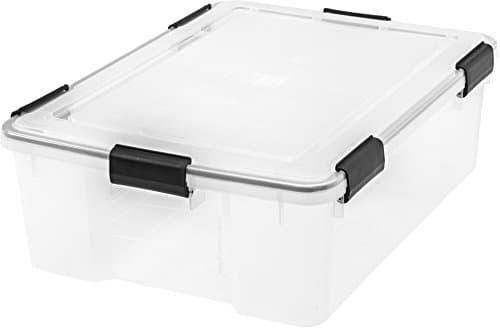
Airtight Weathertight Storage BoxBuy the storage in the same order as the filament, or the discount evaporates in a humid month.Gasketed weathertight box
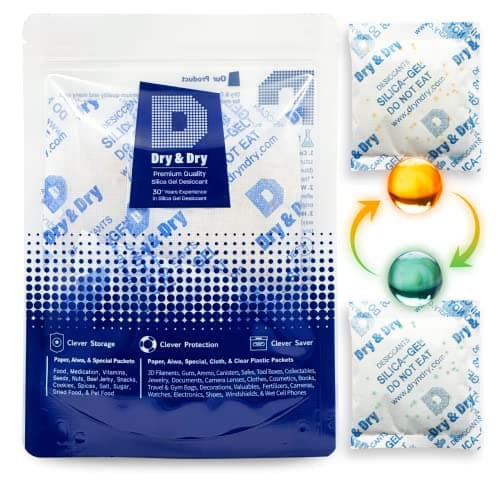
Indicating Silica Gel Desiccant PacketsBulk filament needs bulk desiccant. Sachets sized for single bags do nothing in a full tub.Color-indicating, regenerable
Live prices verified October 16, 2026. Scores are our own fit rating for the stated use, not a measurement and not a customer rating.
Delivered packages and a laptop on a desk.
How long a freshly dried spool stays print-ready, by the humidity of the room it sits in.
Ambient humidity
How long it stays dry
What that means in practice
Below 20% RH (sealed box with desiccant)
2-7 days
The published storage target for most filaments
About 55% RH (ordinary indoor air)
2-12 hours
Enough moisture to affect print quality, depending on how hygroscopic the type is
How long a freshly dried spool stays print-ready, by the humidity of the room it sits in. Both figures are Bambu Lab's, published as ranges across filament types rather than per material. Figures from Bambu Lab Wiki, retrieved 2026-09-01.
Bulk is a storage decision
Filament absorbs moisture from the air, and Bambu Lab publish 2 to 12 hours of print-readiness for a dried spool at around 55 percent relative humidity Bambu Lab Wiki. Twelve spools stacked on a shelf for two years is twelve spools slowly degrading.
So the first question is not whether the discount is good. It is whether you own enough sealed storage for what you are about to buy. If not, the storage goes in the same order or the discount is notional.
When bulk genuinely saves
You print a lot in one material. Six spools of the PLA you actually use is a real saving. Six spools of a material you print occasionally is inventory.
You need color consistency. This is the strongest argument and it has nothing to do with price. Batch color variation is real, and a multi-spool print in one color needs spools from the same batch. Reordering the same color months later can produce a visible seam.
Shipping is a large fraction of the order. One shipment of six spools beats six shipments of one — see where to buy filament.
You run a print farm or sell prints. Consumption is predictable enough that inventory is not a gamble.
When it does not
Buying a material you have not tried. Buy one spool, calibrate it, decide. Six spools of something you end up not liking is not a saving.
Buying multiple colors in bulk. This is the common trap: the discount applies to quantity, and you end up with six colors you use at different rates and five that sit.
Storing in a garage or a basement. Both are usually more humid than living space and both are where bulk filament ends up. Measure with a hygrometer before you commit.
Buying a specialty material speculatively. Nylon in particular degrades fast in poor storage, and it is the most expensive thing to waste — see nylon.
How much to buy
A workable rule: buy what you will use in six months, of a material you have already calibrated, in a color you have decided on, and buy the sealed storage for it at the same time.
For most hobbyists that is two to four spools of the main PLA and one or two of PETG. For anyone printing weekly it scales up. For someone printing a few times a year, bulk is almost never right — a single spool that is fresh beats three that are two years old.
Storing a bulk order properly
Leave them sealed until needed. A factory vacuum-sealed spool is already in the best storage it will ever be in. Do not open all six to admire them.
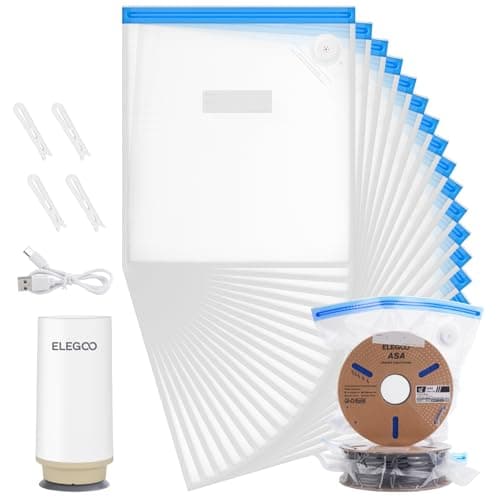
Bag opened spools immediately, with desiccant, the moment they come off the printer.
Buy desiccant by weight. The sachet that came in a single spool bag does nothing in a tub holding six.
Put a hygrometer where you can read it without opening the container.
Not on a date, but it degrades in storage by absorbing moisture. A sealed spool with desiccant keeps for years; an open spool in a humid room is compromised much faster.
+ − How much filament should I buy at once?
What you will use in about six months, in a material you have already calibrated and a color you have decided on — and only if you have sealed storage for it.
+ − Why buy multiple spools of the same color at once?
Batch color variation. A multi-spool print in one color needs spools from the same batch, and reordering the same color months later can produce a visible seam. This is a better reason for bulk than the discount is.