A joiner welds the end of one spool to the start of the next and solves a narrow problem well. Refill coils are the purchase that actually lowers cost per kilogram, and only if you already own reusable spools. A respooler is the least necessary of the three.
How this page is funded. Buy links go to Amazon and we earn a commission on qualifying purchases at no extra cost to you. Commission never decides an order or a score, we accept no free products or sponsored placements, and every roundup names something to skip. Full disclosure.
The picks, ranked
The picks, ranked
#
Product
Best for
Score
Price
1
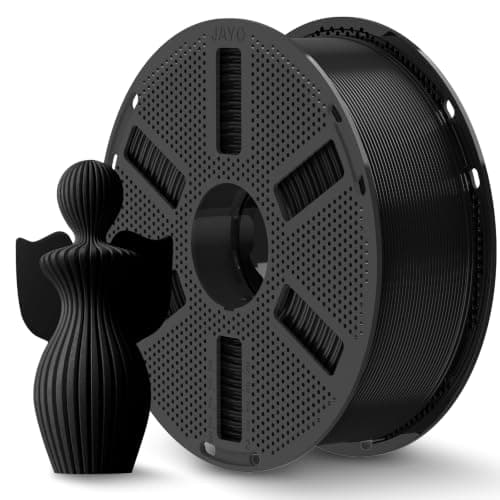
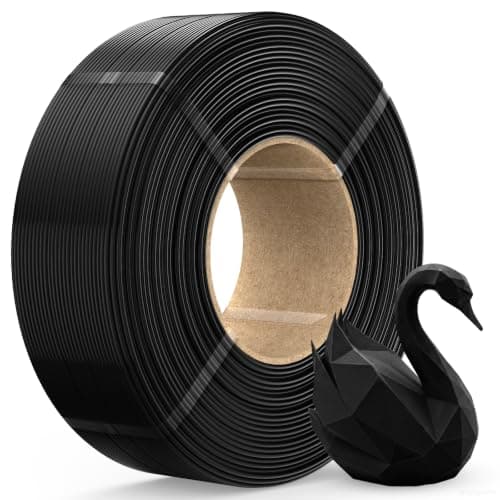
JAYO Filament RefillThe only item here that makes filament cheaper rather than more convenient. It needs a reusable spool, which is the catch worth checking before ordering.1.1 kg coil, no spool
JAYO PLA+The spooled version of the same filament. Buy this first, keep the spool, and switch to refills once you have two or three empties.1.1 kg on a spool, +/- 0.02 mm
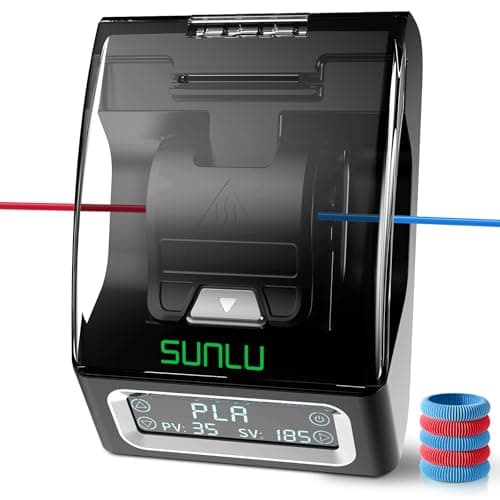
SUNLU Filament Connector FC01Solves the remnant pile and the ran-out-at-hour-eleven problem. Costs about two budget spools, so it earns its place only if you print constantly.1.75 mm, welds PLA, ABS, PETG, PCL, PA, PC
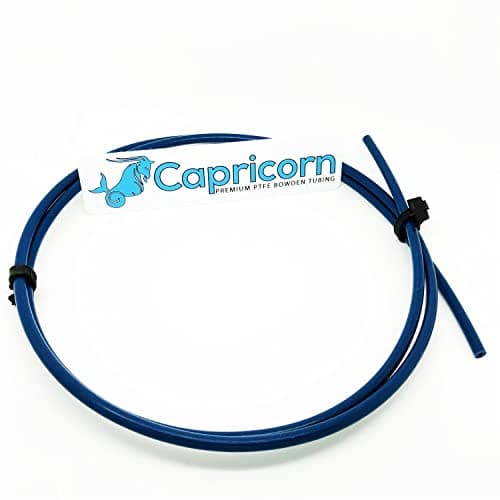
Capricorn XS PTFE Bowden TubingA short length of tube aligns two filament ends while you heat them. It is the cheap version of a joiner and the reason to try before buying one.PTFE tube, tight bore
Live prices verified October 21, 2026. Scores are our own fit rating for the stated use, not a measurement and not a customer rating.
Printer spares and small tools laid out on a bench.
Three problems that get confused for one
Searches for joiners, respoolers and refills come from three different situations, and buying the wrong tool for yours is the usual outcome.
The spool ran out mid-print. You want the print to survive. That is a joiner problem, or a pause-and-swap problem, and which one depends on your printer more than on your filament.
There is a shelf of part-used spools. Six remnants of 60 to 150 grams each are most of a spool of filament doing nothing. That is a joiner problem, and it is the strongest case for buying one.
Refill coils need somewhere to live. You bought filament without a spool and now need to wind it. That is a spool problem first and a winding-technique problem second, and it is rarely a machine problem.
What a filament joiner actually does
A filament connector is a small heated jig. It holds two filament ends in line, melts the joint, and presses them together, so that a continuous strand comes out the other side. SUNLU list their FC01 as working with 1.75 mm filament and as weldable to PLA, ABS, PETG, PCL, PA and PC SUNLU — six materials, which covers almost everything on this site except the filled composites.
Two things decide whether a weld works, and neither is temperature.
Alignment. The strand has to stay straight through the weld. A joint with a kink in it catches on the extruder gear or the entry to the PTFE tube and stalls the print.
Diameter at the joint. A weld that is fatter than the filament is a plug. Any flash has to be trimmed back flush before it goes anywhere near the extruder, and this is the step people skip.
What does not weld well is filled filament. Carbon and glass fibers do not fuse the way the base polymer does, so the joint stays a weak, gritty seam even when it looks right — one more reason composites want their own workflow, covered on carbon fiber filament.
The two-dollar version, and when it is enough
Before spending joiner money, try the jig method. A short length of tight-bore PTFE tube holds two filament ends coaxially while you apply heat, which is exactly the alignment problem the commercial tool solves with a hinge and a heater.
Cut both ends square. A diagonal cut is a weak weld and a lump.
Slide both into a short PTFE sleeve so they meet in the middle, with the joint visible.
Apply heat briefly — a soldering iron tip against the tube, not the filament — and press the ends together.
Let it cool fully before pulling it out, then roll the joint between your fingers and trim anything proud.
It is fiddly, the failure rate is higher than a purpose-built tool, and it costs the price of a tube offcut. If you weld filament twice a year, that is the correct answer. If you weld it twice a week, the tool pays. PTFE tube quality matters more than people expect for this and for the printer generally — PTFE and spares covers what to buy.
Should you be joining filament at all?
Often not, and this is the buyer-first part. Most modern printers detect a runout, park, and wait for you to load more filament. If yours does that reliably, joining solves a problem you do not have on long prints; it only helps with the remnant pile.
The cases where a joiner genuinely earns its place:
A printer with no runout sensor or no resume. An unattended overnight print that stops at hour eleven with no way back is a whole spool and a whole night.
A shelf of remnants. Six part-spools welded into one usable spool is a free kilogram of filament, and the color change mid-print is often fine on functional parts.
Multi-color by splice. Deliberately joining two colors at a known length is a real technique for banded prints, though it takes arithmetic and a tolerance for waste.
The case against is simple: every weld is a defect you introduced on purpose, and it will pass through the hotend at some point. Weld before a long print, not during one, so that a bad joint fails while you are watching.
Refills are the part that actually saves money
A refill is the same filament sold without the plastic core. The saving is real and it is structural rather than promotional: you are not paying for a spool you already own six of. JAYO's refills ship as 1.1 kg coils with the same published +/- 0.02 mm tolerance as their spooled filament, in PLA, PLA+ and PETG, and they state compatibility with reusable spools including Bambu Lab, ELEGOO, SUNLU and eSUN JAYO.
Three things to check before ordering a stack of them.
You own the spools. A refill with nowhere to go is a tangle waiting to happen. If you do not have empties yet, buy spooled filament first — the JAYO PLA+ review covers the spooled version of the same material.
The coil fits your spool. Reusable spools differ in inner diameter and width. A 1.1 kg coil on a spool sized for 1 kg can be a tight wind.
Compare on price per kilogram, not per item. A refill is only cheaper if it is cheaper per kilogram after shipping, which is the arithmetic on filament price per kilogram.
Winding a refill without buying a machine
This is the step people buy respoolers to avoid, and it is straightforward if you keep one rule: the coil must stay under tension from the moment its ties come off until it is on the spool. Filament that relaxes crosses over itself, and a crossover under a later layer is a print that stops at 3 a.m.
Leave the ties on until the end is anchored in the spool's hole or notch.
Let the coil rotate rather than pulling loops off a static pile. A cheap turntable, an upturned stool, or a second person's hands all work.
Wind in even layers across the spool width, not in a heap at one edge, and keep light back-tension the whole time.
Secure the tail immediately in the spool's slot. The end that flops loose is the one that gets buried under three layers.
A 1 kg coil takes about ten minutes by hand the first time and rather less once you have done it twice.
The category we are not recommending
Electric respoolers exist, they are widely sold, and we are not naming one. The retail listings for this category are white-label devices sold under a rotating set of names, with no manufacturer, no documentation and no published specification to hold anyone to. This site's rule is that a product needs a real maker behind it before it gets a recommendation, and nothing in this category currently passes that test.
If you want one anyway, buy it on the strength of the return policy rather than the brand name, and treat the tension control as the feature that matters — a winder that cannot keep the strand tight is just a motor making tangles faster than you could by hand.
The same caution applies to reusable spools themselves: eSUN sell a transparent polycarbonate eSpool designed for exactly this, and it was showing out of stock on their own store when we checked, so buy whichever reusable spool is genuinely available rather than hunting a specific one.
A refill out of its bag is exposed
One consequence of the refill format is worth planning for. A coil arrives sealed; the moment it comes out, it is bare filament in room air with no spool sides to shelter it. Wind it and get it into sealed storage the same day, and keep the desiccant fresh — the numbers are on how to store filament. If a coil has been sitting open for a while, Prusa publish 45 C for 6 hours for PLA and 55 C for 6 hours for PETG Prusa Research, and the practical caution is that a loose coil in a dryer needs to be tied so it cannot spring apart.
Every pick, in detail
01
JAYO Filament Refill
JAYO
Lowering cost per kilogram · 8.3/10 our fit score
A 1.1 kg coil with no spool attached, for people who already own reusable spools. The saving is real and it only exists if the spool problem is already solved.
If you do not own reusable spools · 8.1/10 our fit score
A budget PLA+ that ships 1.1 kg instead of 1 kg and publishes the same tolerance the established budget brands do. The extra 100 grams is the whole argument.
Joining two spools mid-print · 8.0/10 our fit score
A heated splicer that welds the end of one spool to the start of the next. A genuinely useful tool for a narrow problem, and an expensive one for a problem you may not have.
Published specifications for SUNLU Filament Connector FC01
+ − Can you join two pieces of 3D printer filament?
Yes. A heated splicer melts two ends together into a continuous strand; SUNLU list their connector as welding PLA, ABS, PETG, PCL, PA and PC in 1.75 mm. The joint has to be straight and no fatter than the filament, or it jams in the extruder.
+ − Is a filament connector worth buying?
If your printer cannot pause and resume on a runout, or if you have a shelf of part-used spools, yes. It costs roughly two budget spools, so the payback comes from the remnants you stop throwing away. Try the PTFE-tube-and-heat method first; it costs almost nothing.
+ − What is a filament refill and do I need a special spool?
A refill is filament sold as a bare coil with no plastic core, so it costs less per kilogram. You need a reusable spool to wind it onto — JAYO state their refills fit reusable spools including Bambu Lab, ELEGOO, SUNLU and eSUN. Without one, buy spooled filament and keep the spool.
+ − Do I need a filament respooler?
Probably not. Winding a 1 kg coil by hand takes about ten minutes if you keep it under tension the whole way. We do not recommend a specific electric respooler because the category is unbranded white-label hardware with no published specification behind it.