Premium PTFE tubing is a genuine upgrade on a Bowden printer and close to a non-purchase on a direct-drive one. Knowing which machine you have decides most of this page.
How this page is funded. Buy links go to Amazon and we earn a commission on qualifying purchases at no extra cost to you. Commission never decides an order or a score, we accept no free products or sponsored placements, and every roundup names something to skip. Full disclosure.
The picks, ranked
The picks, ranked
#
Product
Best for
Score
Price
1
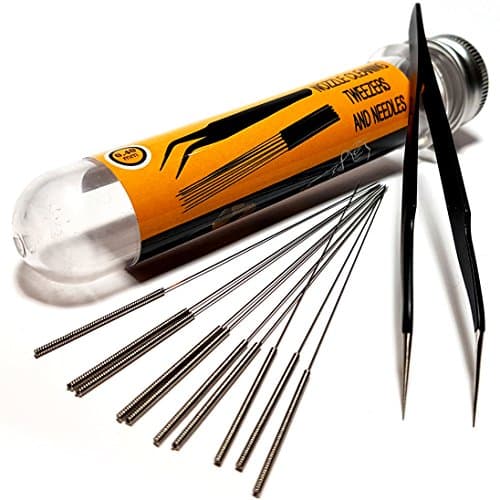
Nozzle Cleaning Needle KitClears the partial clogs that otherwise get diagnosed as a dead nozzle at an inconvenient hour.0.4 mm and 0.6 mm needles
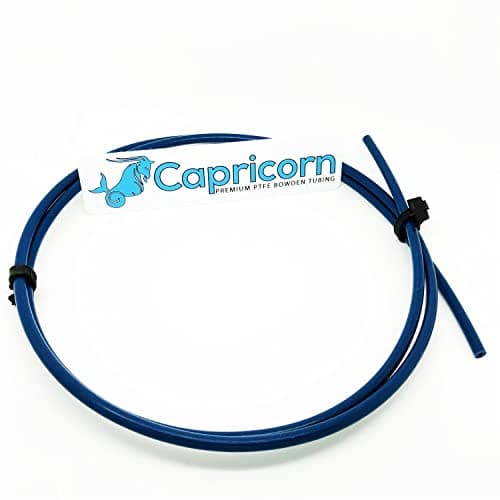
Capricorn XS PTFE Bowden TubingA tighter bore reduces filament wander in a long tube, which is a real Bowden problem and not a direct-drive one.Tighter internal bore
Live prices verified October 16, 2026. Scores are our own fit rating for the stated use, not a measurement and not a customer rating.
3D printer spare parts and PTFE tubing laid out on a bench.
Which printer do you have?
This decides most of the page.
Bowden: the extruder motor is on the frame and pushes filament down a long PTFE tube to the hot end. Tubing quality matters, because the filament is unsupported over that whole distance.
Direct drive: the extruder sits on the print head, a few centimeters from the melt zone. The short PTFE liner still matters for heat, but bore tightness over distance does not.
Why bore tightness matters on Bowden
Filament in a loose tube can wander laterally as it is pushed. Over half a meter of tube that wander becomes lag between what the extruder does and what arrives at the nozzle, which shows up as inconsistent extrusion after direction changes and as retraction that does not do what the slicer intended.
A tighter internal bore constrains the filament, reducing the lag. That is the whole mechanism, and it is why the upgrade is meaningful on a Bowden and irrelevant over a five-centimeter direct-drive liner.
It also matters for flexible filament, which is the case where a loose Bowden tube is not merely inexact but fatal — the soft filament buckles inside it. See TPU.
The heat limit nobody mentions
PTFE degrades at high temperature, and in a hot end where the PTFE liner runs all the way to the nozzle, that sets a ceiling on printing temperature. Materials in the 270 C region — polycarbonate, carbon-filled PC, some nylon grades Prusa Research — are above where an all-PTFE hot end should be operating.
If you plan to print those, an all-metal hot end is part of the purchase rather than an accessory. This is worth knowing before you buy the filament rather than after.
The spares actually worth keeping
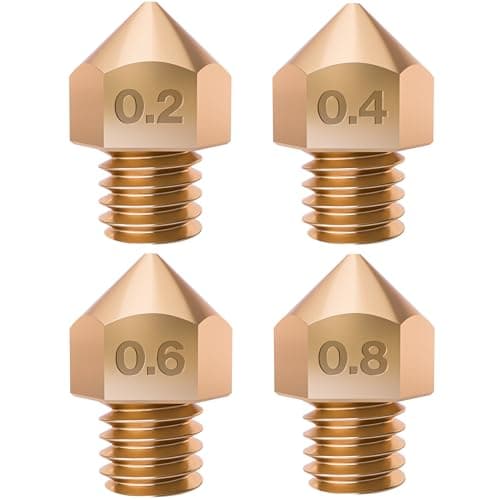
A spare nozzle in your usual size. The most common stopped-printer cause with the fastest fix, if you have one.
Cleaning needles. Two dollars, and most nozzles people replace were clogged rather than worn.
A short length of PTFE tubing plus the couplers. Couplers wear and let the tube creep, which produces a gap where filament oozes and jams.
A spare build surface, if you print constantly. Plates are consumable — see build plates.
Notably absent: belts, hot end assemblies, thermistors. Those fail rarely enough that stocking them is buying insurance against an unlikely event, whereas a nozzle clog is a next-month certainty.
Couplers are the overlooked failure
The pneumatic couplers that hold PTFE tubing wear out. The teeth that grip the tube round off, the tube creeps a millimeter or two under retraction pressure, and that gap is where molten filament collects and eventually jams the whole assembly.
The symptom is a clog that recurs after cleaning, which looks like a nozzle problem and is not. If you have cleaned the nozzle twice and it jammed again, pull the tube and look at the coupler and the tube end. Cutting a clean square end on the tube and replacing a worn coupler fixes a class of problem people chase for weeks.
A tube offcut has one more use worth knowing: it makes a serviceable jig for welding two filament ends together, which is the cheap alternative to a filament connector. That method, and whether the tool is worth buying, are on filament joiners, refills and respoolers.
Every pick, in detail
01
Nozzle Cleaning Needle Kit
Generic
The most useful two dollars here · 8.6/10 our fit score
Two dollars that saves a nozzle change. Keep one in the drawer and use it before you conclude the nozzle is dead.
Published specifications for Nozzle Cleaning Needle Kit
Contents
Assorted needles, usually 0.2-0.6 mm
What it does well
Clears a partial clog in a minute without disassembling the hotend
The needles double as a way to confirm the bore is the size printed on the nozzle
What it does not
A cold needle in a cold nozzle achieves nothing; heat the hotend first
Over-enthusiastic use can scratch the bore and make extrusion worse
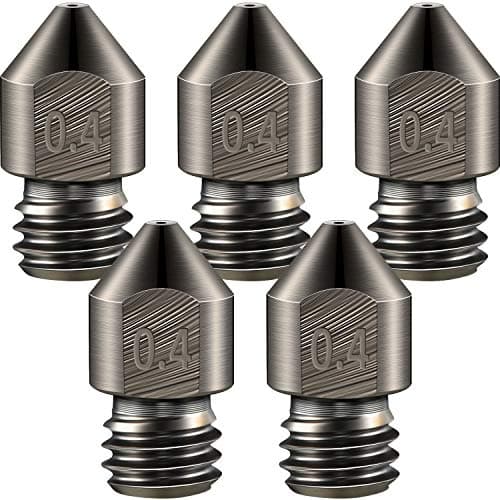
The spare that survives abrasives · 8.8/10 our fit score
The five-dollar part that stops abrasive filament from quietly widening your nozzle mid-print. Buy one before your first carbon fiber spool, not after.
Published specifications for Hardened Steel Nozzle
Common size
0.4 mm
Required for
Carbon fiber, glass filled, glow in the dark, metal filledE3D
Trade-off
Lower thermal conductivity than brass
What it does well
E3D document substantial wear on a brand new brass nozzle after only 250 g of carbon-fiber-filled filament
Cheap enough to keep a spare in the drawer
What it does not
Conducts heat worse than brass, so very high flow rates need a few degrees more
Hardened steel tempers and softens at extreme temperatures — E3D make this point explicitly
On a Bowden printer, yes — a tighter bore reduces filament wander over the length of the tube, which improves retraction consistency. On a direct-drive printer the tube is too short for it to matter.
+ − Why does my clog keep coming back after cleaning?
Check the PTFE tube and its coupler rather than the nozzle. Worn coupler teeth let the tube creep under retraction pressure, leaving a gap where molten filament collects and re-jams the assembly.
+ − Can I print high-temperature materials with a PTFE-lined hot end?
Not the ones in the 270 C region. PTFE degrades at high temperature, so polycarbonate and some nylon grades need an all-metal hot end. Budget for that before buying the filament.