The most expensive mistake available in this hobby is printing PETG on smooth PEI and tearing a chunk out of the sheet. Textured PEI is the safe default, and the reason is chemistry rather than preference.
How this page is funded. Buy links go to Amazon and we earn a commission on qualifying purchases at no extra cost to you. Commission never decides an order or a score, we accept no free products or sponsored placements, and every roundup names something to skip. Full disclosure.
The picks, ranked
The picks, ranked
#
Product
Best for
Score
Price
1
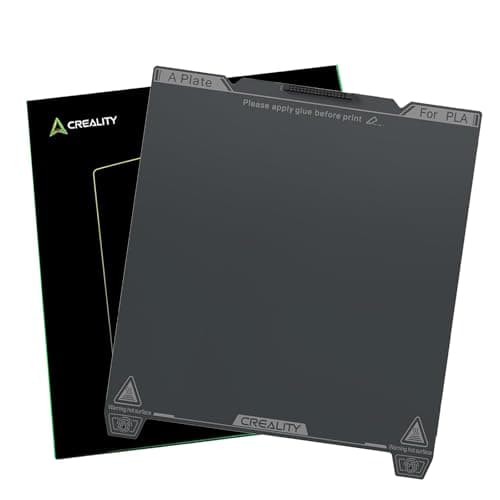
Textured PEI Spring Steel PlateGrips everything, releases everything, and does not bond to PETG. If you own one plate, own this one.Textured PEI spring steel
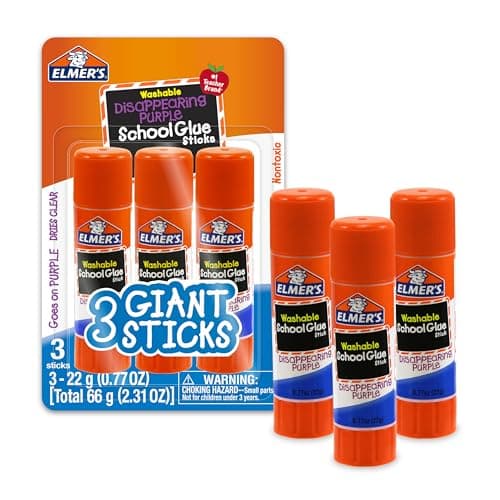
Disappearing Purple Glue StickA dollar of school glue between PETG and smooth PEI is the difference between a print and a ruined plate.Water-soluble release layer
Live prices verified October 17, 2026. Scores are our own fit rating for the stated use, not a measurement and not a customer rating.
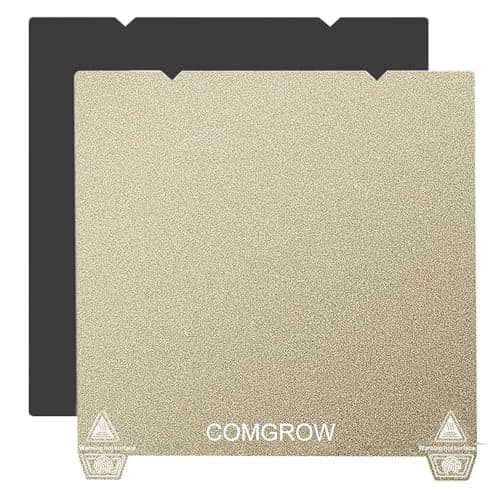
A textured 3D printer build surface with a first layer laid down.
Why PETG destroys smooth PEI
PETG and PEI bond chemically at printing temperatures. This is not strong adhesion — it is the two surfaces fusing. When you flex the plate to release the part, the weakest interface is not between part and plate, it is inside the PEI sheet, so a layer of the sheet comes away with the print.
The damage is permanent. The pitted area no longer releases correctly and the plate is progressively ruined. This is the single most expensive avoidable mistake in filament printing and it happens on the first PETG print for a lot of people.
Textured PEI: the default
The texture is a mechanical key. Plastic flows into the surface pattern and holds, and when the plate cools and flexes, it lets go. Because the mechanism is physical rather than chemical, it works across PLA, PETG, ABS, ASA and TPU without the bonding problem.
What you give up is the bottom finish: the part's underside carries the plate's texture. Plenty of people prefer that look, and for functional parts it is irrelevant.
Smooth PEI: for the finish
Smooth PEI produces a glass-like bottom surface that no textured plate can match. For display pieces where the underside is visible, it is worth owning.
It works excellently with PLA and ASA. With PETG it needs a release layer, every time, without exception. A moment of forgetting is a damaged plate.
Coated and specialty surfaces
PEX and similar coatings are formulated to release PETG cleanly without a chemical bond. If PETG is the majority of what you print, this is the plate that removes the whole problem class rather than managing it.
Garolite and other specialty surfaces exist for nylon, which sticks poorly to PEI. If you print nylon regularly that is worth investigating — see nylon.
Keeping a plate working
Wash with dish soap and warm water, regularly. Skin oil from handling is the number one cause of adhesion failure, and it builds up invisibly.
Isopropyl alcohol between washes, not instead of them. Alcohol removes some residues and smears others around.
Handle by the edges. Fingerprints in the middle of the plate become adhesion failures in the middle of the print.
Do not scrape with metal. A gouged PEI surface is damaged permanently. Flex the plate instead; that is what the spring steel is for.
Let it cool before removing the part. Most parts release themselves as the plate cools and contracts differentially.
When a plate is finished
When adhesion fails in specific spots after a proper wash. Even adhesion loss across the whole plate is usually contamination; patchy failure in the same places is surface damage, and that does not come back.
Spring steel plates are consumable. Budget for replacing one every so often rather than treating it as a permanent part of the printer — more on that in when to replace consumables.
Every pick, in detail
01
Textured PEI Spring Steel Plate
Generic / Creality
The default plate · 9.0/10 our fit score
The default surface. It grips PETG without bonding to it, which is the single most common adhesion problem people have.
Published specifications for Textured PEI Spring Steel Plate
Surface
Powder-coated textured PEI
Why it matters for PETG
Prusa: do not print PETG on smooth PEI, adhesion may be too strongPrusa Research
What it does well
Solves the PETG-welded-to-the-plate problem that ruins smooth PEI sheets
Flexible steel means parts pop off without a scraper
What it does not
The texture prints onto the bottom surface of every part
The coating wears where you print most; it is a consumable on a long timescale
+ − Why does PETG stick too well to my build plate?
Because PETG bonds chemically to smooth PEI rather than merely adhering to it. When you flex the plate, the failure happens inside the PEI sheet and a layer comes away with the print. Use a textured plate or a glue-stick release layer.
+ − Textured or smooth PEI?
Textured if you own one plate. It keys mechanically so it works across every common material without the PETG bonding problem. Smooth is worth owning as a second plate for glass-finish bottoms on PLA and ASA.
+ − How do I clean a PEI build plate?
Dish soap and warm water, regularly. Skin oil is the main cause of adhesion failure and alcohol alone does not remove it reliably. Handle the plate by its edges afterwards.
+ − When should I replace a build plate?
When adhesion fails in the same specific spots after a proper wash. Even loss across the whole plate is contamination; patchy failure in fixed locations is permanent surface damage.