Nylon makes the toughest parts a consumer printer can produce and it is ruined by moisture faster than any other common material. Every decision about nylon is downstream of that one fact.
How this page is funded. Buy links go to Amazon and we earn a commission on qualifying purchases at no extra cost to you. Commission never decides an order or a score, we accept no free products or sponsored placements, and every roundup names something to skip. Full disclosure.
The picks, ranked
The picks, ranked
#
Product
Best for
Score
Price
1
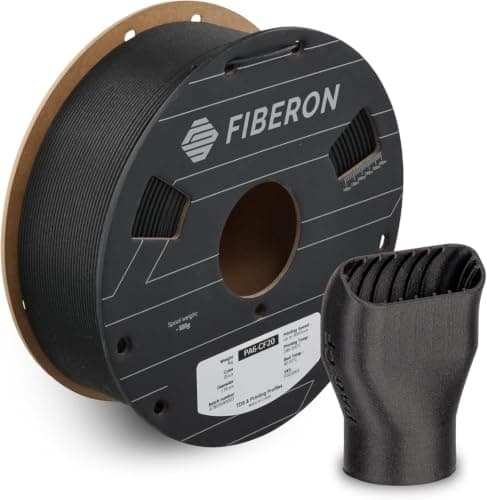
Polymaker Fiberon PA6-CF20A real engineering polymer with a real data sheet. Do not load it until the dryer and the hardened nozzle are in place.240-285 C nozzle, hardened nozzle required
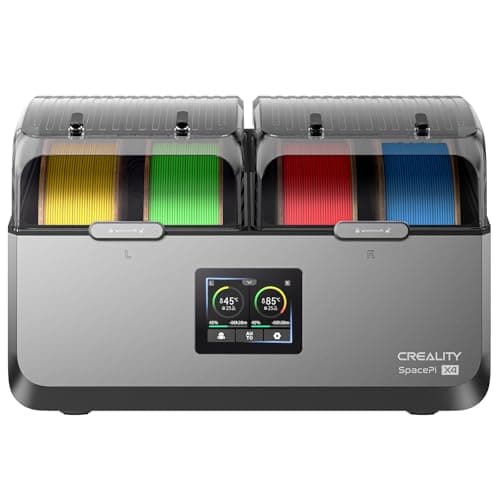
Creality Space Pi X4Most consumer dryers top out below what nylon's published drying figures ask for. This is the one number to check before buying.Higher maximum temperature
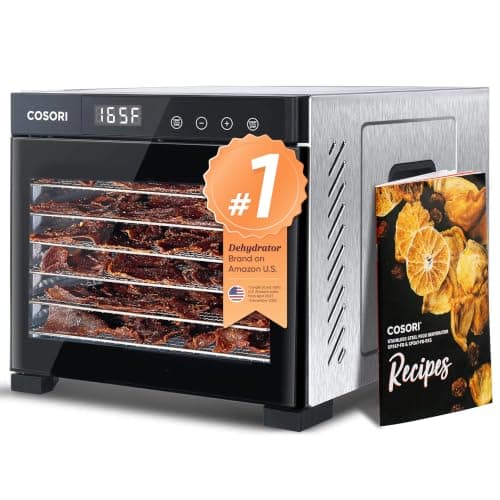
COSORI Food DehydratorCheap capacity if you are willing to lose the humidity display and pull the trays. Check its maximum temperature against the table below.Food dehydrator, no humidity readout
Published drying temperatures and times. Prusa Research and Overture disagree on several materials; both figures are shown rather than averaged. A dash means that manufacturer does not publish a figure for that material. Where they differ, the lower temperature for longer is the safer starting point. Figures from Prusa Research, Overture, Prusa Research, retrieved 2026-09-06.
Moisture is the entire story
Nylon is the most hygroscopic filament in common use. It absorbs water out of ordinary indoor air fast enough to matter within hours, not days. A spool left out overnight can print visibly worse the next morning than it did the previous evening.
Wet nylon does not merely look bad. The water flashes to steam in the melt zone, which produces bubbling, voids inside the extrusion and a part that is dramatically weaker than the datasheet suggests. A wet nylon part is frequently weaker than a dry PETG part, which makes the whole exercise pointless.
The published drying figures, and the trap
Prusa publish drying below 90 C for polyamide, with 90 C for six hours for the carbon-filled PA11 grade Prusa ResearchPrusa Research. Overture publish 95 C for seven hours Overture.
Read those numbers against the dryer you own. Many popular consumer filament dryers top out at 55 to 70 C, which is fine for PLA and PETG and simply cannot reach nylon's published figures. This is the most common way people buy the wrong dryer: the spool capacity is advertised prominently and the maximum temperature is in the specification list. Our dryer roundup sorts on that column deliberately.
Printing it
Prusa publish 240 to 285 C at the nozzle and 70 to 115 C at the bed for polyamide, with an enclosure recommended Prusa Research.
Print from a heated dry box if you can, not from a spool sitting on top of the printer. On a long print, a spool that started dry will not finish dry in an ordinary room.
Enclosure closed. Nylon warps, and it is stiff enough when it does that it pulls plates rather than releasing.
Adhesion needs a plan. Nylon does not stick to PEI well. A glue stick as a bonding layer, or a dedicated adhesive, is the usual answer.
Toughness under repeated load. Nylon parts survive flexing and impact cycles that crack PLA and eventually fatigue PETG. This is why it is the material for living hinges and for gears that run.
Wear resistance. Nylon slides against itself and against metal better than the alternatives, which is the property that matters in printed gears.
Temperature headroom. Well above PETG, though not in polycarbonate territory.
What it does not buy is stiffness. Unfilled nylon is noticeably more flexible than PLA. If you want a rigid part, that is what the carbon-filled grades are for — the fiber restores stiffness that the base polymer does not have.
Whether nylon is worth its requirements at all usually comes down to a comparison with the material most people already own — that one is on PETG versus nylon, and the wider ranking is on strongest filament.
Every pick, in detail
01
Polymaker Fiberon PA6-CF20
Polymaker
Genuine mechanical parts · 8.4/10 our fit score
A genuine engineering material with genuine engineering requirements: a hardened nozzle, an enclosure, and a dryer you actually use.
Published specifications for Polymaker Fiberon PA6-CF20
Dry at the point of printing and staying dry throughout. Prusa publish drying below 90 C for polyamide and Overture publish 95 C for seven hours. On long prints, feed from a heated dry box rather than a spool sitting in room air.
+ − Can my filament dryer handle nylon?
Check its maximum temperature against the published figures. Many consumer dryers top out at 55 to 70 C, which covers PLA and PETG but falls short of nylon's published drying temperatures.
+ − Is nylon stronger than PETG?
When dry, substantially tougher under repeated load and impact, and better at sliding wear. When wet, frequently worse than PETG. The moisture state matters more than the material choice.