Nylon wins on toughness, wear and fatigue, and it only wins once it is dry. PETG wins on everything you have to do to get a part out of the printer. The decision is not which is stronger; it is whether you own a dryer.
How this page is funded. Buy links go to Amazon and we earn a commission on qualifying purchases at no extra cost to you. Commission never decides an order or a score, we accept no free products or sponsored placements, and every roundup names something to skip. Full disclosure.
The picks, ranked
The picks, ranked
#
Product
Best for
Score
Price
1
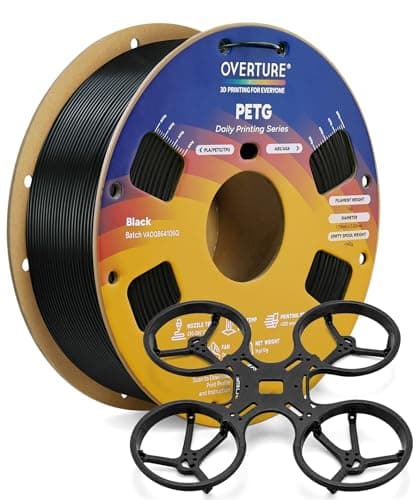
Overture PETGPrints on any machine in any room and shrugs off impacts. The material most people asking this question should buy.215-270 C nozzle, 70-90 C bed, no enclosure
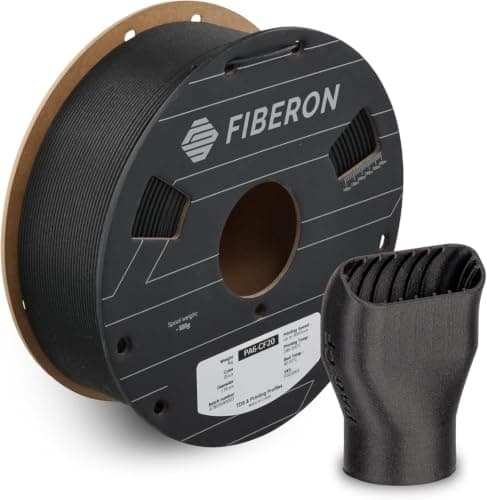
Polymaker Fiberon PA6-CF20If you are going to accept nylon's requirements, take the stiffness too. This is the combination that beats PETG on every mechanical axis.Carbon-filled PA6, hardened nozzle, enclosure
SUNLU Easy PA NylonTuned to print at the low end of the nylon window, which is what makes it survivable on a stock hotend. It still has to be dry.Nylon 6/66 copolymer, 240-285 C range
SUNLU PLA+People arrive here because a PLA part broke. If the part is not hot, not outdoors and not under sustained load, a design change may be cheaper than either material.Softens above about 60 CSkip this
Live prices verified September 13, 2026. Scores are our own fit rating for the stated use, not a measurement and not a customer rating.
A dark 3D printed bracket in an engineering filament.
The short answer
PETG, unless the part slides, flexes repeatedly, or takes impacts for a living — and unless you already own a dryer that reaches nylon's published figures. Nylon is the tougher polymer and it is also the one that punishes every shortcut in handling.
Where they actually differ
Printing window. PETG runs 215 to 270 C at the nozzle with a 70 to 90 C bed and no enclosure; polyamide runs 240 to 285 C with an enclosure recommended Prusa Research. That top figure rules out PTFE-lined hotends.
Moisture. PETG takes up water slowly and prints badly when it has. Nylon takes it up fast enough to ruin a print in an afternoon of open-air storage, which is why it is the one material on this site where storage is part of the material choice.
Wear and friction. Nylon slides against itself and against metal far better than PETG, which is why gears, bushings and living hinges belong to it — the case is on filament for gears.
Impact. Both are good; nylon is better when dry. Prusa list impact resistance as PETG's noted property and mechanical parts as polyamide's Prusa Research.
Heat. Nylon has more headroom, though neither is a high-temperature material in the polycarbonate sense. If heat is the actual problem, see heat-resistant filament.
Warping. Nylon shrinks more and lifts more, especially on large flat footprints Prusa Research. PETG is forgiving by comparison.
The drying requirement is the real comparison
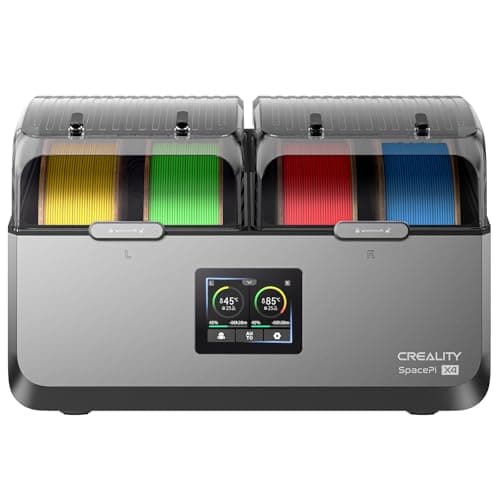
Prusa's guidance for polyamide sits below 90 C Prusa Research, and Overture publish 95 C for seven hours for their own nylon Overture. Read those numbers next to the dryer you own: plenty of consumer units stop at 70 C, which means they cannot dry nylon however long you leave it running.
PETG's figure is 55 C for 6 hours Prusa Research — inside what every dryer and most dehydrators reach. This single gap is why the honest recommendation for a first tough material is PETG, and why a dryer appears in the picks above as a prerequisite rather than an upsell. Which units reach what is on best filament dryer, and whether you need one at all is on is a filament dryer worth it.
When nylon is genuinely the answer
Sliding contact. Gears, bushings, cams, anything rubbing against another part. PETG galls and wears; nylon is what these components are made from in industry.
Repeated flexing. Living hinges, clips that open hundreds of times, snap fits that get reused. Nylon's fatigue behavior is in a different class.
Impact plus abrasion together. Tool parts, RC suspension arms, jigs that get knocked about — see filament for RC cars and drones.
Thin sections that must not snap. Where PETG would need to be thickened, nylon can stay slim.
When PETG is the answer, which is more often
Brackets, enclosures, mounts, organizers, outdoor parts in shade, anything handled, anything printed on an open machine, and anything you need finished this evening. PETG asks for no enclosure, no hardened nozzle and no dryer on day one, and it is stocked everywhere.
The two PETG-specific cautions are unchanged: cut part cooling before touching retraction, and keep it off bare smooth PEI, which Prusa warn it bonds to Prusa Research. Both are covered on PETG print settings and build plates.
The composite shortcut
Both materials exist in carbon-filled versions, and the filler changes the comparison in one useful way: it reduces warping. A carbon-filled nylon is dimensionally better behaved than plain nylon, which takes some of the sting out of the enclosure requirement. It also adds a hardened-nozzle requirement, since E3D document brass wearing measurably within a few hundred grams of filled filament E3D.
If you are weighing filled versions of both, the parallel comparison on the PETG side is PLA-CF versus PETG-CF, and the ranking across all the tough materials is on strongest filament.
Cost, including the parts that are not filament
Nylon costs more per kilogram than PETG, and that is the smaller half. The larger half is the dryer that makes it work, the hardened nozzle if you go filled, and the failed prints while you learn to fight warping. Budget the whole stack before deciding nylon is affordable — the method is on cost per print.
Which for what
Gears, hinges, bushings: nylon, dried properly.
Brackets, mounts, enclosures, tool holders: PETG.
Outdoor in direct sun: neither — ASA, per outdoor and UV.
Your first tough material: PETG, every time.
You already own a dryer that reaches 90 C: nylon is available to you in a way it is not to most people. Take it.
Every pick, in detail
01
Overture PETG
Overture
The PETG side · 8.6/10 our fit score
The PETG most people should start with: forgiving on temperature, widely stocked, and cheap enough to learn on.
Dry nylon is tougher, wears better and handles repeated flexing far better. Wet nylon is worse than PETG on all of it. Since nylon absorbs moisture from room air within hours, the practical answer depends on whether you own a dryer that reaches the published polyamide figures.
+ − Can I print nylon without an enclosure?
Prusa list an enclosure as recommended for polyamide. Small parts in a copolymer grade sometimes come out acceptably on an open machine; large flat ones warp. The carbon-filled grades warp less, at the cost of needing a hardened nozzle.
+ − What temperature does nylon need?
Prusa publish 240 to 285 C at the nozzle for polyamide with a 70 to 115 C bed. That upper figure rules out hotends with a PTFE liner in the heat break, which is a hardware decision rather than a settings one.
+ − Do I need to dry nylon every time?
Effectively yes, unless it has been sealed since its last drying. Nylon is the most hygroscopic common filament and a few hours on an open shelf is enough to show up in the print. Prusa's polyamide guidance sits below 90 C, which is above what many consumer dryers reach.