Design for the crash, because there will be one. RC parts want impact toughness and abrasion resistance; drone parts want the same toughness at the lowest mass you can get away with. Those are two different spools, and neither of them is plain PLA.
How this page is funded. Buy links go to Amazon and we earn a commission on qualifying purchases at no extra cost to you. Commission never decides an order or a score, we accept no free products or sponsored placements, and every roundup names something to skip. Full disclosure.
The picks, ranked
The picks, ranked
#
Product
Best for
Score
Price
1
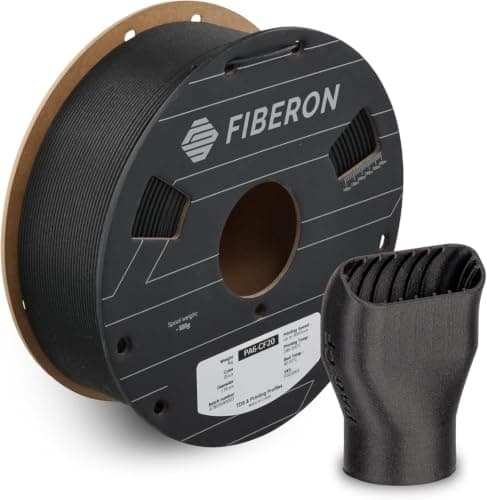
Polymaker Fiberon PA6-CF20Nylon's impact toughness with the stiffness a chassis needs. The requirements are real: dryer, hardened nozzle, enclosure — in that order.Carbon-filled PA6, hardened nozzle, enclosure
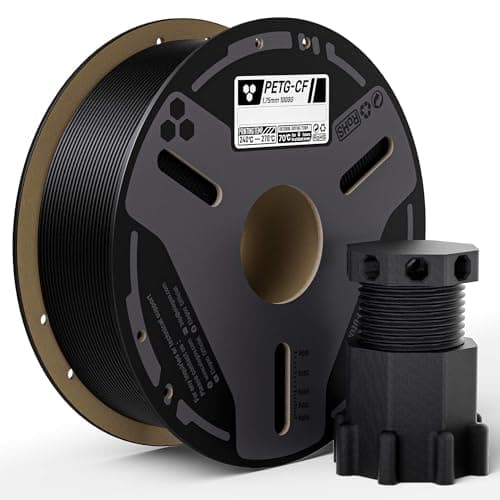
ELEGOO PETG-CFMost of the stiffness, most of the toughness, none of the enclosure. This is what to buy if you are not set up for nylon.PETG base, no enclosure, hardened nozzle
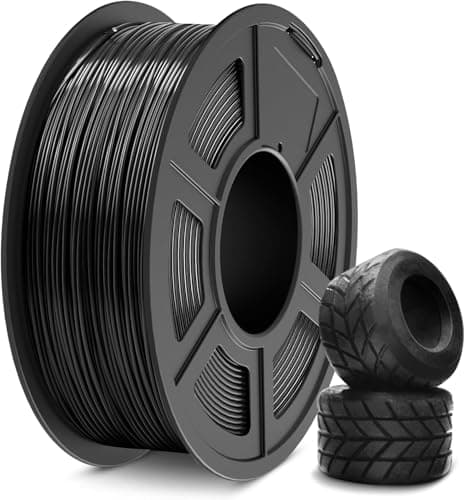
SUNLU TPU 95AThe only printable material that absorbs an impact instead of transmitting it. Slow to print and the difference between a broken mount and a bounce.Shore 95A, roughly 20-40 mm/s
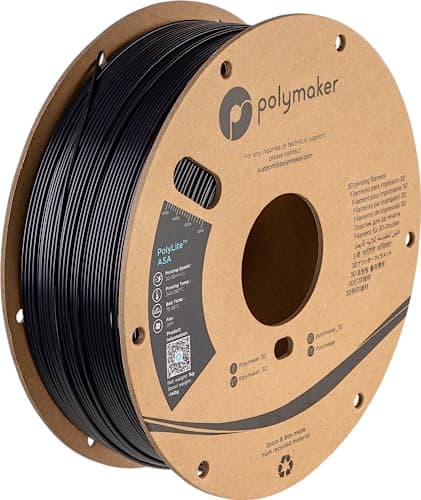
Polymaker PolyLite ASAAn RC body spends its life outdoors. ASA is what outdoor automotive trim is made from, and it holds its color instead of going chalky.UV and chemical resistance, enclosure recommended
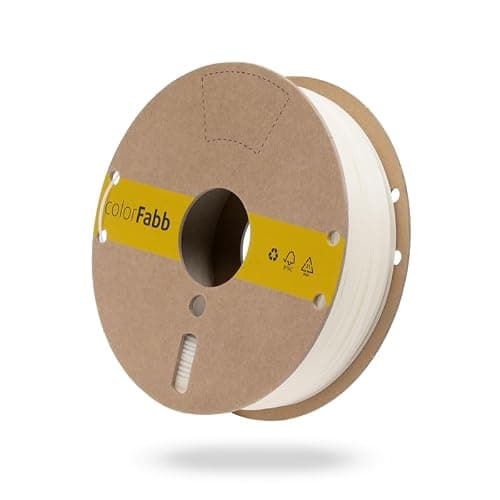
colorFabb LW-PLAPublished density figures rather than a lightweight claim. Every gram on a multirotor is flight time, and this is the only material here that attacks mass directly.0.403-0.476 g/cm3 fully foamed
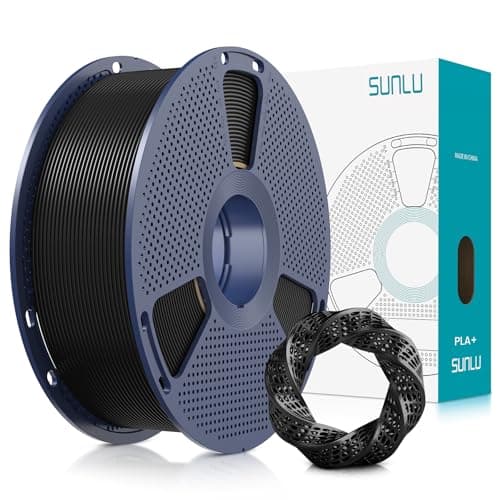
SUNLU PLA+Fine for checking fit on the bench. On the track it shatters on the first hard roll, and in a sunlit car it deforms while parked.Brittle on impact, softens above 60 CSkip this
Live prices verified September 13, 2026. Scores are our own fit rating for the stated use, not a measurement and not a customer rating.
A dark printed mechanical part on a workbench.
What RC and drone parts actually demand
These two hobbies share a failure mode — things hit the ground at speed — and differ on everything else. Five criteria decide the spool, and they are not in the same order for a basher truck and a racing quad.
Impact toughness. The part has to deform and recover rather than shatter. This rules out plain PLA before any other consideration.
Mass, if it flies. On a multirotor, grams are flight time and crash energy. On a ground vehicle, mass is mostly free and sometimes useful.
Abrasion and wear. Gravel, dirt and repeated assembly chew soft materials. Nylon is in a class of its own here.
Sunlight and heat. An RC body sits outdoors and then in a hot car. UV embrittlement and heat deformation are both real, and both happen to PLA first.
What your printer can actually do. The best material you cannot print is worse than the second-best one you can.
Chassis, arms and structural parts
Carbon-filled nylon is the strongest combination a consumer printer produces, and it is genuinely what serious RC printing uses. Prusa publish 240 to 285 C at the nozzle for polyamide with an enclosure recommended Prusa Research, and the carbon fill cuts the warping that makes plain nylon miserable on long flat parts.
The requirement nobody mentions in the forum post is drying. Nylon absorbs water from room air fast enough to matter within hours, and a damp nylon suspension arm is weaker than a dry PETG one. Prusa's polyamide guidance sits below 90 C Prusa Research, above what several consumer dryers reach — the ranking is on best filament dryer.
If that stack is more than you want to own, PETG-CF is the honest substitute: no enclosure, ordinary temperatures, most of the stiffness, and PETG's impact resistance underneath Prusa Research. The trade against PLA-CF is set out on PLA-CF versus PETG-CF, and the full toughness ranking is on strongest filament.
Tires, bumpers and the parts that take the hit
TPU is the only printable material that absorbs energy rather than passing it on. On an RC car that makes it the right answer for tires, bumpers, body posts and any mount you would rather bend than break.
Shore 95A is the grade to buy: stiff enough for a consumer extruder to push, soft enough to do the job. Prusa's flexible guidance puts printing at roughly 20 mm/s with 30 to 40 mm/s as the ceiling Prusa Research, so plan long prints — and a direct-drive extruder is effectively required, because soft filament buckles in a long Bowden tube. The details are on best TPU filament.
Infill and wall count change how a flexible part feels far more than a few points of Shore hardness do, so print a tire at two different infills before buying a softer spool.
Bodies, canopies and anything in the sun
An RC body lives outdoors and then in a car. That is the exact combination — ultraviolet light plus heat — that destroys PLA, and it is what ASA is formulated against: Prusa list UV and chemical resistance as its noted property Prusa Research.
ASA warps, and body shells are large and flat, which is the geometry warping punishes hardest Prusa Research. Split large shells, use a brim, and print in an enclosure. For a body you accept replacing each season, PETG is the easier answer — the trade is on PETG versus ASA.
Drones: mass is the whole argument
Everything above still applies, plus one constraint that dominates: every gram of frame is a gram of battery you are not carrying. This is the one use case where foaming lightweight PLA earns its price, and colorFabb publish the numbers rather than a claim — density falls from 1.210 to 1.430 g/cm3 unfoamed to 0.403 to 0.476 g/cm3 fully activated colorFabb.
Canopies, camera mounts and fairings: foaming lightweight PLA. These are aerodynamic parts, not structural ones, and they are exactly where mass is free to remove.
Arms and frame plates: not PLA of any kind. Use PETG-CF or a nylon composite; arms take the crash load.
TPU for feet, antenna mounts and camera isolation. Vibration isolation is a real performance gain on a flight controller, not just crash protection.
Remember foaming is temperature-controlled. The flow rate that worked at 200 C is wrong at 240 C, so calibrate before printing a part you plan to fly colorFabb.
Design choices that matter more than the spool
Orient for the crash. Printed parts are much weaker across layer boundaries. Lay parts so impact loads run along the layers, not across them.
Fillet everything. Sharp internal corners are crack-starters, and on an RC part the crack starts on the first landing.
Design sacrificial parts on purpose. A cheap PLA body post that snaps and saves a nylon chassis is good engineering, not a failure.
More walls, less infill. Perimeters carry impact load; infill mostly stops the walls buckling. Four walls at 20 percent beats two walls at 50 percent for this job.
What not to buy for this
Plain PLA or PLA+ for anything that moves. It is brittle on impact and Prusa state it softens above about 60 C Prusa Research — which a parked car reaches easily.
PLA-CF for structural parts. Carbon fill adds stiffness, not toughness, and stiffer brittle parts shatter more enthusiastically.
Silk or matte decorative PLA for load paths. The additives that create those finishes reduce layer adhesion.
Any composite through a brass nozzle. E3D document measurable wear within a few hundred grams E3D; fit hardened steel first.
Every pick, in detail
01
Polymaker Fiberon PA6-CF20
Polymaker
Suspension arms, chassis, anything structural · 8.8/10 our fit score
A genuine engineering material with genuine engineering requirements: a hardened nozzle, an enclosure, and a dryer you actually use.
Published specifications for Polymaker Fiberon PA6-CF20
The practical structural answer · 8.5/10 our fit score
The carbon composite to buy when the part has to survive being outdoors, warm or dropped. PETG's toughness with the stiffness and matte finish carbon fill adds.
UV resistance is the entire point and it is real — Prusa contrast it directly with ABS, whose outdoor parts "turn yellowish and more brittle over time"
Warps less and smells less than ABS at the same temperatures
What it does not
Needs an enclosure and a hot bed; this is not a material for an open printer in a cold room
More expensive per kilogram than the PETG that would do the job for many outdoor parts
Drone frames and anything airborne · 8.0/10 our fit score
The foaming PLA that publishes its own density figures, which is the only way to know what the weight saving actually is before you print a helmet in it.
Carbon-filled nylon for structural parts if you have a dryer and an enclosure, PETG-CF if you do not, TPU for tires and bumpers, and ASA for bodies that live in sunlight. Plain PLA is for bench prototypes only — it shatters on impact.
+ − What filament should I use for a drone frame?
Arms and frame plates in PETG-CF or a nylon composite, because they take the crash load. Canopies, mounts and fairings in foaming lightweight PLA, where colorFabb publish a fully foamed density of 0.403 to 0.476 g/cm3 against 1.210 to 1.430 unfoamed. TPU for feet and camera isolation.
+ − Is PLA OK for RC cars?
Only on the bench. It is brittle under impact and Prusa state it softens above about 60 C, which a parked car passes on a warm day. Use it to check fit, then reprint the real part in something tough.
+ − Do I need a hardened nozzle for RC parts?
If you print any carbon or glass filled filament, yes. E3D document measurable brass wear within a few hundred grams of filled filament, and a worn nozzle drifts your tolerances before anything looks wrong. Unfilled TPU and ASA are fine on brass.