Every price on this site comes from a live retail lookup or it does not appear at all. What we can give you here is the arithmetic — the method for working out what a print costs you, using the price you actually pay today.
How this page is funded. Buy links go to Amazon and we earn a commission on qualifying purchases at no extra cost to you. Commission never decides an order or a score, we accept no free products or sponsored placements, and every roundup names something to skip. Full disclosure.
The picks, ranked
The picks, ranked
#
Product
Best for
Score
Price
1
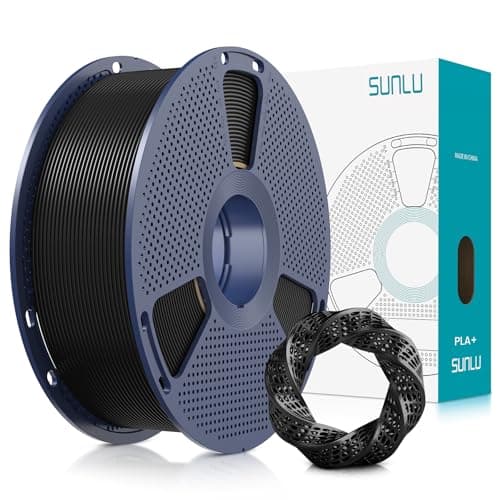
SUNLU PLA+Cheap enough to print freely and consistent enough not to waste spools on failures, which is what value actually means here.Toughened PLA+ grade
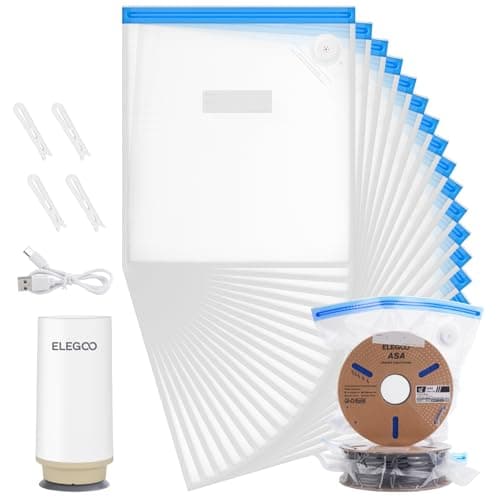
ELEGOO Filament Vacuum Storage BagsFailed prints are the largest cost in this hobby and wet filament is a leading cause. This costs less than one failure.Vacuum bags with valve
Live prices verified October 17, 2026. Scores are our own fit rating for the stated use, not a measurement and not a customer rating.
A partly used filament spool on a digital kitchen scale.
Why there are no dollar figures in this text
Filament prices move constantly and a number typed into an article is wrong within weeks. Every price on this site renders from a live retail lookup; where no verified price exists, the button reads “check price” rather than a figure we remembered.
So this hub gives you the arithmetic instead. Put today's actual price into the method below and you get an answer that is correct today, which a hardcoded number never would be.
Three costs, not one
Material. Grams used times price per gram. The number everyone thinks about, and usually the smallest of the three.
Electricity. Printer wattage times hours times your rate. Usually small, occasionally not on very long prints — the method is on cost per print, using your own rate from the published EIA table U.S. Energy Information Administration rather than a figure we invented.
Failure. The big one. A print that fails at hour 18 costs the material, the electricity and the 18 hours. This is where almost all the money in this hobby actually goes.
Why failures dominate
The difference between the cheapest and most expensive PLA on this site, per spool, is smaller than the cost of two failed long prints. That changes what “value” means: the cheapest filament is not the one with the lowest sticker price, it is the one that finishes.
It also reorders what to spend on. Vacuum bags and a hygrometer cost less than one failed spool and remove a whole category of failure — see storage. That is a better first purchase than upgrading filament brand.
Where you buy changes the answer
Delivered price, not shelf price, is what you actually pay. A spool that is cheap in a store and expensive shipped is two different products economically — which is most of what where to buy filament is about, and why house-brand filament gets a split verdict.
Bulk changes it again, and not always favorably: filament degrades in storage if you do not store it properly, so buying twelve spools you will use over two years means committing to storing them well. That trade is on buying in bulk.
Prices move constantly, so every figure on this site comes from a live retail lookup rather than an article written months ago. The durable observation is that budget and premium filament in the same material typically differ by a factor of two to three.
+ − What is the biggest cost in 3D printing?
Failed prints, not filament. A failure at hour 18 costs the material, the electricity and the time. That is why storage and calibration return more than upgrading filament brand does.
+ − Is expensive filament cheaper in the long run?
Only if it actually reduces your failure rate. On long expensive prints, consistency has real value. On two-hour brackets it does not, and the premium is money spent on documentation you will not read.