Usually yes, and the reason is specific: the budget brands worth buying publish a diameter tolerance and ship sealed, which is most of what a higher price buys. Here is how to check whether yours is one of them.
How this page is funded. Buy links go to Amazon and we earn a commission on qualifying purchases at no extra cost to you. Commission never decides an order or a score, we accept no free products or sponsored placements, and every roundup names something to skip. Full disclosure.
The picks, ranked
The picks, ranked
#
Product
Best for
Score
Price
1
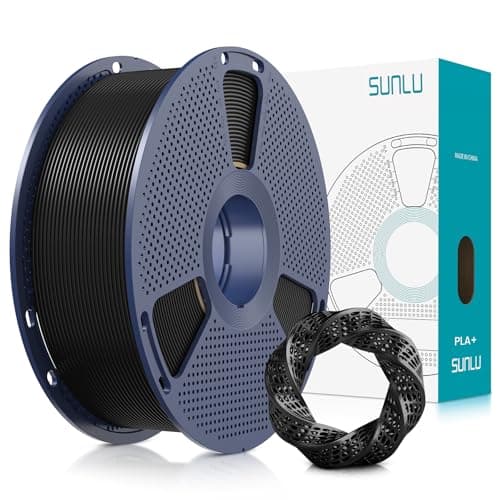
SUNLU PLA+The example that makes this question interesting. Cheap, sealed, tolerance published, and it prints like premium after one calibration.Published tolerance, PLA+ grade
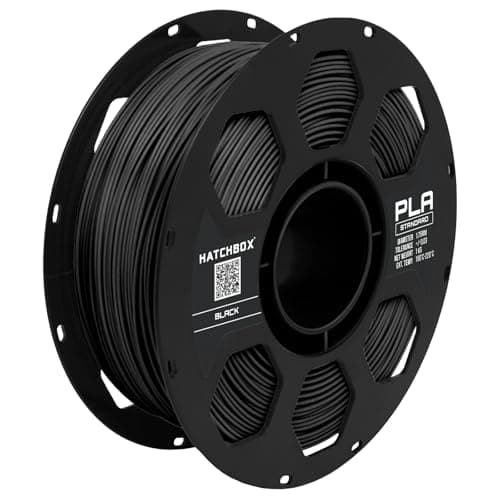
HATCHBOX PLANot cheap and not tight. The worst position on this axis is mid-price with budget specifications.Looser published tolerance, mid priceSkip this
Live prices verified October 16, 2026. Scores are our own fit rating for the stated use, not a measurement and not a customer rating.
A calculator and notebook on a desk.
How long a freshly dried spool stays print-ready, by the humidity of the room it sits in.
Ambient humidity
How long it stays dry
What that means in practice
Below 20% RH (sealed box with desiccant)
2-7 days
The published storage target for most filaments
About 55% RH (ordinary indoor air)
2-12 hours
Enough moisture to affect print quality, depending on how hygroscopic the type is
How long a freshly dried spool stays print-ready, by the humidity of the room it sits in. Both figures are Bambu Lab's, published as ranges across filament types rather than per material. Figures from Bambu Lab Wiki, retrieved 2026-09-01.
The arithmetic
Cost per finished part = spool cost divided by (parts per spool times success rate).
A spool that is 30 percent cheaper and drops your success rate from 90 percent to 70 percent costs more per finished part than the spool it undercut — and that is before counting the hours the failures took.
So the question is never whether a spool is cheap. It is whether it is cheap and reliable, and those are not in tension as often as people assume.
Cheap is not the same as bad
The budget brands worth buying share three properties, and each is checkable before you buy:
A published diameter tolerance. A brand willing to state +/- 0.02 mm is a brand accepting a standard. A brand that publishes nothing is asking you to absorb whatever variation happens.
Vacuum sealed with desiccant. The spool you open is the spool you were sold, rather than one that absorbed moisture in a warehouse.
Consistent availability. A brand you can reorder in three months is a brand whose profile is worth tuning.
A spool with all three at a low price is genuinely good value. A spool with none of them at a slightly lower price is where the false economy lives.
What the premium actually buys
Not a better polymer. Consistency, and documentation.
Tighter diameter control, so a profile tuned on one spool works on the next.
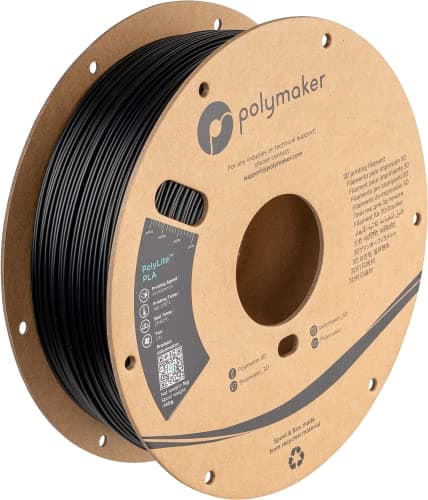
Published technical data, so you can design against a number — see Polymaker.
A per-spool measurement record, at the top end — see Prusament.
Each of those has a specific value that depends on your situation. On a two-hour bracket the value is near zero; on a 30-hour print it is real insurance.
Check this before upgrading
A large share of failures blamed on cheap filament are storage failures. Bambu Lab publish 2 to 12 hours of print-readiness for a dried spool sitting in ordinary indoor air Bambu Lab Wiki, so a budget spool left open on a shelf is being judged on a handicap that has nothing to do with its price.
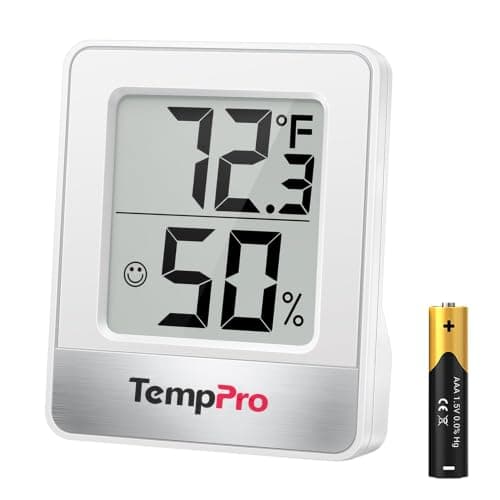
Buy a hygrometer and some vacuum bags first. If your success rate improves, the filament was never the problem — and you have spent far less than an upgrade would have cost. See how to store filament.
The honest answer
Print occasional parts one spool at a time? Buy cheap. Budget PLA+ from a brand that publishes a tolerance is the right default and there is very little argument against it.
Re-tuning between spools costs you time? Move up a tier. That is the specific problem consistency solves.
Running long, expensive prints? The premium is cheap relative to what a failure at hour 28 costs.
Selling prints or printing to a dimension? Buy the documentation. You need a number you can stand behind.
Every pick, in detail
01
SUNLU PLA+
SUNLU
Cheap and good · 9.1/10 our fit score
The cheapest filament we would load without flinching, and the reason most people never need to spend more.
Not necessarily. The budget brands worth buying publish a diameter tolerance, ship vacuum sealed, and stay in stock. A spool with none of those at a marginally lower price is where the false economy is.
+ − Will expensive filament fix my print quality?
Only if inconsistency was the cause. Check storage first — a dried spool in ordinary room air is compromised within hours, so a budget spool left open is being judged on a handicap unrelated to its price.
+ − What is the cheapest filament worth buying?
A budget PLA+ from a brand that publishes a diameter tolerance and ships vacuum sealed. Those two checkable properties separate cheap filament from bad filament.