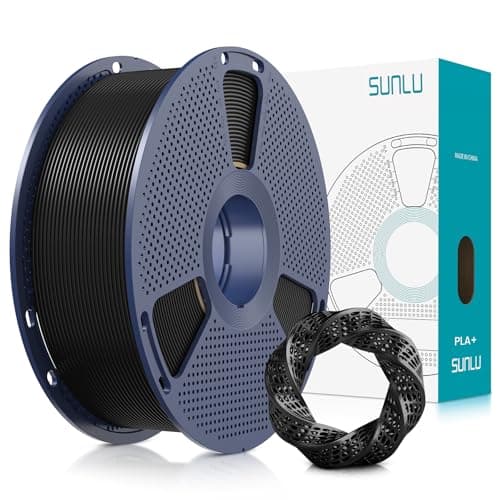
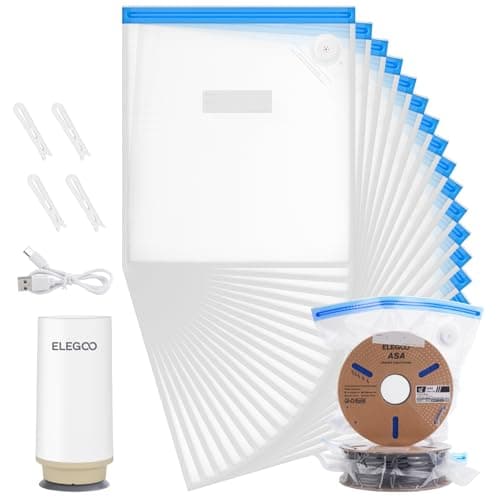
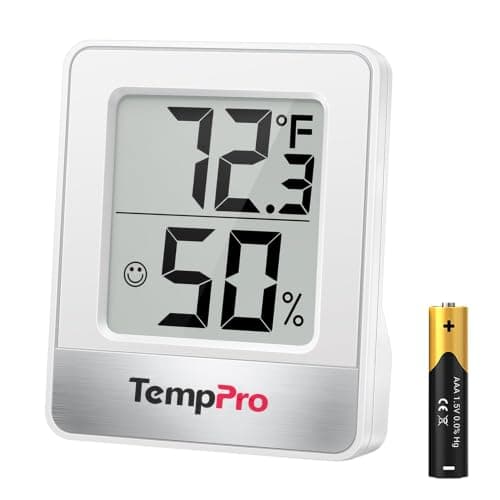
Three inputs give you a real number: grams from your slicer, your delivered filament price, and your own electricity rate. The third term is the one people leave out and it is the largest.
How this page is funded. Buy links go to Amazon and we earn a commission on qualifying purchases at no extra cost to you. Commission never decides an order or a score, we accept no free products or sponsored placements, and every roundup names something to skip. Full disclosure.
The picks, ranked
The picks, ranked
#
Product
Best for
Score
Price
1
Digital HygrometerThe failure term dominates the arithmetic, and wet filament is a leading cause. This is the cheapest way to attack it.Relative humidity readout
Live prices verified October 16, 2026. Scores are our own fit rating for the stated use, not a measurement and not a customer rating.
A calculator and notes on a workbench.
The three terms
Cost per successful print = (material + electricity) divided by the success rate.
That last division is what most calculators omit, and it is why their answers are optimistic. If one print in five fails, every successful print carries a quarter of a failed one.
Term one: material
Your slicer reports grams used for every print. Multiply by your delivered price per gram, which is your delivered spool price divided by the filament weight — not the gross weight including the reel. See price per kilogram for what to normalize.
Term two: electricity
Printer average power draw in kilowatts, times hours, times your rate per kilowatt-hour. Two of those three you can measure or read off the print.
For the rate, use your own bill. If you want a reference figure, the U.S. Energy Information Administration publishes average electricity prices by sector and state U.S. Energy Information Administration — look up yours rather than using an average, because regional variation is large enough to change the answer.
Average draw is well below the printer's rated maximum: the bed and hotend cycle rather than running continuously. A plug-in power meter measures it directly for a few dollars and removes the guesswork.
Term three: the success rate
Count your last twenty prints and how many finished usably. That fraction is the divisor. Most people are surprised by their own number, which is the point of counting rather than estimating.
Where to spend to lower the number
Attack the failure term first. It is the only one that can double the result. Dry filament, clean plate, calibrated first layer — all free or nearly so.
Then material. Fewer wider walls, infill capped around 40 percent, supports designed out.
Electricity last. It is genuinely small for most printing, and the main lever is print time, which the first two already shorten.
Long prints change the shape
On a 30-hour print, electricity stops being negligible and failure becomes very expensive. This is exactly where premium filament's consistency argument earns its price — the premium is small relative to losing 30 hours, and it is why a published per-spool record matters on long prints and not on short ones.
It is also where drying during the print matters for hygroscopic materials: a spool that starts dry does not stay dry in room air for 30 hours Bambu Lab Wiki. See dry boxes.
The term nobody prices
Your time. Slicing, monitoring, removing supports, sanding, and reprinting. If a part takes three attempts and an hour of finishing, the filament was never the expensive part — which is worth remembering before optimizing a spool price by a few percent.
Every pick, in detail
01
Digital Hygrometer
TempPro
Reducing the failure term · 8.8/10 our fit score
A few dollars of instrument that turns filament storage from a belief into a measurement. Everything else on this page is guesswork without one.
Add material cost (slicer grams times your delivered price per gram) to electricity (average kilowatts times hours times your rate), then divide by your success rate. The division is the term most calculators skip.
+ − How much electricity does a 3D printer use?
Well below its rated maximum, because the bed and hotend cycle rather than running continuously. A plug-in power meter measures your own printer directly, which beats any published average.
+ − Does electricity make 3D printing expensive?
Usually not, for prints of ordinary length. On very long prints it becomes a real term. Use your own rate rather than an average, because regional variation is large.