Price per kilogram is the standard comparison and it is incomplete on its own. Here is what to normalize for before comparing, and which differences are real.
How this page is funded. Buy links go to Amazon and we earn a commission on qualifying purchases at no extra cost to you. Commission never decides an order or a score, we accept no free products or sponsored placements, and every roundup names something to skip. Full disclosure.
The picks, ranked
The picks, ranked
#
Product
Best for
Score
Price
1
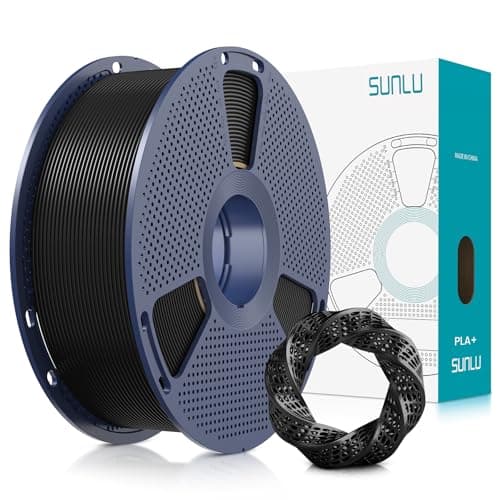
SUNLU PLA+The benchmark the rest of the PLA ledger is priced against.1 kg spool, PLA+ grade
Live prices verified October 17, 2026. Scores are our own fit rating for the stated use, not a measurement and not a customer rating.
A calculator and notebook on a desk.
Normalize before you compare
Three things make a headline price misleading, and all three are common.
Spool weight. 1 kg is standard but 750 g and 500 g spools are sold at prices that look competitive until you divide. Always compute price per kilogram yourself.
Delivered price. Shipping can exceed the price difference between two spools. A cheap spool with expensive shipping is an expensive spool.
Spool weight versus filament weight. Some listings quote gross weight including the reel. The reel is not filament.
The three tiers, and what separates them
Budget
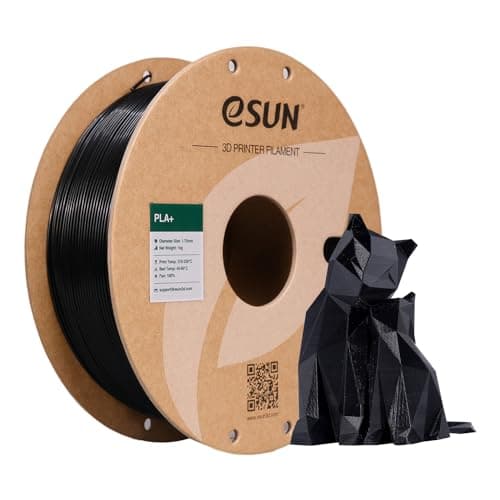
The cheapest filament worth loading. Publishes a diameter tolerance, ships vacuum sealed, prints well after one calibration session. This is where SUNLU and eSUN sit, and it is the right default for most printing.
Mid
Typically somewhat above budget. What you get is consistency between spools and, in Polymaker's case, published technical data sheets. Worth it when re-tuning between spools is costing you time.
Premium
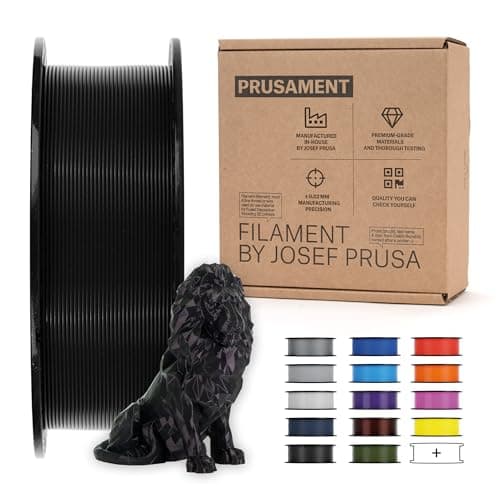
Typically a multiple of budget. Buys documentation: Prusament publishes a per-spool measurement record. Worth it in proportion to what a failed long print costs you, and not otherwise.
How materials compare
Roughly, cheapest first: PLA, then PETG a modest step above, then ABS and ASA, then TPU, then nylon, then carbon-filled composites, then polycarbonate. Resin is priced per liter rather than per kilogram and is generally more expensive per part — see filament versus resin.
The material step is usually smaller than people expect. The gap between budget PLA and budget PETG is rarely large enough to justify printing a part in the wrong material, which is worth knowing because plenty of people do exactly that.
Why per-kilogram is the wrong number alone
You do not buy kilograms, you buy finished parts. A spool that is 20 percent cheaper and fails one print in ten is more expensive than the spool it undercut.
The useful figure is cost per successful print, which folds in failure rate, electricity and time. That method is on cost per print, and the failure arithmetic is on is cheap filament worth it.
Tracking prices without obsessing
Buy a working stock, not a hoard. Filament absorbs moisture in storage and a bargain you cannot store properly is not a bargain — see buying in bulk.
Buy the color you need all at once. Batch color variation is real, and reordering the same color months later can produce a visible seam on a multi-spool print.
Watch delivered price, not sticker price. This is the single most common way people overpay while feeling thrifty.
Every pick, in detail
01
SUNLU PLA+
SUNLU
Best price per usable kilogram · 9.1/10 our fit score
The cheapest filament we would load without flinching, and the reason most people never need to spend more.
Normalize to price per kilogram of filament, delivered. Watch for 750 g and 500 g spools priced to look competitive, and for listings quoting gross weight including the reel.
+ − Is PETG much more expensive than PLA?
A modest step up, usually smaller than people expect. It is rarely large enough to justify printing a part in the wrong material to save money.
+ − Why do you not list filament prices in the text?
Because they would be wrong within weeks. Every price on this site renders from a live retail lookup, and where no verified price exists the button says so rather than showing a number we remembered.