Skip to content
Spool & Slice

Cost

Cheapest filament worth buying

There is a floor below which saving money costs money. These are the spools at the bottom of the range that still publish a tolerance and arrive sealed, which is where the floor sits.

How this page is funded. Buy links go to Amazon and we earn a commission on qualifying purchases at no extra cost to you. Commission never decides an order or a score, we accept no free products or sponsored placements, and every roundup names something to skip. Full disclosure.

The picks, ranked

The picks, ranked
#ProductBest forScorePrice
1
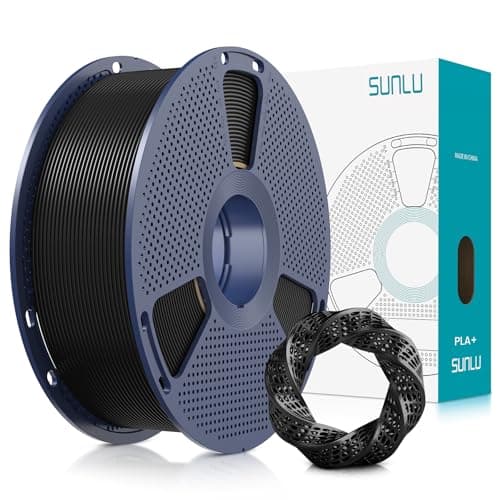
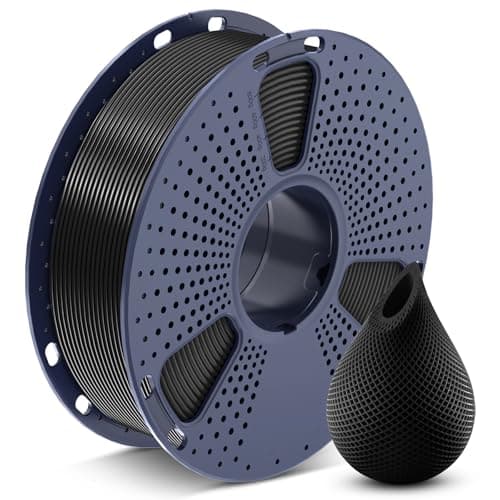
Spools of PLA filament stacked on a workshop shelf (illustrative photograph of the product type)SUNLU PLA+The floor, and a high one. Toughened grade, sealed, tolerance published.PLA+ grade, published tolerance
Cheapest genuinely good9.1/10Check price on Amazon#ad disclosure
2
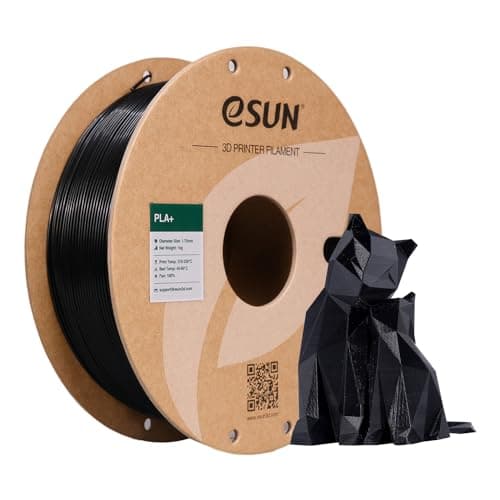
Spools of PLA filament stacked on a workshop shelf (illustrative photograph of the product type)eSUN PLA+Directly competing. Whichever is cheaper on the day is the right answer.PLA+ grade
The alternate cheapest8.4/10Check price on Amazon#ad disclosure
3
A partly used spool of translucent filament beside a 3D printer (illustrative photograph of the product type)SUNLU PETGThe cheapest PETG we would load. Budget one evening of retraction tuning into the price.Budget PETG
Cheapest PETG8.1/10Check price on Amazon#ad disclosure
4
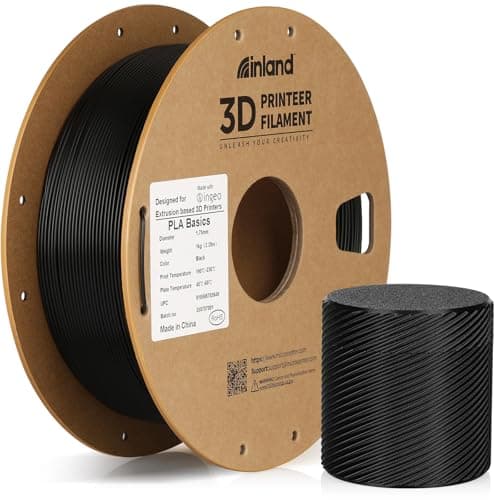
Spools of PLA filament stacked on a workshop shelf (illustrative photograph of the product type)Inland PLAGenuinely cheap at the shelf. Add shipping and the argument evaporates.House-brand budget PLA
Cheapest in a store7.4/10Check price on Amazon#ad disclosure
5
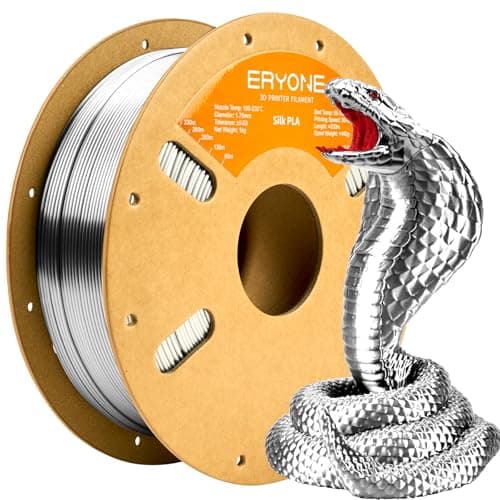
Spools of PLA filament stacked on a workshop shelf (illustrative photograph of the product type)ERYONE Silk PLAOften priced near budget PLA and it is a decorative material with worse layer adhesion. Cheap for the wrong reason.Silk finish, no published toleranceSkip this
A false economy4.5/10Check price on Amazon#ad disclosure

Live prices verified September 1, 2026. Scores are our own fit rating for the stated use, not a measurement and not a customer rating.

A laptop and delivered package on a desk
A laptop and delivered package on a desk.

Where the floor is

Two checkable properties separate cheap filament from bad filament, and both are visible before you buy.

  1. A published diameter tolerance. If the listing does not state one, the manufacturer is not committing to one.
  2. Vacuum sealed with desiccant. Especially for PETG, which absorbs enough moisture in a warehouse to matter on the first print.

Below that floor, the saving comes out of your success rate, and a failed print costs more than the difference — the arithmetic is on is cheap filament worth it.

The cheapest worth buying, by material

PLA

Budget PLA+ from SUNLU or eSUN. Toughened, sealed, tolerance published, and priced against plain PLA. There is essentially no argument for buying cheaper than this — see PLA brands.

PETG

SUNLU PETG. It needs more tuning than the premium spools and rewards it. The one caution is packaging: PETG punishes a marginal seal more than PLA does, so treat a new spool as suspect until the first print proves otherwise. See PETG brands.

TPU

Budget TPU is the cheapest way to find out whether your extruder can handle flexibles at all, which is a real question with a hardware answer — see TPU. If it works, upgrading later is easy; if it does not, you have learned it cheaply.

ABS, ASA and nylon

We would not buy the cheapest here. These materials are difficult enough that filament inconsistency compounds with printing difficulty, and a documented starting profile is worth real money when you are chasing a lifted corner.

The false economies

The genuinely cheapest way to print

It is not a spool. It is not failing.

Vacuum bags, indicating desiccant and a hygrometer cost less than one failed long print and remove a whole category of failure. Bambu Lab publish 2 to 12 hours of print-readiness for a dried spool in ordinary indoor air Bambu Lab Wiki, which means an unbagged spool is quietly costing you success rate whatever it cost to buy.

Storage first, then filament brand. That order returns more than any spool decision on this page.

Every pick, in detail

01

SUNLU PLA+

SUNLU

Cheapest genuinely good · 9.1/10 our fit score

Spools of PLA filament stacked on a workshop shelf (illustrative photograph of the product type)

Illustrative photo of the product type, not this exact item.

The cheapest filament we would load without flinching, and the reason most people never need to spend more.

Published specifications for SUNLU PLA+
Diameter1.75 mm, published tolerance +/- 0.02 mm
Spool weight1 kg
Nozzle185-235 C (PLA range) Prusa Research
Drying50 C / 7 h (PLA guidance) Overture

What it does well

  • Consistently the lowest cost per kilogram among brands that publish a tolerance figure
  • The PLA+ formulation is noticeably less brittle than plain PLA on thin parts
  • Stocked widely enough that a reorder rarely means a different formulation

What it does not

  • Color-to-color variation is real; a temperature that works for black may not work for white
  • "PLA+" is a marketing term, not a standard — nothing about it is defined across brands
02

eSUN PLA+

eSUN

The alternate cheapest · 8.4/10 our fit score

Spools of PLA filament stacked on a workshop shelf (illustrative photograph of the product type)

Illustrative photo of the product type, not this exact item.

The other half of the budget PLA+ duopoly. Tougher than plain PLA, and the one to buy when SUNLU is out of the color you want.

Published specifications for eSUN PLA+
Diameter1.75 mm, published tolerance +/- 0.03 mm
Spool weight1 kg
Nozzle185-235 C (PLA range) Prusa Research

What it does well

  • Good layer adhesion for a budget spool; parts break across layers less readily than plain PLA
  • Matte and standard finishes share a base formulation, so settings carry over between them

What it does not

  • Published tolerance is looser than SUNLU's or Overture's
  • Runs slightly hotter than most PLA — expect to add 5-10 C to your usual profile
03

SUNLU PETG

SUNLU

Cheapest PETG · 8.1/10 our fit score

A partly used spool of translucent filament beside a 3D printer (illustrative photograph of the product type)

Illustrative photo of the product type, not this exact item.

The cheapest PETG worth loading. Expect to spend an evening on retraction tuning and then forget about it.

Published specifications for SUNLU PETG
Diameter1.75 mm, published tolerance +/- 0.02 mm
Nozzle215-270 C (PETG range) Prusa Research

What it does well

  • Lowest cost per kilogram of the PETGs that publish a tolerance figure
  • Clear and translucent colors are genuinely clear, which is not true of every budget PETG

What it does not

  • Strings the most of the PETGs here at stock settings
  • Arrives wetter than the premium spools more often than it should — dry it before the first print
04

Inland PLA

Inland (Micro Center)

Cheapest in a store · 7.4/10 our fit score

Spools of PLA filament stacked on a workshop shelf (illustrative photograph of the product type)

Illustrative photo of the product type, not this exact item.

A rebadged budget spool that is excellent value in a Micro Center and unremarkable value anywhere else.

Published specifications for Inland PLA
Diameter1.75 mm, published tolerance +/- 0.03 mm
Spool weight1 kg
Nozzle185-235 C (PLA range) Prusa Research

What it does well

  • In-store pricing is frequently the lowest available anywhere for a 1 kg spool
  • Prints at ordinary PLA settings with no surprises

What it does not

  • The manufacturing source is not disclosed and has changed over time
  • Availability is tied to a physical retailer, so restocking a color is not guaranteed
05

ERYONE Silk PLA

ERYONESkip this

A false economy · 4.5/10 our fit score

Spools of PLA filament stacked on a workshop shelf (illustrative photograph of the product type)

Illustrative photo of the product type, not this exact item.

Buy it for the finish and nothing else. Silk PLA is a decorative material with worse layer adhesion than the plain version.

Published specifications for ERYONE Silk PLA
Diameter1.75 mm, published tolerance +/- 0.03 mm
FinishHigh-gloss silk
Nozzle185-235 C (PLA range) Prusa Research

What it does well

  • The gloss is genuine and survives at ordinary PLA speeds
  • Cheap enough to treat as a finish choice rather than an investment

What it does not

  • Layer adhesion is worse than plain PLA — do not use it for anything structural
  • The additives that create the sheen make it fussy about temperature; expect to tune per color

Common questions

What is the cheapest filament that still prints well?

Budget PLA+ from a brand that publishes a diameter tolerance and ships vacuum sealed. Those two properties are the floor, and the floor is high enough that premium tiers have to justify themselves.

Should I buy no-name filament?

We would not. Without a published tolerance you have no advance information about consistency, and the saving over a budget brand that does publish one is small.

Is cheap PETG a false economy?

Not if it is sealed properly. PETG punishes a marginal seal more than PLA does, so packaging matters more here — treat a new budget spool as suspect until the first print proves otherwise.
Sources

Scooter M. · Enthusiast

I'm Scooter, an enthusiast who's genuinely into this. I read the manuals, compile the published specs, and do the math. No lab coat.

About · How we choose · Last reviewed