Skip to content
Spool & Slice

PETG

Best PETG filament brands

Brand matters more in PETG than in PLA, and the reason is packaging. PETG absorbs water, so how a spool was sealed before you opened it changes how it prints on the first day.

How this page is funded. Buy links go to Amazon and we earn a commission on qualifying purchases at no extra cost to you. Commission never decides an order or a score, we accept no free products or sponsored placements, and every roundup names something to skip. Full disclosure.

The picks, ranked

The picks, ranked
#ProductBest forScorePrice
1
A partly used spool of translucent filament beside a 3D printer (illustrative photograph of the product type)Polymaker PolyLite PETGThe brand whose consistency shows up most clearly in PETG, because PETG is where inconsistency costs you an evening.Published data sheet
Least time spent tuning8.9/10Check price on Amazon#ad disclosure
2
A partly used spool of translucent filament beside a 3D printer (illustrative photograph of the product type)Overture PETGCheap, forgiving and always in stock. The right spool to make your PETG mistakes on.Wide forgiving temperature range
Learning PETG8.8/10Check price on Amazon#ad disclosure
3
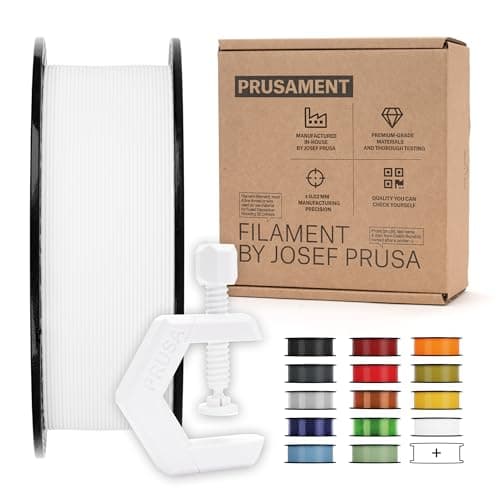
A partly used spool of translucent filament beside a 3D printer (illustrative photograph of the product type)Prusament PETGPrusa publish exact profile numbers, so a print that fails on this spool is telling you about your printer.Published profile temperatures
A known-good reference8.5/10Check price on Amazon#ad disclosure
4
A partly used spool of translucent filament beside a 3D printer (illustrative photograph of the product type)SUNLU PETGThe cheapest PETG we would load. Budget an evening of retraction tuning into the price.Budget PETG
Volume buying8.1/10Check price on Amazon#ad disclosure
5
A partly used spool of translucent filament beside a 3D printer (illustrative photograph of the product type)eSUN PETGNothing wrong with it and nothing that distinguishes it. If it is not the cheapest on the day, there is no argument for it.Budget PETGSkip this
Only when it is cheapest6.9/10Check price on Amazon#ad disclosure

Live prices verified September 1, 2026. Scores are our own fit rating for the stated use, not a measurement and not a customer rating.

Filament spools in several colors on a shelf
Filament spools in several colors on a shelf.

Why packaging matters more here

In PLA, a spool that arrived slightly damp is a minor inconvenience. In PETG it is the difference between a clean first print and an evening spent concluding your retraction settings are broken when they are fine.

So the first question to ask about a PETG brand is not what the polymer is. It is whether the spool arrives vacuum sealed with a desiccant pack that has not already turned. Every brand on this list does seal, which is why they are on it — but seal quality varies, and a spool that has been sitting in a warehouse for a year behind a marginal seal is a spool you will want to dry before the first print.

Polymaker: the consistency case is strongest here

Polymaker's argument in PLA is that the next spool behaves like this one. In PETG that argument is worth substantially more, because the tuning you would have to redo is longer. Retraction settings for PETG are more sensitive than for PLA, and a spool that flows slightly differently can put strings back into a profile that was clean yesterday.

Polymaker also publish real technical data sheets per grade, so if you need a number to design against, it exists. That is rarer in PETG than it should be.

Overture: the right place to learn

Overture PETG's virtue is a forgiving temperature response. It prints acceptably across a wide band, which matters when you are still working out what your printer wants. It is also cheap and consistently stocked, so the cost of a wasted spool while learning is low.

If you have never printed PETG, this is the spool to start on, and the settings page is the sequence to run.

Prusament: the diagnostic spool

Prusa publish exact profile temperatures for Prusament PETG, which is not true of most filament. That has a specific practical value: when a print fails, you can eliminate the filament as a variable. Keeping one reference spool for exactly this purpose is a habit worth having even if you print budget PETG day to day.

The budget pair

SUNLU and eSUN PETG occupy the same position as their PLA+ products do: near-equivalent, competing on price, both fine. The difference is that PETG rewards packaging quality more, so the case for buying the cheapest is slightly weaker than it is in PLA. If a budget PETG arrives dry and you tune it once, it will serve. If it arrives damp, the money you saved goes into drying time.

We put eSUN PETG in the skip row not because it is poor but because we could not identify a buyer for whom it is the best answer at anything other than the lowest price on a given day — and at that point you are buying a number, not a brand.

Every pick, in detail

01

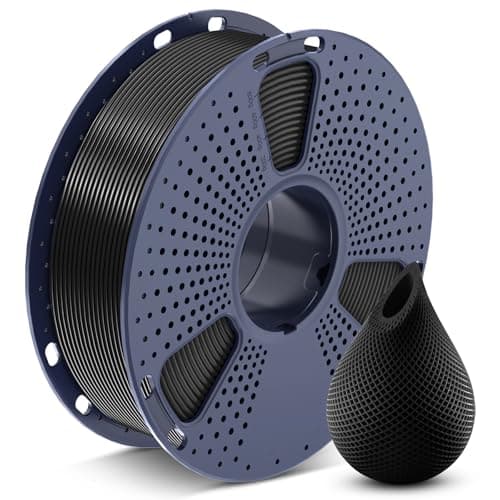
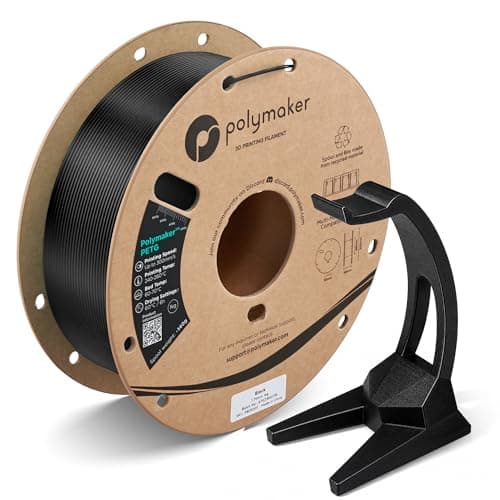
Polymaker PolyLite PETG

Polymaker

Least time spent tuning · 8.9/10 our fit score

A partly used spool of translucent filament beside a 3D printer (illustrative photograph of the product type)

Illustrative photo of the product type, not this exact item.

The spool to buy when stringing is what is costing you time. Consistency is what the premium buys.

Published specifications for Polymaker PolyLite PETG
Diameter1.75 mm, published tolerance +/- 0.02 mm
Nozzle215-270 C (PETG range) Prusa Research
Bed70-90 C Prusa Research

What it does well

  • Published technical data sheet with mechanical figures, which is rare in this price band
  • Noticeably cleaner travel moves than budget PETG at the same retraction settings

What it does not

  • Meaningfully more expensive per kilogram than Overture or SUNLU PETG
  • Same fundamental limits as any PETG: poor bridging, difficult supports
02

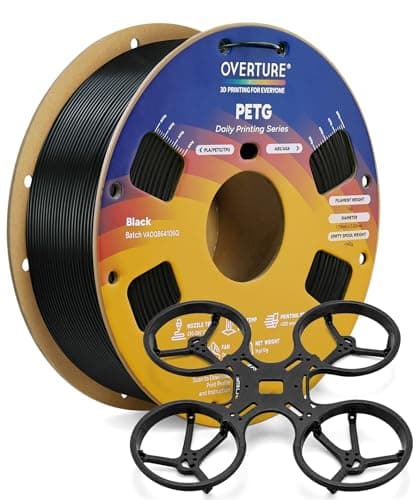
Overture PETG

Overture

Learning PETG · 8.8/10 our fit score

A partly used spool of translucent filament beside a 3D printer (illustrative photograph of the product type)

Illustrative photo of the product type, not this exact item.

The PETG most people should start with: forgiving on temperature, widely stocked, and cheap enough to learn on.

Published specifications for Overture PETG
Diameter1.75 mm, published tolerance +/- 0.02 mm
Nozzle215-270 C (PETG range) Prusa Research
Bed70-90 C Prusa Research
Drying65 C / 7 h Overture

What it does well

  • Overture publish an explicit drying temperature and time for their own PETG
  • Tolerant of a wide temperature window, which matters because PETG punishes a bad guess with stringing

What it does not

  • Strings more than the premium spools at the same settings
  • Bonds hard to smooth PEI — Prusa's PETG page says "Do not print on the smooth PEI sheet as the adhesion may be too strong"
03

Prusament PETG

Prusa Research

A known-good reference · 8.5/10 our fit score

A partly used spool of translucent filament beside a 3D printer (illustrative photograph of the product type)

Illustrative photo of the product type, not this exact item.

The reference PETG. Prusa publish exact profile temperatures for it, which makes it the easiest spool to diagnose against when something goes wrong.

Published specifications for Prusament PETG
Diameter1.75 mm, published tolerance +/- 0.02 mm
Nozzle (Prusa profile)230 C first layer, 240 C after Prusa Research
Bed (Prusa profile)85 C first layer, 90 C after Prusa Research
Service temperatureExterior use below 80 C Prusa Research

What it does well

  • Per-spool measured batch data, published and scannable
  • Prusa give exact first-layer and subsequent-layer temperatures — a real starting point rather than a range

What it does not

  • Roughly double the price per kilogram of budget PETG
  • Prusa themselves warn it "bonds strongly to the print surface" — a powder-coated sheet is effectively mandatory
04

SUNLU PETG

SUNLU

Volume buying · 8.1/10 our fit score

A partly used spool of translucent filament beside a 3D printer (illustrative photograph of the product type)

Illustrative photo of the product type, not this exact item.

The cheapest PETG worth loading. Expect to spend an evening on retraction tuning and then forget about it.

Published specifications for SUNLU PETG
Diameter1.75 mm, published tolerance +/- 0.02 mm
Nozzle215-270 C (PETG range) Prusa Research

What it does well

  • Lowest cost per kilogram of the PETGs that publish a tolerance figure
  • Clear and translucent colors are genuinely clear, which is not true of every budget PETG

What it does not

  • Strings the most of the PETGs here at stock settings
  • Arrives wetter than the premium spools more often than it should — dry it before the first print
05

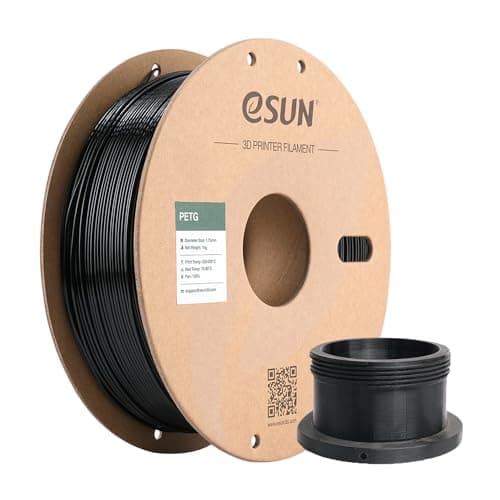
eSUN PETG

eSUNSkip this

Only when it is cheapest · 6.9/10 our fit score

A partly used spool of translucent filament beside a 3D printer (illustrative photograph of the product type)

Illustrative photo of the product type, not this exact item.

A competent budget PETG that is usually a dollar or two behind SUNLU and occasionally ahead of it. Buy on price.

Published specifications for eSUN PETG
Diameter1.75 mm, published tolerance +/- 0.03 mm
Nozzle215-270 C (PETG range) Prusa Research

What it does well

  • Reliable winding and consistent spool weight
  • Solid opaque colors print cleanly at stock PETG profiles

What it does not

  • Looser published tolerance than Overture, SUNLU or Polymaker
  • Translucent colors are noticeably cloudier than the competition

Common questions

Does PETG brand actually matter?

More than in PLA, mostly because of packaging. PETG absorbs water, so how well a spool was sealed before you opened it affects the first print. Published temperatures and consistency matter too, because PETG needs more tuning than PLA.

Should I dry a brand-new PETG spool?

If it strings unusually on the first print, yes. Prusa publish 55 C for six hours for PETG and Overture publish 65 C for seven. A hygrometer in your storage box tells you whether it is worth the time before you spend it.
Sources

Scooter M. · Enthusiast

I'm Scooter, an enthusiast who's genuinely into this. I read the manuals, compile the published specs, and do the math. No lab coat.

About · How we choose · Last reviewed