The case for premium PETG is not that it prints better on any single print. It is that the next spool prints the same as this one, and in PETG the cost of that not being true is an evening of retraction tuning.
How this page is funded. Buy links go to Amazon and we earn a commission on qualifying purchases at no extra cost to you. Commission never decides an order or a score, we accept no free products or sponsored placements, and every roundup names something to skip. Full disclosure.
The picks, ranked
The picks, ranked
#
Product
Best for
Score
Price
1
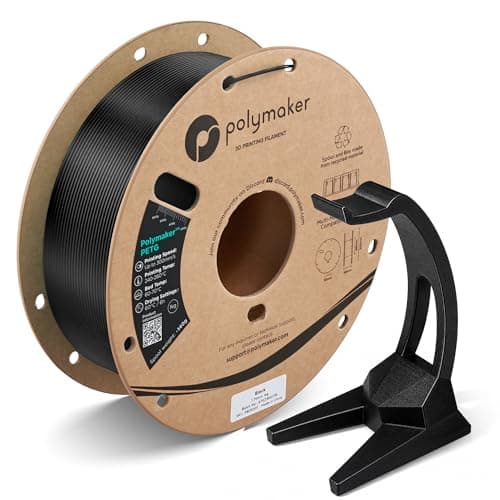
Polymaker PolyLite PETGThe spool to buy when your PETG problem is variation rather than technique.Published data sheet per grade
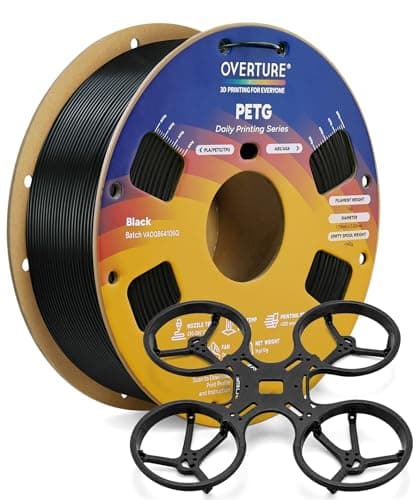
Overture PETGCheaper and more forgiving of temperature error. Buy it if you are still learning, or if you tune every spool anyway.215-270 C nozzle, forgiving
Live prices verified October 16, 2026. Scores are our own fit rating for the stated use, not a measurement and not a customer rating.
A translucent filament spool next to a printed part.
Why consistency is worth more in PETG
In PLA, an inconsistent spool costs you a temperature tower. In PETG it costs you a temperature tower plus retraction tuning plus, if you get it wrong, a print full of strings you have to clean by hand. Retraction in PETG is more sensitive than in PLA because the material stays viscous across a wider band, so small changes in flow behavior show up on the part.
That is the whole premium argument, and it is much stronger here than it is one hub over. If you print PETG regularly and you have ever re-tuned a profile that used to work, this is the product that addresses it.
The data sheet
Polymaker publish technical data sheets per grade rather than a marketing range. That is unusual at this price and it matters disproportionately in PETG, because PETG is often chosen for functional parts where a designer wants an actual number rather than an impression.
It is also why Polymaker grades appear as the reference spool across this site: when we need to reason from a published figure rather than a vibe, there is usually one available.
How it prints
Inside the standard PETG window of 215 to 270 C at the nozzle and 70 to 90 C at the bed Prusa Research. It is slightly less forgiving of a wrong temperature than Overture, in the way that tightly controlled materials often are — the sweet spot is narrower and better. Run the tower.
Drying
Same as all PETG: it absorbs water and wet PETG strings regardless of brand. Prusa publish 55 C for six hours Prusa Research. Good packaging delays the problem; it does not remove it, and a spool left on an open shelf for a month is a spool worth drying. Our storage guide covers keeping it dry in the first place.
Who should not buy it
Anyone who tunes every spool anyway. If your workflow already includes a temperature tower and a flow test for each new spool, you are already absorbing the variation manually and the premium buys you nothing you are not already doing for free.
Every pick, in detail
01
Polymaker PolyLite PETG
Polymaker
Consistent results across spools · 8.9/10 our fit score
The spool to buy when stringing is what is costing you time. Consistency is what the premium buys.
Published specifications for Polymaker PolyLite PETG
If your problem is re-tuning between spools, yes. If you tune every spool as a matter of course, no — you are already paying for that consistency with your own time and buying it twice.
+ − Does Polymaker PETG string less?
Once tuned, all good PETG strings a similar small amount. The difference is how often you have to re-tune to stay at that point, which is what the consistency is for.