One material needs no enclosure and survives a season outdoors. The other needs an enclosure and survives years of sunlight. That single sentence resolves most of this comparison before any other property is considered.
How this page is funded. Buy links go to Amazon and we earn a commission on qualifying purchases at no extra cost to you. Commission never decides an order or a score, we accept no free products or sponsored placements, and every roundup names something to skip. Full disclosure.
The picks, ranked
The picks, ranked
#
Product
Best for
Score
Price
1
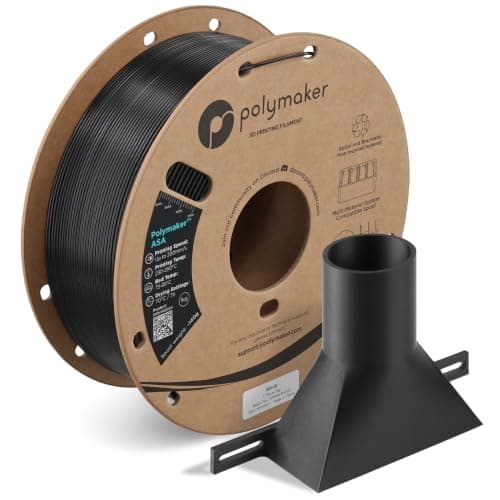
Polymaker PolyLite ASAThe default ASA on this site. Buy it when the part lives in sunlight and you have somewhere still and warm to print it.220-275 C nozzle, enclosure recommended
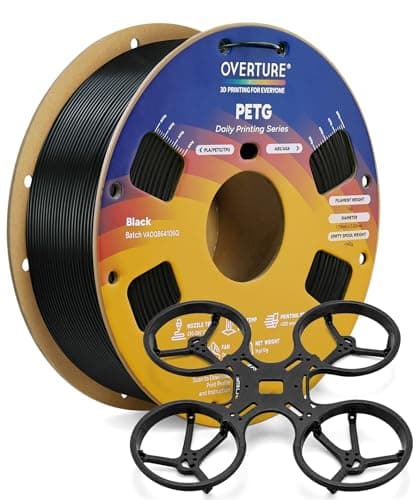
Overture PETGPrints on any machine in any room. For a shaded or replaceable outdoor part it is the sensible answer, and indoors it is not close.215-270 C nozzle, 70-90 C bed, no enclosure
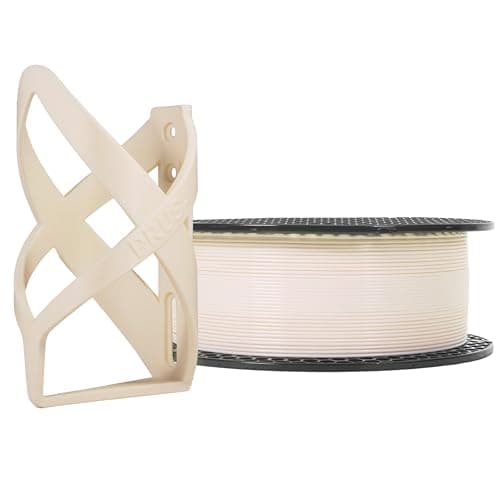
Prusament ASAASA warps, and a documented starting profile is worth real money when a large flat part keeps lifting a corner.Published profile, 90-110 C bed
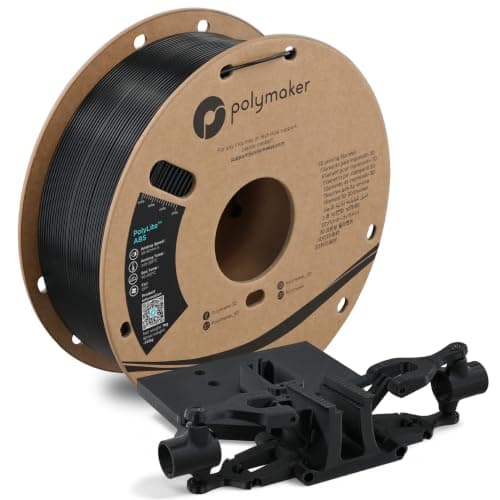
Polymaker PolyLite ABSABS asks for the same enclosure ASA does and goes chalky in sunlight. If you are already enclosed, print ASA instead.230-255 C, enclosure recommendedSkip this
Published printing parameters by material, from Prusa Research's filament material guide. Ranges are the manufacturer's published envelopes, not a recommendation for your specific spool — every brand publishes its own narrower window inside these. Figures from Prusa Research, retrieved 2026-09-01.
The short answer
Print PETG unless the part will live in direct sunlight for more than a season. Then print ASA, and only if you have an enclosure. That is the whole decision for most people, and everything below is the reasoning and the exceptions.
The two materials are not competing for the same job as often as the comparison implies. Prusa list PETG's noted property as impact resistance and ASA's as UV and chemical resistance Prusa Research. Those are different problems, and knowing which one you have answers the question.
Where they actually differ
Enclosure. Prusa recommend one for ASA and do not for PETG Prusa Research. This is the single largest practical difference and it is a hardware requirement, not a preference.
Ultraviolet light. ASA is formulated for it; it is what outdoor automotive trim is made from. PETG degrades in prolonged sun — fine for a season in the shade, not for years on a south-facing wall.
Bed temperature. PETG runs at 70 to 90 C, ASA at 90 to 110 C Prusa Research. Some older printers cannot reach the top of the ASA range at all, which settles the argument for them.
Warping. ASA contracts as it cools and lifts large flat parts off the bed Prusa Research. PETG is far more forgiving, and on a big footprint that difference is hours of your life.
Smell and ventilation. ASA is a styrene-based material with the smell that implies, and it wants both an enclosure and a ventilated room. PETG is essentially odorless.
Drying. Prusa publish 55 C for 6 hours for PETG and 80 C for 4 hours for ASA Prusa Research. The ASA figure is above what some consumer dryers reach, which is a purchase decision hiding inside a material decision.
Bed surface. Prusa warn against printing PETG on smooth PEI, where it bonds hard enough to damage the sheet Prusa Research, and recommend smooth or powder-coated PEI with a glue stick for ASA Prusa Research. Two different plates, or one plate and a glue stick.
The enclosure is the real decision
If you do not have an enclosure, this comparison is already over. ASA printed on an open frame warps, splits between layers on tall parts, and fills the room with styrene smell. None of that is a filament quality problem and no brand of ASA fixes it.
An enclosure does not have to be expensive — a tent-style cover or a purpose-built box both work — but it does have to exist before the spool arrives. If you are printing outdoor parts and you do not want to enclose the printer, PETG for a season with a plan to reprint is a perfectly respectable engineering answer, and it is the one we would give most people.
Outdoors, which is where ASA earns it
Sunlight destroys plastics in two ways at once: ultraviolet light breaks polymer chains at the surface, and heat softens the part while it happens. ASA is formulated against the first and tolerates the second. PETG does neither especially well, though it is far ahead of PLA, which fails at both immediately.
The practical rule is exposure time. A part that spends its life in shade, under an eave or inside a housing can be PETG. A part in unshaded sun — a bracket on a fence, a mount on a roof, anything on a car exterior — is ASA. The full treatment is on best filament for outdoor use and best ASA filament.
Strength, honestly
Neither material is straightforwardly stronger than the other, and anyone who tells you otherwise is quoting one number from one test. What the manufacturers publish is a difference in character: Prusa note PETG for impact resistance and ASA for UV and chemical resistance Prusa Research.
In practice, a PETG part tends to bend and survive where an ASA part is stiffer and more inclined to crack, and an ASA part holds its properties for years outdoors where a PETG part slowly gets brittle. For a part that takes impacts indoors, PETG. For a part that takes weather, ASA. Print orientation matters more than either choice, since both fail along layer boundaries first.
Cost
ASA costs more per kilogram than PETG from the same brand, and that is the smaller half of the difference. The larger half is failed prints: a warped ASA part halfway through a long print costs the filament, the electricity and the day. Budget for a few of those while you find the bed temperature and brim settings your printer wants.
The arithmetic for both sides — filament, electricity and failure rate — is on cost per print.
UV resistance is the entire point and it is real — Prusa contrast it directly with ABS, whose outdoor parts "turn yellowish and more brittle over time"
Warps less and smells less than ABS at the same temperatures
What it does not
Needs an enclosure and a hot bed; this is not a material for an open printer in a cold room
More expensive per kilogram than the PETG that would do the job for many outdoor parts
Outdoors, yes: ASA is formulated for UV and chemical resistance and PETG is not. Everywhere else PETG is the more practical material, because Prusa recommend an enclosure for ASA and none for PETG, and because ASA warps on large flat parts.
+ − Can I print ASA without an enclosure?
Small parts sometimes survive it. Large flat ones warp, tall ones split between layers, and the room fills with styrene smell. Prusa list an enclosure as recommended for ASA, and treating that as optional is the most common reason people conclude ASA is bad filament.
+ − How long does PETG last outdoors?
A season in shade is a reasonable expectation; years in direct sun is not. Ultraviolet exposure makes it progressively more brittle, so the failure is a part that snaps rather than one that sags. If the part must last outdoors, use ASA.
+ − Do PETG and ASA need the same build plate?
No, and this is a common mistake. Prusa warn against printing PETG on smooth PEI because it bonds hard enough to damage the sheet, and recommend smooth or powder-coated PEI with a glue stick for ASA. Textured PEI for PETG, or a glue stick as a release layer.