Polypropylene fails on the build plate, not at the nozzle. PP bonds to almost nothing except itself, so the adhesive or surface matters more than the spool, and buying the spool first is how most PP projects end. Solve adhesion, then pick the filament.
How this page is funded. Buy links go to Amazon and we earn a commission on qualifying purchases at no extra cost to you. Commission never decides an order or a score, we accept no free products or sponsored placements, and every roundup names something to skip. Full disclosure.
The picks, ranked
The picks, ranked
#
Product
Best for
Score
Price
1
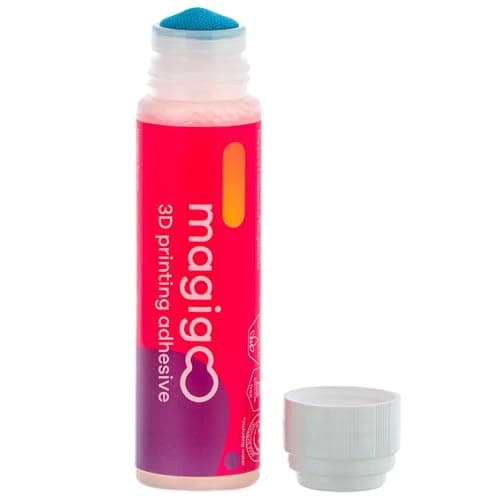
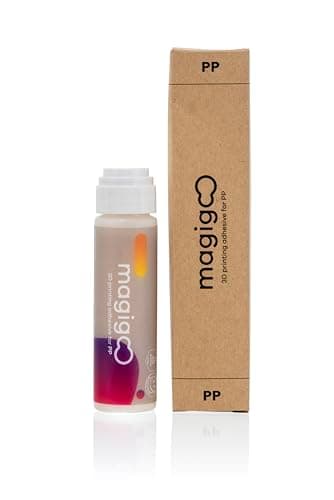
Magigoo Pro PPPrusa name Magigoo PP on glass as one of the surfaces that works for PP. Nothing else on this page matters until the first layer stays down.PP-specific adhesive, grips hot and releases cold
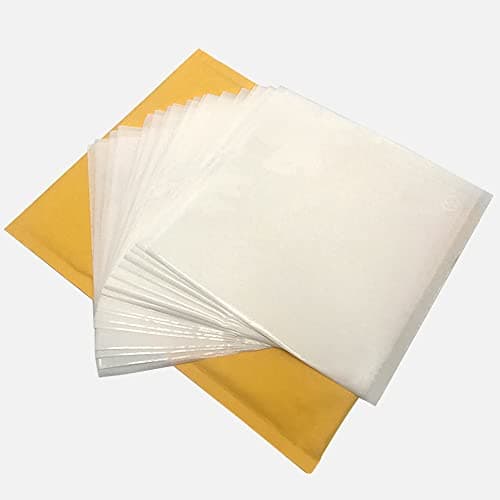
YOUSU PP Printing Surface SheetsPP bonds to PP, so a PP surface is the oldest fix in this category. Cheap, consumable and cuttable, which suits a plate you do not want to coat.20 PP film sheets, 200 x 200 mm
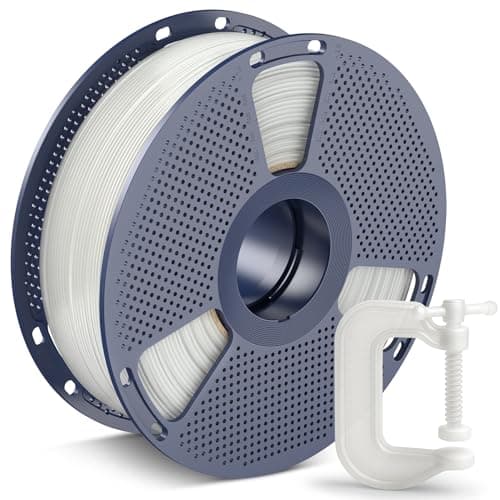
SUNLU PPSUNLU publish density, heat deflection, tensile and impact figures plus a settings block. That is more than most PP spools tell you.210-230 C nozzle, 0.9 g/cm3
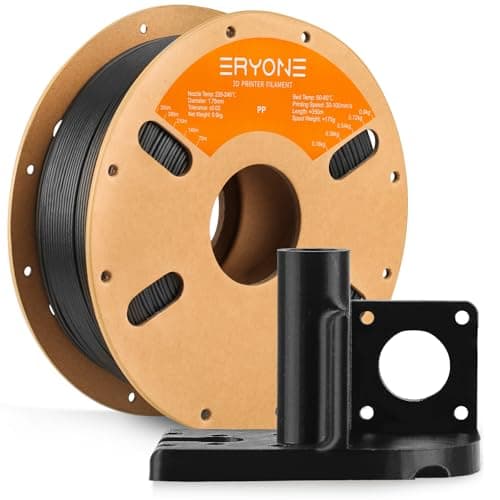
ERYONE PPPublished against named ASTM and GB test methods, with the printing conditions the samples were made under. Rare honesty at this price.220-240 C nozzle, 60-80 C bed, 900 g
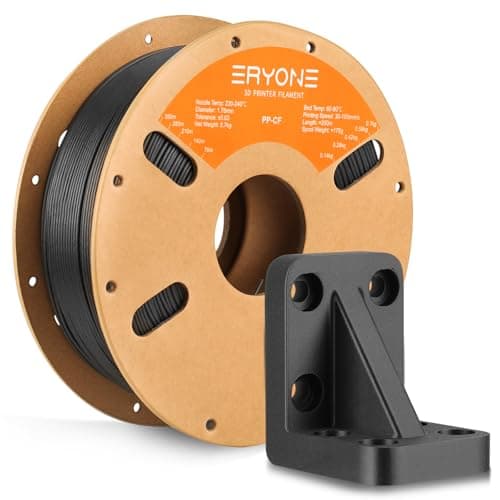
ERYONE PP-CFPrusa note that makers add carbon or glass fiber to solve PP's warping, which is the argument for this one. It still wears a brass nozzle, and the first layer is still PP.Carbon-filled PP, 700 g, hardened nozzle
Magigoo 3D Printing AdhesiveThe right adhesive on ASA, ABS and nylon, and the wrong one here. Magigoo sell a separate PP formula because PP needs different chemistry.Sold for ABS, PLA and PETGSkip this
Live prices verified September 19, 2026. Scores are our own fit rating for the stated use, not a measurement and not a customer rating.
A lightweight printed container part on a workbench.
Published polypropylene printing figures. The three sources disagree by a wide margin, so follow the maker of the spool in your hand.
Source
Nozzle (C)
Bed (C)
Drying
Density (g/cm3)
SUNLU PP
210-230
50-60 with PP glue
50-60 C
0.90
ERYONE PP
220-240
60-80
50-60 C, 8 h
0.95
Prusa, generic PP
220-270
85-100
-
-
Prusa material guide
220-245
70-100
-
-
Published polypropylene printing figures. The three sources disagree by a wide margin, so follow the maker of the spool in your hand. Prusa's own two pages differ, and both sit above the figures SUNLU and ERYONE publish for their spools. A 50 C spread is normal in this material, which is exactly why a PP profile copied from a forum post fails. Figures from SUNLU, ERYONE, Prusa Research, Prusa Research, retrieved 2026-09-19.
What decides a polypropylene buy
PP is the plastic of food tubs and chemical bottles, and it is genuinely useful printed: Prusa describe it as lightweight, resistant to chemicals, and bendable and translucent in thin layers Prusa Research. It is also the one material where buying the spool first is the mistake. Five things decide whether a PP project works.
How you are going to make it stick. Prusa list poor surface adhesion on PEI as a PP disadvantage and point to a PP sheet, PP tape on smooth PEI, or glass with a PP-specific adhesive instead Prusa Research. Decide this before you order filament.
Whether you can enclose the printer. Prusa call PP highly prone to warping and recommend an enclosure Prusa Research; ERYONE recommend closed printing ERYONE; SUNLU recommend an enclosed chamber SUNLU. Three makers, one answer.
What you actually want from the part. Chemical resistance, fatigue life and low weight are what PP is for. If you want stiffness, heat resistance or dimensional precision, other materials on this site do it with less trouble.
The heat figure, not the heat adjective. ERYONE publish a 55 C heat distortion temperature and a 55 to 63 C Vicat softening point ERYONE; SUNLU publish 61 C SUNLU. That is PLA territory. Buy PP for chemicals, not for heat.
Your tolerance for fiddling. Prusa list PP’s high price and mark it unsuitable for beginners Prusa Research. That is a fair description of a first PP print.
Bed adhesion is the entire problem
Every other material on this site sticks to a clean plate or to a glue stick. PP does not, and the makers say so themselves: ERYONE recommend applying specialized PP printing glue to the heated bed ERYONE, and SUNLU tell you to use a print surface designed for PP and apply PP glue SUNLU. Prusa list three surfaces that work and one that does not Prusa Research.
The three routes, cheapest first
A PP film on the plate. PP bonds well to itself, so an adhesive-backed polypropylene sheet turns the adhesion problem into a consumable. Prusa list a PP sheet as the surface for this material Prusa Research. Sheets are usually 200 x 200 mm, so a 235 or 256 mm plate needs two, or a trim.
PP tape on a smooth PEI sheet. This is the combination Prusa themselves recommend if you do not have a PP sheet, along with a higher nozzle temperature for layer adhesion and a relatively lower one for the first layer Prusa Research. They also note a powder-coated satin sheet can work, with less grip than smooth PEI plus tape.
A PP-specific adhesive. Prusa pair glass with Magigoo PP Prusa Research, and Magigoo describe it as designed for polypropylene and polyolefin filaments, gripping while the bed is hot and releasing as it cools Magigoo. This is the option that leaves your normal plate usable for everything else.
What does not work is the drawer of adhesives you already own. A PVA glue stick and an all-purpose bed adhesive are formulated for PLA, PETG, ABS and ASA; Magigoo sell a separate PP product precisely because PP needs different chemistry Magigoo. The general case for each is on bed adhesion, and the plate options are on build plates.
Warping, brims and the fan
PP shrinks as it crystallizes, and shrinkage is what lifts corners Prusa Research. The published countermeasures are consistent across all three sources and none of them is a setting you would guess.
Use a brim of 5 to 10 mm depending on model size, which is Prusa’s specific recommendation for PP Prusa Research and much wider than the default.
Turn the part cooling fan almost off. SUNLU recommend 10 percent SUNLU. Cooling a warping material quickly is working against yourself.
Print enclosed, or at least out of the draft. Prusa, ERYONE and SUNLU all recommend it Prusa ResearchERYONESUNLU.
Avoid dense rectangular infill. SUNLU tie that pattern to deformation from crystallization and suggest a skirt to help the first layer settle SUNLU. Gyroid or another curved pattern at a moderate density is the safer default.
Slow down. ERYONE publish 30 to 100 mm/s ERYONE, and the bottom of that range is where a large flat part behaves.
What PP is genuinely good at
Chemical resistance
This is the reason to own it. Prusa describe PP as resistant to chemicals and used for storage and packing in food processing, and list lab equipment, engine fluid containers and RC model parts as applications Prusa Research. ERYONE point at handles, lockable containers and bottles for holding chemicals ERYONE. Those are parts where PETG or PLA would be attacked or would craze.
It bends instead of snapping
PP is the living-hinge plastic, and the published elongation figures show why: SUNLU quote a 900 percent breaking elongation for their spool SUNLU, ERYONE quote more than 80 percent for theirs ERYONE. Those two numbers differ by an order of magnitude, so treat them as direction rather than specification — but both describe a material that deforms rather than shatters, which no PLA does.
It is the lightest common filament
SUNLU publish 0.9 g/cm3 and ERYONE 0.95 g/cm3 SUNLUERYONE. Both are below the density of water, so a solid PP print floats, and Prusa cite that lightness as what makes PP suitable for RC model components Prusa Research. If cutting weight is the whole goal, foaming lightweight PLA goes further and is far easier to print; that comparison lives on filament for RC cars and drones.
What PP is not
Not heat resistant. ERYONE’s page calls the material heat resistant in prose and then publishes a 55 C heat distortion temperature ERYONE; SUNLU publish 61 C SUNLU. A part in a hot car is not a PP job. The materials that survive that are on heat resistant filament.
Not stiff. PP is semi-rigid by design. Where you want a part that does not flex under load, the ranking is on strongest filament.
Not cheap. Prusa list high price among PP’s disadvantages Prusa Research, and the spools here cost more per kilogram than good PLA or PETG while shipping less of it — 800 g, 900 g and 700 g rather than a kilogram.
Not a beginner material. Prusa say so directly Prusa Research. If the appeal is chemical resistance on a simple part, PETG handles many household chemicals and prints on anything — start at best PETG filament.
Carbon-filled PP
This is the one upgrade with a warping argument behind it. Prusa write that manufacturers usually solve PP’s warping by adding carbon or glass fibers to the compound Prusa Research, which is a different claim from the usual carbon-fiber pitch. ERYONE sell a carbon-filled PP alongside the plain spool on the same published parameters: 220 to 240 C at the nozzle, a 60 to 80 C bed, 30 to 100 mm/s ERYONE. What the fill does not add is heat resistance, because that comes from the base polymer.
It also abrades nozzles. E3D document measurable brass wear within a few hundred grams of filled filament E3D, so fit hardened steel before the first spool rather than after the tolerances drift — see the nozzle wear guide and carbon fiber filament. What carbon fill does not fix is adhesion: the first layer is still PP.
Drying, and why PP is the easy one here
After nylon and PVA, PP is a relief. ERYONE state that it does not normally absorb moisture and that drying is not required, with 50 to 60 C for 8 hours if a spool has been sitting in humid air ERYONE; SUNLU publish the same 50 to 60 C drying window SUNLU. Note how low that is — a dryer that only runs hot is the wrong tool, and the temperature range matters more than the maximum. The comparison table is on best filament dryer.
What not to buy for this
A general-purpose bed adhesive. It is the right product on ABS, ASA and nylon and the wrong one here; the maker of the best-known pen sells a separate PP formula Magigoo.
A smooth PEI plate bought for this job. Prusa list poor adhesion on PEI as a PP disadvantage Prusa Research. PEI is an excellent plate for almost everything else.
PP for a part that must hold its dimensions. Shrinkage on cooling is inherent to it, and a printed jig in PP will not match the model as closely as the same jig in PETG.
Carbon-filled PP through a brass nozzle. The wear is documented and invisible until your prints are already out of tolerance E3D.
Every pick, in detail
01
Magigoo Pro PP
Magigoo
Buy this before the filament · 8.7/10 our fit score
The adhesive made for the one material that defeats every other adhesive. Buy it before the filament, not after the first failed print.
A full test-method spec sheet · 8.0/10 our fit score
Published against named test methods, with the printing conditions the samples were made under. That is more disclosure than this price bracket usually offers.
Because PP bonds to almost nothing except itself. Prusa list poor surface adhesion on PEI as one of PP’s disadvantages and point to a PP sheet, PP tape on smooth PEI, or glass with a PP-specific adhesive instead. ERYONE and SUNLU both tell you to apply a PP glue to the bed.
+ − What temperature do you print polypropylene at?
Follow the spool you bought, because the published windows disagree sharply. SUNLU quote 210 to 230 C with a 50 to 60 C bed, ERYONE 220 to 240 C with a 60 to 80 C bed, and Prusa’s generic PP page 220 to 270 C with an 85 to 100 C bed. Start at your maker’s figures rather than a forum profile.
+ − Is PP filament heat resistant?
Less than its reputation suggests. ERYONE publish a 55 C heat distortion temperature and a 55 to 63 C Vicat softening point; SUNLU publish 61 C. That is close to PLA. PP is bought for chemical resistance and fatigue life, not for heat.
+ − Do I need an enclosure to print PP?
All three sources recommend one. Prusa call PP highly prone to warping and suggest printing in an enclosure with a 5 to 10 mm brim, ERYONE recommend closed printing, and SUNLU recommend an enclosed chamber with the part fan at 10 percent. A draft-free corner and a wide brim get a small part through; a large flat part needs the enclosure.
+ − Does PP filament need drying?
Rarely. ERYONE state that it does not normally absorb moisture and that drying is not required, with 50 to 60 C for 8 hours if the spool has been exposed to humid air. SUNLU publish the same 50 to 60 C window. After nylon or PVA, this is an easy material to store.