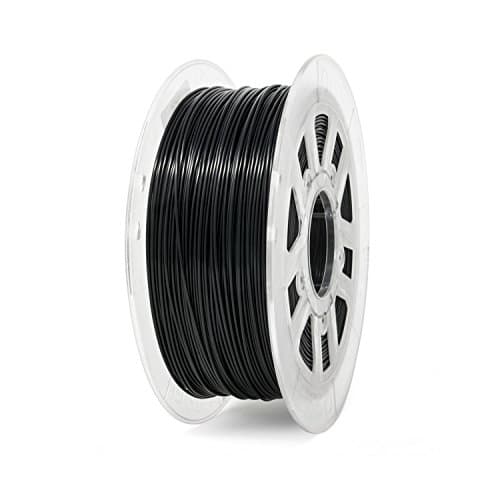
POM is the plastic machined gears, bearings and cams are actually made from: stiff, slippery and hard-wearing. It is also one of the hardest materials to keep on a build plate, and Gizmo Dorks say plainly that acetal does not adhere well to any typical printer bed surface. Solve that first.
How this page is funded. Buy links go to Amazon and we earn a commission on qualifying purchases at no extra cost to you. Commission never decides an order or a score, we accept no free products or sponsored placements, and every roundup names something to skip. Full disclosure.
The picks, ranked
The picks, ranked
#
Product
Best for
Score
Price
1
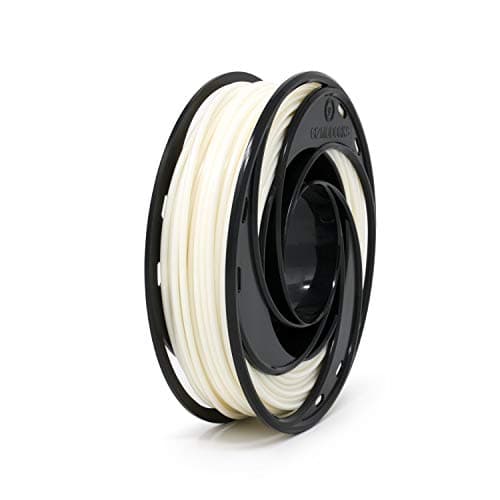
Gizmo Dorks POM (Acetal)The only POM on Amazon whose maker publishes settings, a bed-surface recommendation and the decomposition warning. All three matter here.210-220 C nozzle, 100-130 C bed, 30 mm/s
Gizmo Dorks POM (Acetal), 200 gA 200 g coil is the right way to learn a material whose first layer defeats most people. Cheap enough to write off if your plate refuses it.200 g coil, same material
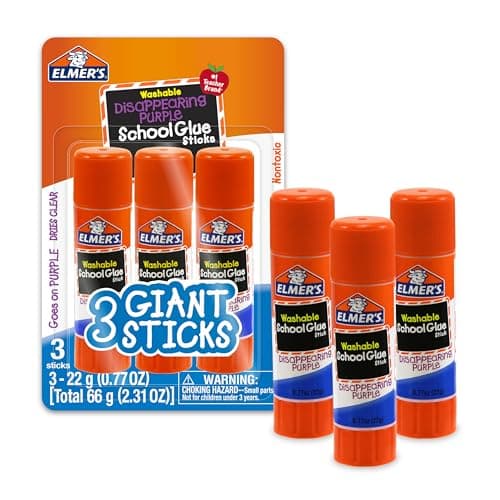
Disappearing Purple Glue StickGizmo Dorks recommend printing onto glued paper or a cellulose surface. The glue stick is the cheap half of that method.Water-soluble PVA glue stick
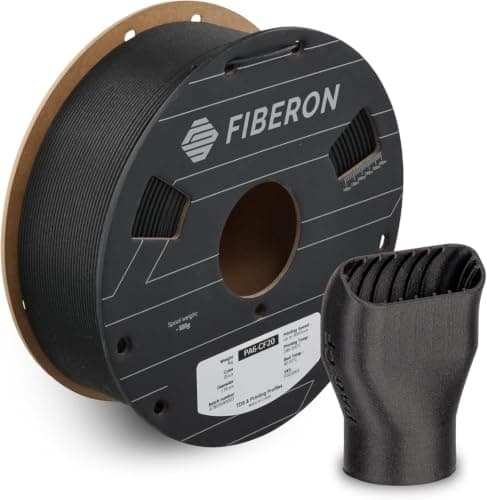
Polymaker Fiberon PA6-CF20Nylon is the printable wear material with a support network behind it. POM wins on friction and loses on every practical measure of printability.Carbon-filled nylon, needs a dryer
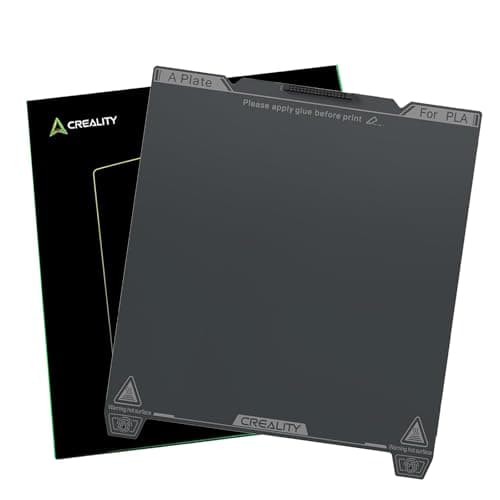
Smooth PEI Spring Steel PlateExcellent plate, wrong material. Gizmo Dorks state acetal does not adhere well to any of the typical 3D printer bed surfaces, PEI included.Smooth PEI spring steelSkip this
Live prices verified September 27, 2026. Scores are our own fit rating for the stated use, not a measurement and not a customer rating.
A printed gear and bearing part on a workbench.
POM as published by Gizmo Dorks, against the nylon it competes with.
Material
Nozzle (C)
Bed (C)
Speed
Noted for
POM / acetal
210-220
100-130
30 mm/s
Low friction, wear resistance
PA (nylon), Prusa guide
240-285
70-115
-
Mechanical parts
POM as published by Gizmo Dorks, against the nylon it competes with. POM prints cooler than nylon and on a hotter bed, at a third of the speed. The low nozzle temperature is not an invitation to go faster: Gizmo Dorks publish 30 mm/s. Figures from Gizmo Dorks, Prusa Research, retrieved 2026-09-27.
What POM is, and why engineers ask for it
POM is polyoxymethylene, sold as acetal and under DuPont’s Delrin trade name. Gizmo Dorks describe it as having high stiffness, low friction and excellent wear resistance, with good elastic resilience, dimensional stability and good chemical and heat resistance, and note it is routinely used for gear wheels and ball bearings Gizmo Dorks.
That list is the reason POM exists in the machine shop. A POM gear runs against another POM gear with less friction and less wear than any common printable plastic manages, which is why the material is worth the trouble for a mechanism that actually has to run.
The first layer is the whole problem
POM is slippery by nature, and that does not stop at the part. Gizmo Dorks state that acetal does not adhere well to any of the typical 3D printer bed surfaces, and recommend three specific alternatives: drywall joint tape as the preferred method, a wood or cellulose-based platform, or thick paper around 80 pound weight glued down with a PVA glue Gizmo Dorks.
This is the same shape of problem polypropylene has, and the same lesson applies: the surface is the purchase, not the spool. Our PP page covers the parallel case on best polypropylene filament, and the general plate and adhesive options are on build plates and bed adhesion.
Expect to sacrifice a surface. Tape and paper are consumables here, which is cheaper than discovering a smooth PEI sheet will not hold the part.
Run the bed hot. Gizmo Dorks publish 100 to 130 C Gizmo Dorks, which is ABS territory and above what some older machines reach.
Enclose if you can. Gizmo Dorks recommend a chamber to reduce warping and help with delamination Gizmo Dorks.
This is the part of a POM page that should not be buried. Gizmo Dorks state that acetal degrades when overheated and may give off small amounts of formaldehyde gas, that you should not keep acetal heated above 230 C, and that it should always be used in a well ventilated area or with a ventilation system Gizmo Dorks.
They also give the useful nuance: decomposition depends on how long the material is held hot, and at typical printing temperatures of 210 to 220 C it is not significant until after about 30 minutes Gizmo Dorks. In practice that means never parking a loaded hotend at temperature between prints, and never nudging the temperature up to fix a flow problem.
Printing it
210 to 220 C, and no higher. The published window is narrow and the upper limit is a safety limit rather than a quality one Gizmo Dorks.
30 mm/s. Gizmo Dorks publish a single figure rather than a range Gizmo Dorks. POM crystallizes as it cools, and rushing it is how layers separate.
Design for shrinkage. Semi-crystalline plastics shrink as they crystallize, and warping follows contraction Prusa Research. Small parts first.
Do not expect bonded layers to match machined stock. A printed POM gear is stronger along the layers than across them, like every FDM part — the orientation argument is on strongest filament.
Purge before and after. POM does not like sharing a nozzle with materials that print much hotter, and the temperature ceiling makes a thorough purge the safer habit.
POM against nylon for gears
Nylon is what our gear page recommends, and that has not changed. Prusa publish 240 to 285 C for polyamide with an enclosure recommended Prusa Research, and nylon prints on ordinary plates with ordinary adhesives once it is dry. POM beats it on friction and wear, and loses on adhesion, ventilation and available documentation.
The honest recommendation: use nylon unless the mechanism specifically needs POM’s low friction — a bushing running dry against a shaft, a cam that has to slide, a gear train where every joule of friction is a loss. The wider gear discussion is on best filament for gears and the moisture regime nylon demands is on best nylon filament.
What not to buy it for
Anything you cannot ventilate. Gizmo Dorks ask for a well ventilated area explicitly Gizmo Dorks.
Large flat parts, on a first attempt. A material that barely sticks plus a shrinking footprint is the worst combination in printing.
Glued assemblies. POM’s chemical resistance works against adhesives; design for fasteners or press fits.
Painted or finished parts. The same slipperiness that makes it a good bearing makes it a poor substrate for paint.
Every pick, in detail
01
Gizmo Dorks POM (Acetal)
Gizmo Dorks
The documented POM spool · 8.2/10 our fit score
The only POM on the shelf whose maker publishes settings, bed-surface advice and the decomposition warning. All three decide whether the print works.
Published specifications for Gizmo Dorks POM (Acetal)
Gears, bearings, bushings and cams — parts where low friction and wear resistance decide the outcome. Gizmo Dorks describe POM as having high stiffness, low friction and excellent wear resistance, and note it is routinely used for gear wheels and ball bearings.
+ − Why will POM not stick to my build plate?
Because it is slippery by nature. Gizmo Dorks state acetal does not adhere well to any of the typical 3D printer bed surfaces and recommend drywall joint tape as the preferred surface, a wood or cellulose platform, or thick paper glued down with PVA glue.
+ − Is POM filament safe to print?
With ventilation and a temperature ceiling. Gizmo Dorks state acetal degrades when overheated and may give off small amounts of formaldehyde gas, that it should not be kept above 230 C, and that it should be used in a well ventilated area. They add that at 210 to 220 C decomposition is not significant until after about 30 minutes.
+ − Should I use POM or nylon for gears?
Nylon for most people: it prints on ordinary plates with ordinary adhesives once dry, and Prusa publish a well-documented window for it. POM earns its place when the mechanism specifically needs low friction, such as a dry-running bushing or a sliding cam.