ASA exists because ABS goes yellow and brittle in sunlight. It prints in almost the same window, wants the same enclosure, and produces parts that survive years outdoors instead of one summer.
How this page is funded. Buy links go to Amazon and we earn a commission on qualifying purchases at no extra cost to you. Commission never decides an order or a score, we accept no free products or sponsored placements, and every roundup names something to skip. Full disclosure.
The picks, ranked
The picks, ranked
#
Product
Best for
Score
Price
1
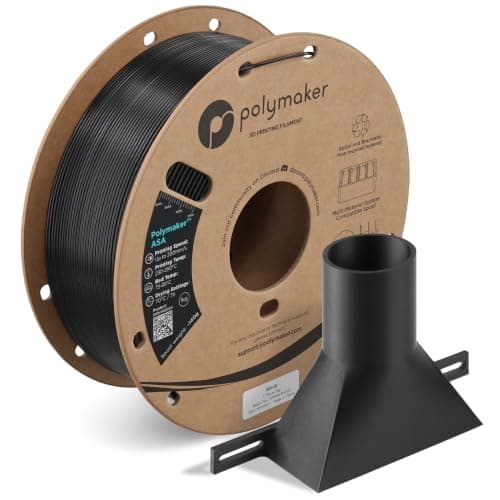
Polymaker PolyLite ASAThe default ASA, from the cheapest brand that publishes real data sheets.UV and chemical resistance
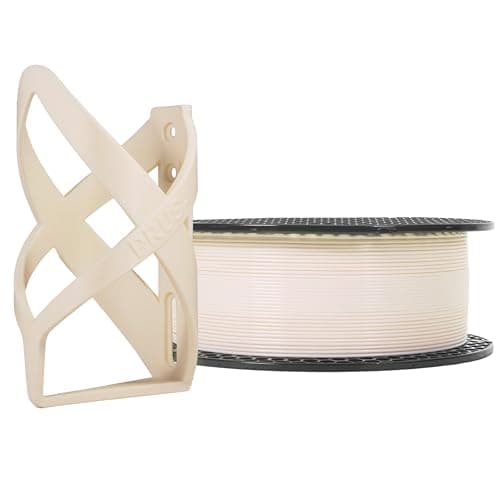
Prusament ASAA documented starting profile is worth real money on a material where the failure mode is a lifted corner at hour three.220-275 C nozzle, published profile
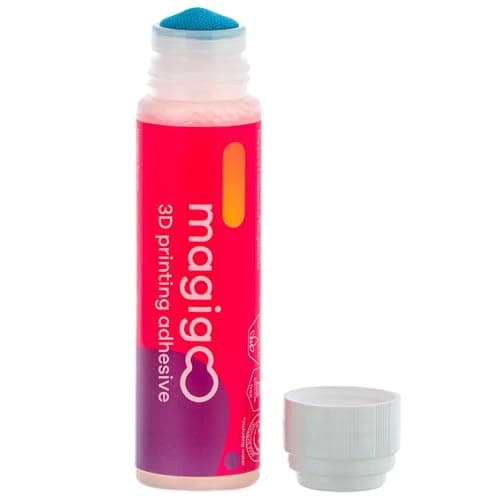
Magigoo 3D Printing AdhesiveThis is the material where a specialty adhesive earns its price, unlike PLA where a clean plate is enough.Adhesive for warping materials
Published drying temperatures and times. Prusa Research and Overture disagree on several materials; both figures are shown rather than averaged. A dash means that manufacturer does not publish a figure for that material. Where they differ, the lower temperature for longer is the safer starting point. Figures from Prusa Research, Overture, Prusa Research, retrieved 2026-09-06.
What ASA is
Acrylonitrile styrene acrylate: chemically close to ABS with the butadiene replaced by an acrylate that does not degrade under ultraviolet light. Everything that makes ABS a good engineering material is retained; the thing that made it a bad outdoor material is removed.
Prusa list ASA's noted properties as UV and chemical resistance and publish 220 to 275 C at the nozzle with 90 to 110 C at the bed and an enclosure recommended Prusa Research. That temperature range is wide, which is characteristic: different ASA formulations sit in quite different parts of it, so the brand's own figure matters more than the class range.
The warping problem, and what actually fixes it
ASA warps. It is the material's defining printing difficulty and it is worth being specific about the mechanism: as the part cools it contracts, and if one region cools faster than another the difference in contraction pulls the part off the plate or splits it between layers Prusa Research. Everything that helps is a way of making the cooling more even.
Enclosure, closed, for the entire print. This is the big one. Ambient temperature stability matters more than any setting.
Part cooling fan off or nearly off. Counterintuitive if you came from PLA, and correct.
Brim, and a proper adhesive. ASA is the case where a specialty adhesive earns its price rather than a glue stick doing the job.
Design out the large flat bottom. Contraction force scales with the area trying to shrink. Splitting a large flat part into two smaller ones frequently solves what no setting could.
Bed at the top of the range. 100 to 110 C keeps the bottom of the part above the temperature at which it wants to curl.
Ventilation
ASA emits styrene compounds while printing, as ABS does. The enclosure that solves warping also concentrates those emissions, which means enclosure and ventilation have to be solved together — ideally an enclosure vented outside or through a filter, rather than a sealed box in a room you occupy.
Drying
ASA absorbs moisture more than PLA and less than nylon. Prusa publish 80 C for four hours and Overture publish 75 C for seven Prusa ResearchOverture. Both are above the maximum temperature of several popular consumer dryers, which is worth checking before you buy one — the table is on filament dryers.
When ASA is the wrong answer
When you do not have an enclosure. An ASA part printed in a draft is worse than a PETG part printed properly, and PETG will handle a season outdoors perfectly well. Our outdoor filament guide lays out the honest trade between reprinting PETG occasionally and learning to print ASA once.
The two materials are compared property by property, with the enclosure requirement priced in, on PETG versus ASA.
Every pick, in detail
01
Polymaker PolyLite ASA
Polymaker
Outdoor parts generally · 8.9/10 our fit score
The right answer for a part that lives outside. It is ABS that does not go yellow and chalky in sunlight.
Published specifications for Polymaker PolyLite ASA
UV resistance is the entire point and it is real — Prusa contrast it directly with ABS, whose outdoor parts "turn yellowish and more brittle over time"
Warps less and smells less than ABS at the same temperatures
What it does not
Needs an enclosure and a hot bed; this is not a material for an open printer in a cold room
More expensive per kilogram than the PETG that would do the job for many outdoor parts
For almost every use, yes. Similar printing requirements, similar toughness, and it adds the UV resistance ABS lacks. ABS keeps one genuine advantage: it can be smoothed with acetone vapor.
+ − Can I print ASA without an enclosure?
Small parts sometimes, large parts no. Prusa mark an enclosure as recommended and the failure mode without one is corner lift and layer splitting. If you have no enclosure, PETG outdoors for a season is the more realistic plan.
+ − How long does ASA last outdoors?
Years rather than a season, which is the whole point of choosing it. We are not going to publish a specific lifetime figure because we have not tested one and we have not found a manufacturer publishing a verifiable number for consumer filament.