These two materials ask almost exactly the same things of your printer. One of them goes yellow and brittle in sunlight and the other does not, which makes this a shorter comparison than it looks.
How this page is funded. Buy links go to Amazon and we earn a commission on qualifying purchases at no extra cost to you. Commission never decides an order or a score, we accept no free products or sponsored placements, and every roundup names something to skip. Full disclosure.
The picks, ranked
The picks, ranked
#
Product
Best for
Score
Price
1
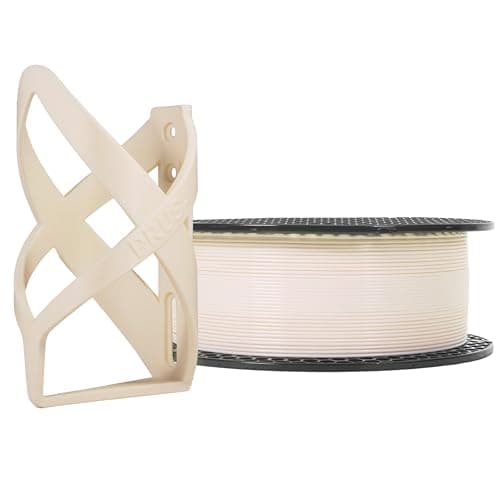
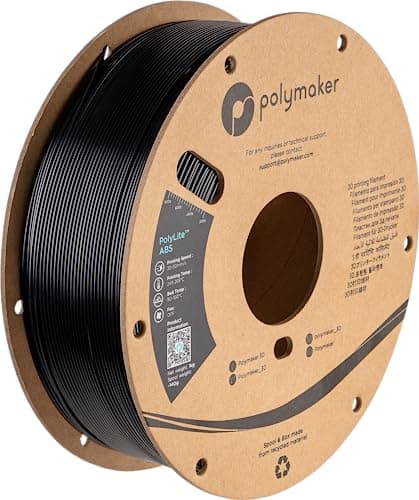
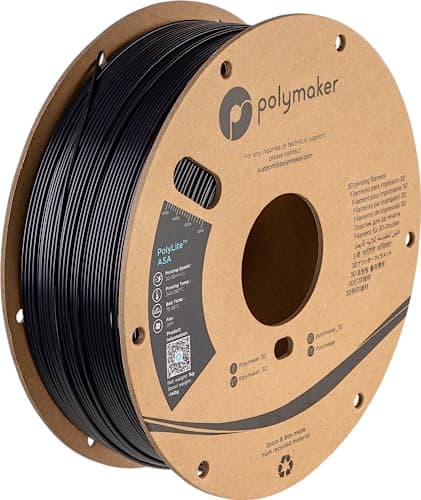
Polymaker PolyLite ASASame printing requirements as ABS plus UV stability. This is the default answer.UV and chemical resistance
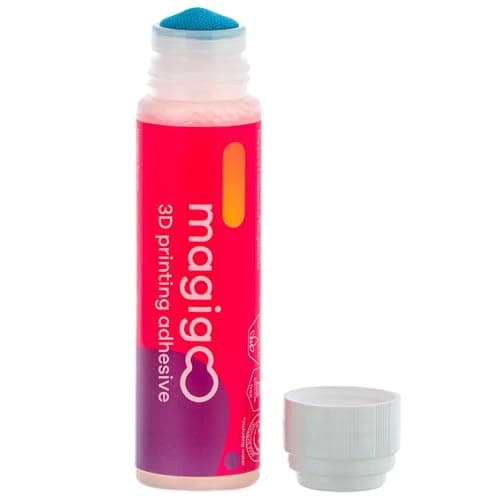
Magigoo 3D Printing AdhesiveBoth warp. This is the category where a specialty adhesive earns its price rather than duplicating a glue stick.Adhesive for warping materials
Published printing parameters by material, from Prusa Research's filament material guide. Ranges are the manufacturer's published envelopes, not a recommendation for your specific spool — every brand publishes its own narrower window inside these. Figures from Prusa Research, retrieved 2026-09-01.
Published drying temperatures and times. Prusa Research and Overture disagree on several materials; both figures are shown rather than averaged.
Published drying temperatures and times. Prusa Research and Overture disagree on several materials; both figures are shown rather than averaged. A dash means that manufacturer does not publish a figure for that material. Where they differ, the lower temperature for longer is the safer starting point. Figures from Prusa Research, Overture, Prusa Research, retrieved 2026-09-06.
The chemical difference, briefly
ABS is acrylonitrile butadiene styrene. ASA is acrylonitrile styrene acrylate: the butadiene is replaced with an acrylate that does not degrade under ultraviolet light.
Butadiene is what makes ABS tough and it is also what UV attacks. So ASA is a reformulation that keeps most of the toughness and removes the failure mode, which is why Prusa list ASA's noted properties as UV and chemical resistance and ABS's as impact resistance Prusa Research.
Printing requirements, side by side
Prusa publish 230 to 255 C nozzle and 95 to 110 C bed for ABS Prusa Research, and 220 to 275 C nozzle with 90 to 110 C bed for ASA Prusa Research. Both are marked enclosure recommended.
ASA's published nozzle range is wider, which reflects genuine formulation variation between brands rather than ASA being more forgiving. Use the specific brand's figure, not the class range.
Both warp, both want still air, and both produce styrene compounds that need ventilation. There is no meaningful difficulty gap: if you can print one, you can print the other.
Acetone smoothing: the one real ABS advantage
ABS dissolves in acetone, so vapor exposure melts the surface into a continuous glossy skin. This seals the layer channels, produces a finish nothing else here reaches without sanding, and is genuinely useful for parts that need to be sealed or handled.
ASA responds to acetone differently and does not smooth the same way. If that finish is what you are after, ABS is the material and there is no substitute in this comparison.
Outdoors: not close
An ABS part in direct sun yellows, chalks and becomes brittle. It is the material's defining weakness and it is the reason ASA is used for automotive exterior trim and outdoor equipment housings.
If the part is going outside, ASA. If the part is going in a car — where UV comes through glass and cabin temperatures are high — ASA. That is most of what filament for car parts and the outdoor guide conclude.
Both warp, and the fixes are identical
Enclosure closed for the whole print. Opening the door mid-print is how tall parts split Prusa Research.
Part cooling off or nearly off.
Bed at the top of the published range, 100 to 110 C.
Brim plus a real adhesive. This is the material class where a specialty adhesive earns its price.
Reduce the flat footprint where the design allows. Contraction force scales with area.
Drying differs slightly
Prusa publish 80 C for four hours for ASA Prusa Research; Overture publish 75 C for seven hours for both ABS and ASA Overture. Both figures are above the maximum temperature of several popular consumer dryers, which is worth checking before buying one — see filament dryers.
Every pick, in detail
01
Polymaker PolyLite ASA
Polymaker
Almost every case · 8.9/10 our fit score
The right answer for a part that lives outside. It is ABS that does not go yellow and chalky in sunlight.
Published specifications for Polymaker PolyLite ASA
UV resistance is the entire point and it is real — Prusa contrast it directly with ABS, whose outdoor parts "turn yellowish and more brittle over time"
Warps less and smells less than ABS at the same temperatures
What it does not
Needs an enclosure and a hot bed; this is not a material for an open printer in a cold room
More expensive per kilogram than the PETG that would do the job for many outdoor parts
Close to it. ASA replaces the butadiene in ABS with an acrylate that does not degrade under UV, keeping most of the toughness and removing the sunlight failure mode.
+ − Is ASA harder to print than ABS?
Not meaningfully. Both warp, both want an enclosure and still air, and both need ventilation. ASA's published nozzle range is wider, which reflects brand variation rather than extra forgiveness.
+ − Can I acetone smooth ASA?
Not the same way. ASA responds to acetone differently and does not produce the glossy sealed finish ABS does. If that finish is the goal, ABS is the material.