A car is three different thermal environments and one of them will destroy PLA in an afternoon. Interior, engine bay and exterior each want a different material, and some parts should not be printed at all.
How this page is funded. Buy links go to Amazon and we earn a commission on qualifying purchases at no extra cost to you. Commission never decides an order or a score, we accept no free products or sponsored placements, and every roundup names something to skip. Full disclosure.
The picks, ranked
The picks, ranked
#
Product
Best for
Score
Price
1
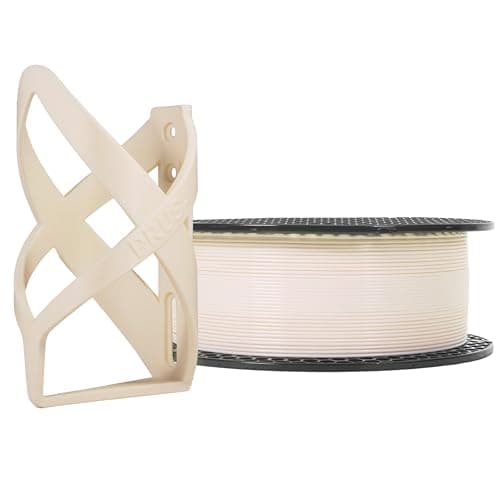
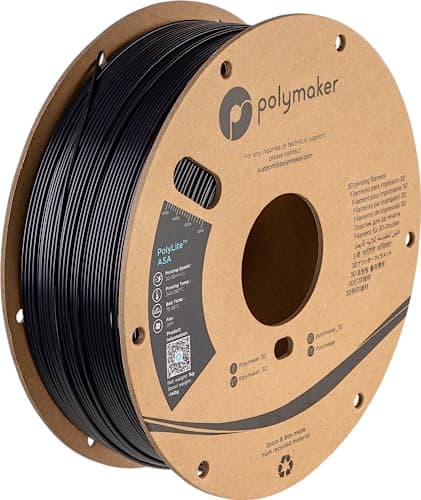
Polymaker PolyLite ASAThe default for anything on a car. UV through glass and heat in a parked cabin are exactly what ASA was formulated for.UV resistance, high temperature tolerance
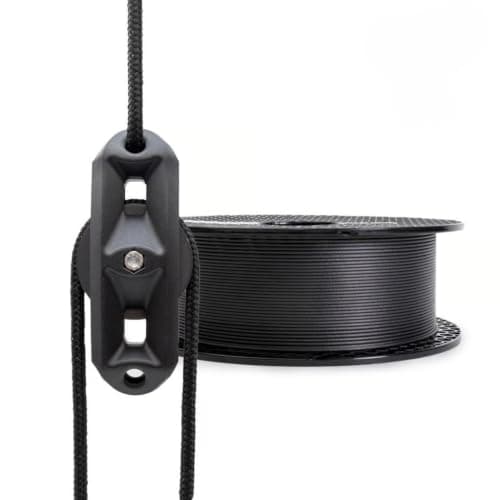
Prusament PC Blend Carbon FiberThe engine bay is the hottest environment here. Polycarbonate is the only material on this site with real headroom for it.270-275 C nozzle, high temperature
Live prices verified October 16, 2026. Scores are our own fit rating for the stated use, not a measurement and not a customer rating.
A plastic component in direct sunlight.
Three environments, not one
The cabin
A parked car in summer reaches temperatures well above ambient air, and a dark dashboard surface goes higher still. It also gets direct sunlight through glass, which delivers UV. PLA fails both tests. This is the single most common car-printing mistake and it usually takes one afternoon.
ASA is the correct answer: Prusa list it for UV and chemical resistance Prusa Research, and it has the heat headroom a cabin demands.
The engine bay
Hotter again, plus oil, fuel vapor and vibration. Polycarbonate is the only material covered here with genuine headroom, published at 270 to 275 C nozzle and 100 to 115 C bed Prusa Research. Even then, place parts away from direct exhaust or turbo heat, and treat anything structural with suspicion.
The exterior
UV, rain, road salt, grit and thermal cycling. ASA again — it is what automotive exterior trim is actually made from, which is not a coincidence.
What not to print
A printed part fails along layer boundaries, without warning, and under conditions that are hard to predict. That makes some categories a bad idea regardless of material.
Anything in the braking, steering or suspension path. Not a material question. A layer-boundary failure in these systems is a safety failure.
Anything carrying fuel or brake fluid. Chemical compatibility and the porosity of printed parts both count against it.
Anything an airbag deploys into or past. Trim near an airbag is designed to behave a specific way during deployment.
Structural mounts carrying real load. A bracket holding a phone is fine; a bracket holding a battery is not.
Interior trim clips, phone and drink holders, blank switch covers, cable routing, dust caps, non-structural brackets: these are the category that printing is genuinely good for.
Printing ASA for car parts
Car trim tends to be large and flat, which is exactly the geometry ASA warps on Prusa Research. The fixes are the ones on the ASA page, with two additions specific to this use:
Split large parts and join them mechanically. Contraction force scales with area; two halves warp far less than one whole.
Match the color to the interior deliberately. ASA holds its color in sunlight, which is the whole point, so the color you print is the color it stays.
Designing for a car interior
Automotive trim is full of snap fits, and snap fits in a brittle material break on the first installation. ASA is tough enough to survive them; PLA is not. If a clip has to flex to install, that is another reason PLA is the wrong material even for a part that never gets hot.
For clips that flex repeatedly, nylon is better still — see nylon — though it brings its own drying requirement.
Every pick, in detail
01
Polymaker PolyLite ASA
Polymaker
Interior and exterior trim · 9.0/10 our fit score
The right answer for a part that lives outside. It is ABS that does not go yellow and chalky in sunlight.
Published specifications for Polymaker PolyLite ASA
UV resistance is the entire point and it is real — Prusa contrast it directly with ABS, whose outdoor parts "turn yellowish and more brittle over time"
Warps less and smells less than ABS at the same temperatures
What it does not
Needs an enclosure and a hot bed; this is not a material for an open printer in a cold room
More expensive per kilogram than the PETG that would do the job for many outdoor parts
Only for prototypes checked in the driveway. A parked car in summer reaches temperatures that deform PLA, and sunlight through glass adds UV damage. It is the most common car-printing mistake.
+ − What filament is best for a car interior?
ASA. It handles cabin temperatures and the UV that comes through the glass, and it is tough enough for snap-fit trim clips. Prusa list UV and chemical resistance as its noted properties.
+ − Are 3D printed car parts safe?
Non-structural trim, holders and covers are fine. Anything in the braking, steering or suspension path, anything carrying fluid, and anything near an airbag deployment path is not — a printed part fails along layer boundaries without warning.