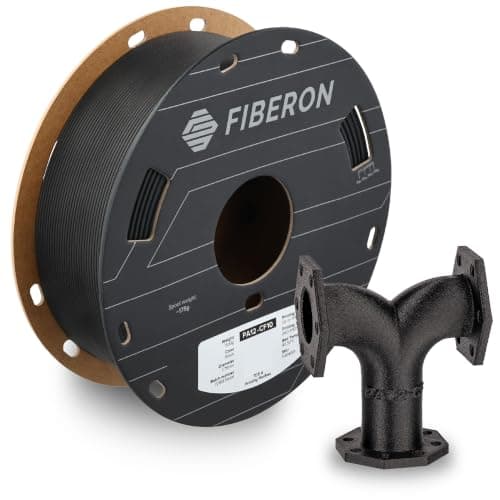
PA12 is the nylon for people whose PA6 parts keep changing size. Polymaker state their PA12 absorbs significantly less moisture than PA6 and PA6/66 materials, which is the whole reason to pay more for it - and it still wants a dryer, a hardened nozzle and a 280 C hotend.
How this page is funded. Buy links go to Amazon and we earn a commission on qualifying purchases at no extra cost to you. Commission never decides an order or a score, we accept no free products or sponsored placements, and every roundup names something to skip. Full disclosure.
The picks, ranked
The picks, ranked
#
Product
Best for
Score
Price
1
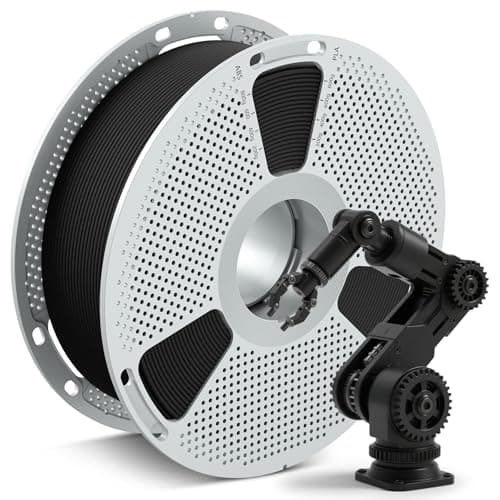
Polymaker Fiberon PA12-CF10Polymaker publish the window, the annealing schedule and the counterintuitive bed rule: keep it below 50 C and the chamber open, or the part warps.280-300 C, bed 40-50 C, anneal 100 C for 16 h
SUNLU PA12-CF 20%Publishes heat deflection, tensile, flexural and impact figures at roughly half the price per kilogram of the industrial spool.175 +/- 3 C heat deflection, 20% carbon fiber
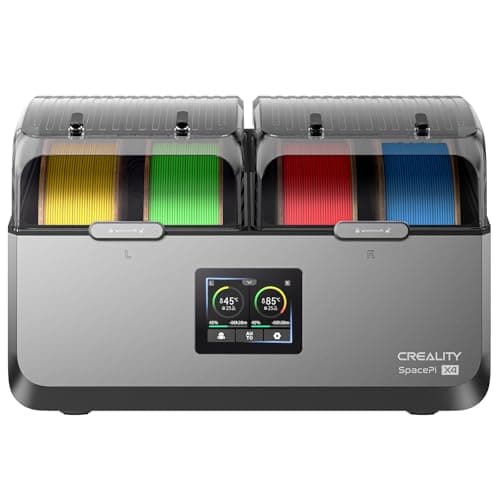
Creality Space Pi X4Polymaker say PA-CF should only be printed while kept in a heated dryer for the whole print. That makes the dryer part of the material, not an accessory.45-85 C, 4 spools
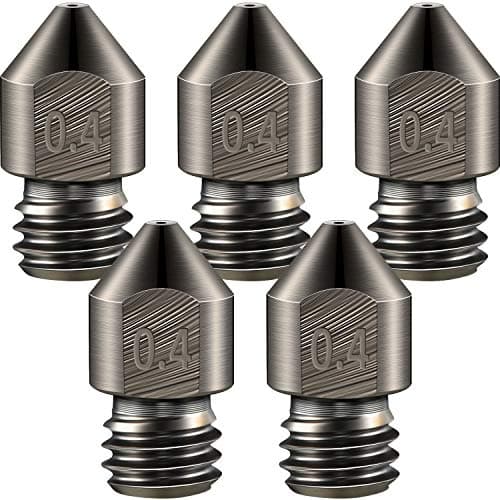
Hardened Steel NozzleBoth makers require a hardened nozzle for the carbon-filled grades. Brass is measurably worn within a few hundred grams of filled filament.Hardened steel, fits most hotends
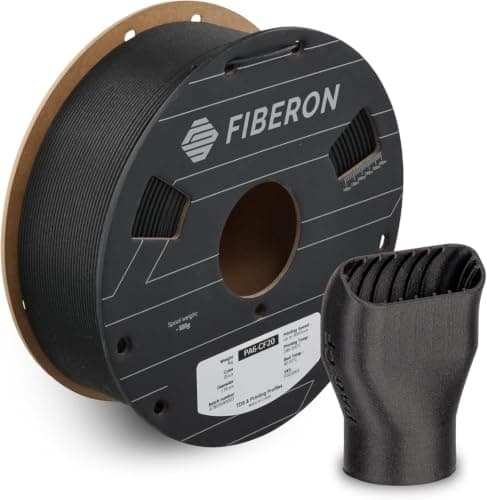
Polymaker Fiberon PA6-CF20A superb filament that drinks water faster: Polymaker state PA12 absorbs significantly less than PA6 and PA6/66. If humidity is your failure mode, this is the spool to move away from.PA6-CF, higher moisture uptakeSkip this
Live prices verified September 27, 2026. Scores are our own fit rating for the stated use, not a measurement and not a customer rating.
A black engineering-grade printed bracket on a bench.
The two PA12 spools here, as published by their makers.
Spool
Nozzle (C)
Bed (C)
Drying
Heat deflection
Polymaker Fiberon PA12-CF10
280-300
40-50
Heated dryer while printing
-
SUNLU PA12-CF 20%
260-280
60-70
80-110 C
175 +/- 3 C
The two PA12 spools here, as published by their makers. Note the bed disagreement. Polymaker cap the plate at 50 C and tell you to keep chamber doors open; SUNLU publish 60 to 70 C. Follow the spool in your hand, and if parts warp, drop the bed rather than raising it. Figures from Polymaker, SUNLU, retrieved 2026-09-27.
Why PA12 rather than PA6
Every nylon page on the internet, including ours, opens with moisture. Nylon absorbs water from room air, and a wet nylon part prints rough and measures wrong. PA12 is the answer to that specific complaint: Polymaker state that thanks to its chemical structure, Fiberon PA12-CF10 absorbs significantly less moisture than PA6/66 and PA6-based materials, which keeps dimensional accuracy and mechanical properties consistent in humid environments Polymaker.
That is the upgrade, and it is a real one. What it is not is an exemption. The same page tells you PA-CF is very hygroscopic and should only be printed while kept in a heated filament dryer for the entire print, and that popping or cracking noises mean it needs drying Polymaker. Less thirsty is not the same as indifferent.
What decides the buy
Hotend temperature. Polymaker publish 280 to 300 C and require an all-metal hotend that reaches at least 280 C Polymaker; SUNLU publish 260 to 280 C SUNLU. A 250 C machine is out.
The bed rule, which is backwards. Polymaker say do not set the build plate above 50 C and to keep chamber doors open, because letting the plate or ambient air exceed 50 C risks warping and ugly prints Polymaker. Most engineering materials want the opposite.
A hardened nozzle. Required by Polymaker for the filled grade Polymaker, and SUNLU note that printing PA12-CF with copper nozzles is susceptible to wear and recommend wear-resistant nozzles SUNLU. E3D document the underlying wear E3D.
A dryer you can print out of. Not dry-then-print: print from the dryer Polymaker. SUNLU publish 80 to 110 C for drying SUNLU, which is above what several consumer boxes reach — the comparison is on best filament dryer.
Whether you will anneal. Polymaker say the part needs annealing at 100 C for 16 hours after printing Polymaker. That is an oven and most of a day.
What the numbers say
SUNLU publish a full table for their 20 percent carbon-filled PA12: a heat deflection temperature of 175 +/- 3 C, tensile strength 86 +/- 6 MPa, flexural strength 160 +/- 30 MPa, flexural modulus 5,800 +/- 300 MPa, impact strength 11.3 +/- 2.5 kJ/m2 in the X-Y plane, density 1.08 g/cm3, and a 190 C melting point SUNLU.
Read that heat deflection figure against the rest of this site: the polycarbonate spools we rank publish 101 to 114 C, and PETG and PLA are far below. Carbon-filled PA12 is one of the most heat-tolerant materials here that does not need a 350 C hotend — the cross-material ranking is on most heat resistant filament.
The mechanical figures are the other half of the case: stiff, strong and tough enough for functional brackets, with the wear resistance nylon is bought for. The gear-specific argument is on best filament for gears.
Printing it
Fan off, or nearly. Polymaker specify 0 percent for PA12-CF10 Polymaker; SUNLU suggest around 70 percent for their spool SUNLU. Start at the maker's figure and treat warping as the signal to reduce it.
Bed adhesion needs help. Polymaker suggest a glue stick or a nylon-specific adhesive if the plate gives trouble Polymaker. The general case is on bed adhesion.
Moderate speeds. SUNLU publish 60 to 100 mm/s SUNLU; Polymaker allow 30 to 300 mm/s for the filled grade Polymaker, which is a range rather than a recommendation.
Listen for popping. Polymaker name it as the tell for wet filament Polymaker, and the other signs are on wet filament signs.
Keep the chamber open. Counterintuitive on an enclosed printer, and specifically what Polymaker ask for Polymaker.
PA12 against PA6, and what you give up
PA6 is stronger and cheaper per kilogram; PA12 is more stable. The decision is about your environment rather than the part: if your workshop is humid, or parts sit unused for months between assembly, the moisture difference Polymaker describe is the one that shows up in measurements Polymaker.
Our nylon buying guide covers PA6 and the drying regime it demands at length on best nylon filament. Read the two together: PA6 with a dryer you actually use beats PA12 bought as a way to avoid buying a dryer, because PA12-CF still wants that dryer running during the print.
And both cost several times what PETG costs. For a bracket that never gets hot and never gets wet, PETG remains the sensible answer — the honest ranking is on strongest filament.
What not to buy it for
Escaping the dryer. The published instruction is to print from a heated dryer Polymaker.
Cosmetic parts. Carbon-filled, matte black, printed with the fan off. Functional finish only.
Printers with a 250 C ceiling or a brass nozzle you want to keep E3D.
Parts you will not anneal, if the heat resistance is why you bought it — Polymaker tie the property to a 100 C, 16-hour anneal Polymaker.
Every pick, in detail
01
Polymaker Fiberon PA12-CF10
Polymaker
The documented choice · 8.5/10 our fit score
The documented PA12: lower moisture uptake than PA6, with the awkward instructions published rather than hidden.
Published specifications for Polymaker Fiberon PA12-CF10
The five-dollar part that stops abrasive filament from quietly widening your nozzle mid-print. Buy one before your first carbon fiber spool, not after.
Published specifications for Hardened Steel Nozzle
Common size
0.4 mm
Required for
Carbon fiber, glass filled, glow in the dark, metal filledE3D
Trade-off
Lower thermal conductivity than brass
What it does well
E3D document substantial wear on a brand new brass nozzle after only 250 g of carbon-fiber-filled filament
Cheap enough to keep a spare in the drawer
What it does not
Conducts heat worse than brass, so very high flow rates need a few degrees more
Hardened steel tempers and softens at extreme temperatures — E3D make this point explicitly
It is more dimensionally stable in humid air. Polymaker state their PA12-CF10 absorbs significantly less moisture than PA6/66 and PA6-based materials, which keeps accuracy and mechanical properties consistent. PA6 is cheaper and stronger, so the choice is really about your workshop rather than the part.
+ − Does PA12 filament still need drying?
Yes. Polymaker call PA-CF very hygroscopic and say it should only be printed while kept in a heated filament dryer for the entire print, with popping or cracking noises as the tell that it needs drying. SUNLU publish 80 to 110 C as the drying window for their PA12-CF.
+ − What temperature does PA12 need?
Polymaker publish 280 to 300 C at the nozzle with an all-metal hotend and a build plate kept below 50 C; SUNLU publish 260 to 280 C with a 60 to 70 C bed. Both require a hardened nozzle for the carbon-filled grades.
+ − How heat resistant is carbon-filled PA12?
SUNLU publish a heat deflection temperature of 175 +/- 3 C for their 20 percent carbon-filled PA12, which is above the 101 to 114 C the polycarbonate spools we rank publish. Polymaker tie the thermal performance of their grade to annealing at 100 C for 16 hours.