Wet filament and a bad profile produce overlapping symptoms, and people lose evenings tuning settings that were never wrong. One question separates them reliably.
How this page is funded. Buy links go to Amazon and we earn a commission on qualifying purchases at no extra cost to you. Commission never decides an order or a score, we accept no free products or sponsored placements, and every roundup names something to skip. Full disclosure.
The picks, ranked
The picks, ranked
#
Product
Best for
Score
Price
1
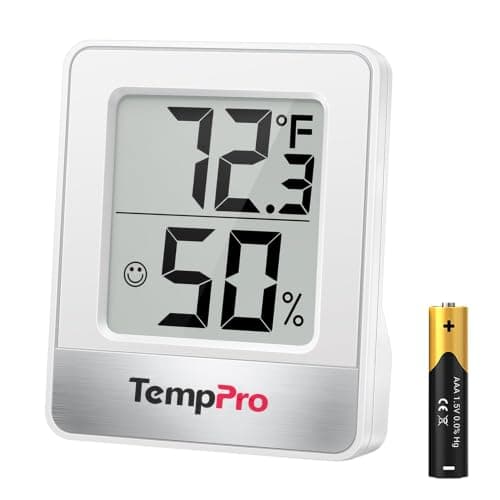
Digital HygrometerIf the storage box reads above the published target, you already know the answer before printing anything.Relative humidity readout
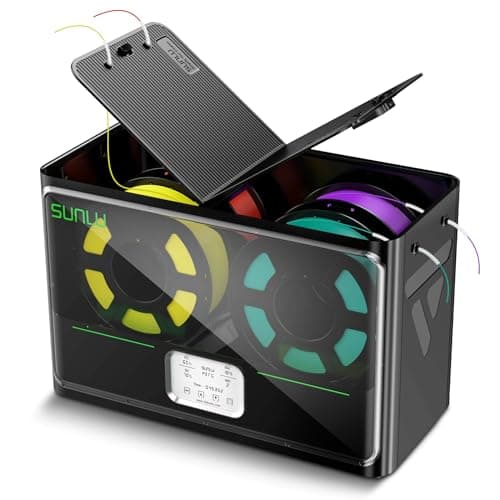
SUNLU FilaDryer S4The humidity readout is the useful part here: it shows the spool giving up water rather than making you guess.Up to 70 C, humidity setpoint
Published drying temperatures and times. Prusa Research and Overture disagree on several materials; both figures are shown rather than averaged. A dash means that manufacturer does not publish a figure for that material. Where they differ, the lower temperature for longer is the safer starting point. Figures from Prusa Research, Overture, Prusa Research, retrieved 2026-09-06.
The diagnostic question
Did prints get worse over time with the same profile, or were they never right?
Getting worse with an unchanged profile is moisture. Filament absorbs water gradually, so quality degrades gradually. A profile that was never right is a settings problem and drying will not fix it.
That one question resolves most cases, and it is worth asking before touching a single slicer value.
The six symptoms
Popping, crackling or hissing at the nozzle. Water flashing to steam in the melt zone. The most reliable single sign, and audible from across a room.
Visible steam or wisps at the nozzle, most obvious against a dark background.
A rough, matte surface where the material should be glossy. Steam disrupts the extrusion as it leaves the nozzle.
Stringing that no retraction setting fixes. If increasing retraction distance stops helping and starts causing clogs, the problem was never retraction.
Weak layers that split easily. Steam voids inside the extrusion reduce the bonded area between layers.
Bubbles or pits visible in the extruded line, best seen by extruding into air and watching the strand.
Which materials show it first
Roughly in order of sensitivity: nylon, TPU, PETG, ASA, ABS, PLA. A nylon spool left out overnight can print visibly worse in the morning. A PLA spool can sit out for weeks and often prints acceptably, which is why does PLA need drying gets a more careful answer than most guides give it.
If you are seeing symptoms in PLA, the spool has usually been badly stored for a long time or the room is genuinely humid — and a hygrometer will tell you which.
A quick test
Heat the hotend to the material's usual printing temperature with nothing printing and extrude slowly by hand for twenty seconds. Watch and listen to the strand as it comes out.
Dry filament extrudes as a smooth, continuous, glossy strand, quietly.
Wet filament pops audibly, and the strand shows bubbles, a rough surface, or visible steam.
This takes a minute and is far more informative than another test print.
Reprint the same test file with the same profile. If it is fixed, the diagnosis was right.
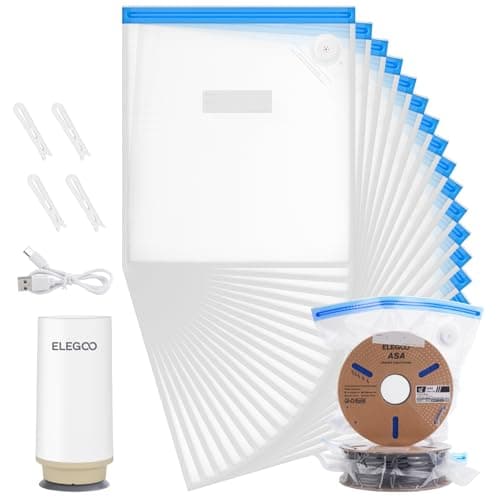
Store it properly afterwards, or you are back here in a month. Bambu's published re-wetting figures give a dried spool hours in ordinary room air Bambu Lab Wiki.
If drying changed nothing, it was a settings problem after all — the per-material settings pages for PLA and PETG are the next stop.
Every pick, in detail
01
Digital Hygrometer
TempPro
Answering the question in advance · 9.0/10 our fit score
A few dollars of instrument that turns filament storage from a belief into a measurement. Everything else on this page is guesswork without one.
Heat the hotend and extrude by hand for twenty seconds. Dry filament produces a smooth glossy strand quietly; wet filament pops and the strand shows bubbles or a rough surface.
+ − Is my problem wet filament or bad settings?
Ask whether prints got worse over time with an unchanged profile. Gradual degradation with the same settings is moisture. A profile that was never right is a settings problem.
+ − Can wet filament damage my printer?
Not directly, but chasing it with ever-increasing retraction can. Over-retraction pulls molten material up into the cooler part of the hotend, which is a common route to a stubborn clog.