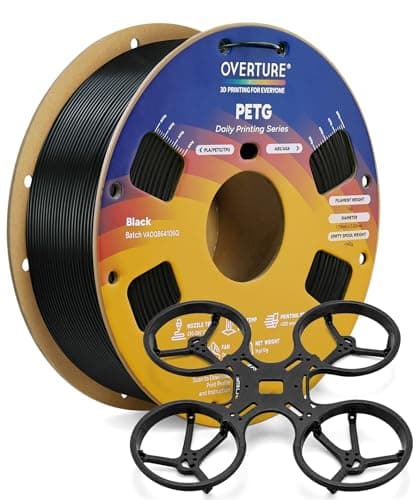
This is the most common material decision in the hobby and it has a clean answer: print PLA until a part breaks or gets hot, then print PETG. What changes when you switch is worth knowing in advance.
How this page is funded. Buy links go to Amazon and we earn a commission on qualifying purchases at no extra cost to you. Commission never decides an order or a score, we accept no free products or sponsored placements, and every roundup names something to skip. Full disclosure.
The picks, ranked
The picks, ranked
#
Product
Best for
Score
Price
1
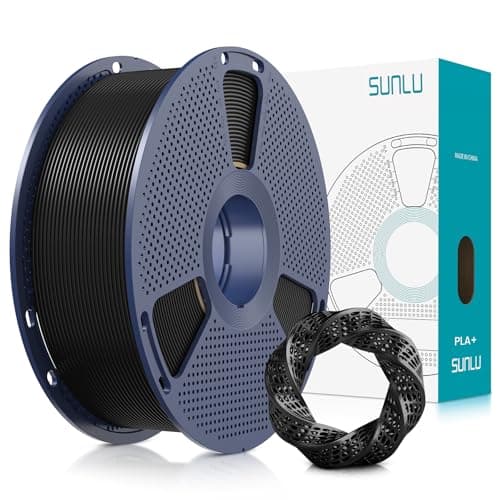
SUNLU PLA+A toughened PLA closes part of the impact gap to PETG without any of PETG's tuning cost.185-235 C nozzle, 50-60 C bed
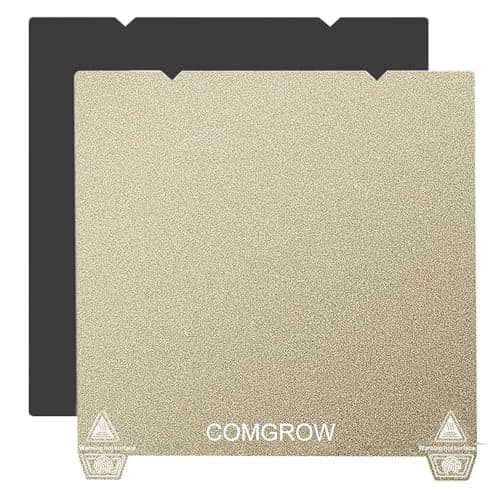
Textured PEI Spring Steel PlatePETG bonds chemically to smooth PEI. Sorting the plate out first is cheaper than replacing one.Textured PEI, mechanical keying
Published printing parameters by material, from Prusa Research's filament material guide. Ranges are the manufacturer's published envelopes, not a recommendation for your specific spool — every brand publishes its own narrower window inside these. Figures from Prusa Research, retrieved 2026-09-01.
The short answer
Print PLA. Switch to PETG when a part broke, when it needs to live outdoors, or when it gets warm. That covers essentially every case.
Prusa list PLA's noted property as low warping and PETG's as impact resistance Prusa Research, and that pairing is the whole comparison: PLA is easier to print, PETG survives more.
Where they actually differ
Stiffness: PLA wins clearly. It deflects less under load, which is why PLA prints feel more rigid in the hand.
Impact: PETG wins decisively. PLA shatters, PETG deforms. Most printed parts that fail in real use fail by impact.
Heat: PETG wins. PLA sags at temperatures a parked car reaches; PETG has meaningful headroom.
Outdoors: PETG wins for a season. Neither is UV-stable long term, which is what ASA is for.
Detail and overhangs: PLA wins. It cools fast and takes maximum part cooling, which is why it bridges better.
Ease: PLA wins comfortably.
The two costs of switching
1. Stringing
PETG absorbs more water and stays viscous over a wider temperature band, so it strings more. This is tunable but the order matters: dry the filament, then set temperature, then tune retraction. Tuning retraction on wet PETG produces settings that break once it dries — the sequence is on the PETG settings page.
2. Your build plate
PETG bonds chemically to smooth PEI and can tear material out of the sheet when the part is removed. This destroys plates, and it happens on the first PETG print for a lot of people.
Either print PETG on a textured surface, or use a glue stick on smooth PEI as a deliberate release layer. Sort this out before the first print rather than after — see build plates.
Settings differences at a glance
Prusa publish 185 to 235 C nozzle and 50 to 60 C bed for PLA Prusa Research, against 215 to 270 C nozzle and 70 to 90 C bed for PETG Prusa Research. Neither needs an enclosure.
The setting that catches people out is cooling. PLA wants maximum part cooling; PETG wants far less, and running PETG with PLA's fan settings produces weak layers that split — defeating the reason you switched. Start PETG around 30 to 50 percent.
Cost
PETG generally costs somewhat more per kilogram than budget PLA, and the gap is small enough that it is rarely the deciding factor. What costs more is the first evening of tuning. Our price per kilogram page keeps the live comparison rather than quoting a number here that would go stale.
Which for what
Display models, prototypes, anything indoors and static: PLA.
Tougher rather than stronger. PLA is stiffer and comparable in tensile strength; PETG absorbs impact far better and deforms before failing. For parts that get handled, PETG is the more useful material.
+ − Can I print PETG on the same printer as PLA?
Yes. Both are published as needing no enclosure. You will need a hotter nozzle and bed, much less part cooling, and either a textured plate or a glue-stick release layer to protect smooth PEI.
+ − Why does my PETG look worse than my PLA?
Usually cooling. PETG run with PLA's fan settings has poor layer adhesion and a rough surface. Drop part cooling to 30 to 50 percent and slow down before changing anything else.
+ − Should I just use PETG for everything?
You could, and plenty of people do. You would give up PLA's better overhangs, sharper detail and easier printing, and gain toughness you may not need on a display model.