Lithophanes work because thick plastic blocks light and thin plastic passes it. That makes translucency the only property that matters, and it rules out every finish that scatters light — matte, silk and glow included.
How this page is funded. Buy links go to Amazon and we earn a commission on qualifying purchases at no extra cost to you. Commission never decides an order or a score, we accept no free products or sponsored placements, and every roundup names something to skip. Full disclosure.
The picks, ranked
The picks, ranked
#
Product
Best for
Score
Price
1
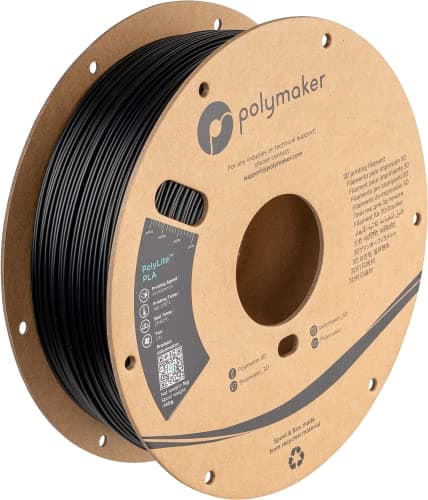
Polymaker PolyLite PLAPlain white PLA with a tight published tolerance. Consistency matters here because a diameter wobble reads as a band across a face.Plain PLA, published +/- 0.02 mm
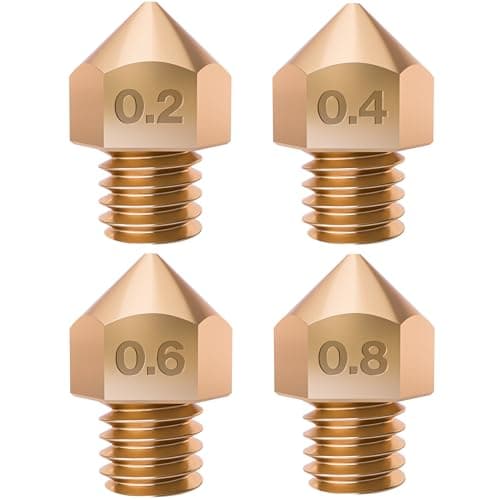
Brass Nozzle AssortmentA 0.2 mm nozzle is what turns a recognizable image into a detailed one. Nozzle diameter sets horizontal detail; nothing on the spool does.Typically 0.2 / 0.4 / 0.6 / 0.8 mm
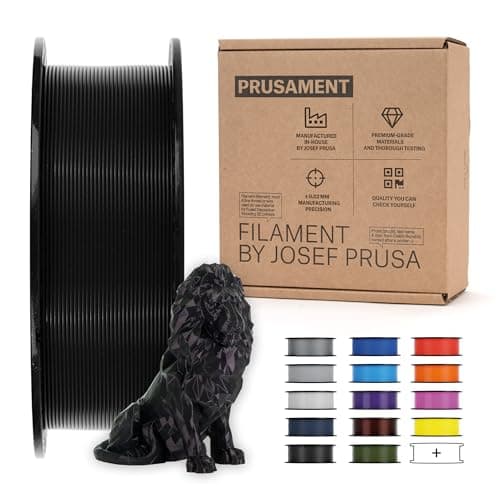
Prusament PLAA lithophane is hours of 0.1 mm layers where one extrusion fault is visible forever. Worth the premium exactly when the print is long.Per-spool measurement record
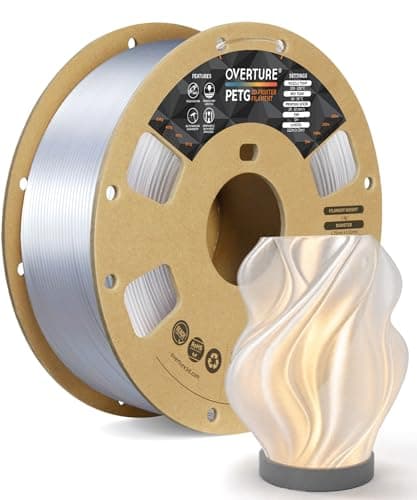
Overture PETG, TransparentClear PETG passes more light and holds detail worse. Right for diffusers and signage, wrong for a portrait.Transparent PETG, 215-270 C
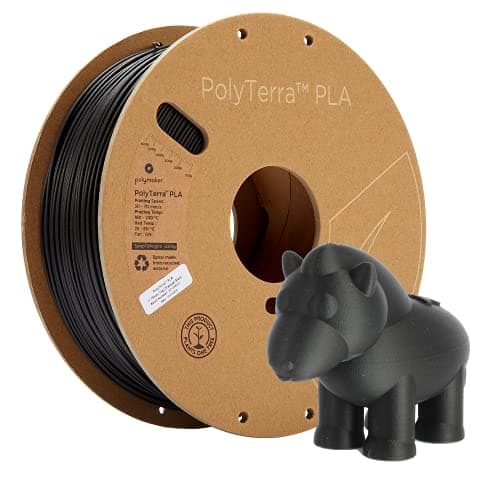
Polymaker PolyTerra PLAMatte additives exist to diffuse light. In a lithophane that flattens the contrast you are printing the whole thing to create.Matte finish, engineered to scatter lightSkip this
Live prices verified September 13, 2026. Scores are our own fit rating for the stated use, not a measurement and not a customer rating.
Spools of PLA filament stacked on a workshop shelf.
Why translucency is the only property that matters
A lithophane is a relief carving where thickness encodes brightness: thick areas block light and read dark, thin areas pass it and read bright. Every decision on this page follows from that single mechanism.
Which means the filament's job is to be evenly translucent and nothing else. Strength is irrelevant — the part hangs in a frame. Temperature resistance is irrelevant unless you back it with a hot bulb, which you should not. What matters is that light passes through predictably, and that the material does not scatter it sideways before it reaches your eye.
Why white, and why plain
White PLA is the standard for a reason: it is translucent enough to pass light at thin sections and opaque enough to block it at thick ones, with neutral color so the image reads as a photograph rather than a tint. Natural or clear PLA passes too much light and flattens the dark end of the range; a saturated color turns your photograph into a monochrome in that color.
"Plain" is the other half. Every additive that gives filament a finish also changes how light moves through it:
Matte scatters light by design, which is exactly what a lithophane must not do. It is the right choice for models and the wrong one here — the trade is on matte and silk PLA.
Silk adds gloss and internal sparkle, both of which scatter and both of which show up as haze across the image.
Carbon or metal fill is opaque. There is no image.
Glow-in-the-dark is loaded with phosphorescent particles that block and scatter light, and is abrasive to the nozzle as a bonus.
The nozzle decides the detail
Prusa are explicit that layer height changes vertical resolution only, and that if you want more resolution in the XY plane you change the nozzle diameter Prusa Research. A lithophane is an image made of horizontal detail, so this is the single most effective change available.
A 0.2 mm nozzle resolves facial features that a 0.4 mm nozzle turns to mush. The costs are the usual ones: long print times, more clogging risk, and a hard requirement for dry, clean filament. Which diameter suits which job is on 3D printer nozzle sizes, and if the small nozzle blocks, work through why your nozzle keeps clogging rather than buying another nozzle.
Settings that make or break the image
Print it vertically. Standing the panel up puts the layer lines across the image, where they read as fine horizontal texture, and gives every thickness step its own layer. Printing flat puts the image in the Z direction where thickness is quantized far more coarsely.
Layer height 0.08 to 0.12 mm. Prusa cap layer height below 80 percent of nozzle diameter and recommend against going below 0.10 mm generally Prusa Research; a lithophane is one of the few jobs where the bottom of that range earns its time.
Solid, or near enough. Infill voids are light leaks. Use enough perimeters that the walls meet through the whole thickness, or set infill to 100 percent.
Slow down and cool well. PLA's published window is 185 to 235 C at the nozzle Prusa Research; the lower half plus full part cooling keeps thin sections crisp.
Dry filament. Moisture leaves bubbles, and a bubble in a 0.8 mm thin section is a visible blemish. Prusa publish 45 C for 6 hours for PLA Prusa Research.
Thickness range is a decision, not a default
The generator you use will offer a minimum and maximum thickness. Those two numbers set your contrast: too thin a minimum and the highlights blow out, too thick a maximum and the shadows go solid black. Common practice is a minimum around 0.6 to 0.8 mm and a maximum around 3 mm, and the right answer depends on your filament's translucency and your light source — which is why the useful move is to print a small test strip of your actual spool before committing to a six-hour panel.
Treat that strip as calibration rather than waste. Two hours of test prints is cheaper than discovering at hour five that every face is a silhouette.
The light behind it is half the result
A lithophane is only as good as what shines through it. Diffuse, even, neutral-white light gives a photographic result; a bare point source gives a hotspot and washed-out edges.
Diffuse the source. A frosted panel or a light-guide behind the print evens the field far more than any printing change.
Keep it cool. PLA softens above about 60 C Prusa Research, so an LED panel is fine and an incandescent bulb pressed against the back is a slow-motion accident.
Mind the color temperature. Warm-white LEDs tint the image; neutral white keeps skin tones honest.
When PETG is the better choice
For a photographic lithophane, it is not. Clear PETG passes more light than white PLA and holds fine detail less crisply, so portraits come out flat and washed.
Where it wins is backlit panels that are not photographs: signage, diffusers, lamp shades and anything that gets warm or lives where someone might knock it. PETG tolerates heat far better than PLA and shrugs off impacts. The settings that decide how clear a PETG print comes out are on best clear and transparent PETG.
Every pick, in detail
01
Polymaker PolyLite PLA
Polymaker
The default lithophane spool · 8.6/10 our fit score
Where the money goes on consistency rather than on a novel finish. Spool-to-spool repeatability is the product.
Published specifications for Polymaker PolyLite PLA
Plain white PLA. It is translucent enough to pass light at thin sections and opaque enough to block it at thick ones, with neutral color. Avoid matte, silk, glow and any filled filament — they all scatter or block light in ways that flatten the image.
+ − Should lithophanes be printed vertically?
Yes. Standing the panel up puts layer lines across the image as fine texture and gives each thickness step its own layer. Printing flat quantizes the image in the Z direction and loses most of the gradation.
+ − What nozzle and layer height for a lithophane?
A 0.2 mm nozzle at 0.08 to 0.12 mm layers. Prusa note that nozzle diameter sets horizontal resolution while layer height sets vertical resolution, and a lithophane is mostly horizontal detail.
+ − Can you use PETG for lithophanes?
You can, and photographs come out flatter than in white PLA because clear PETG passes too much light. PETG is the better choice for backlit signage, diffusers and anything that gets warm or handled, since PLA softens above about 60 C.