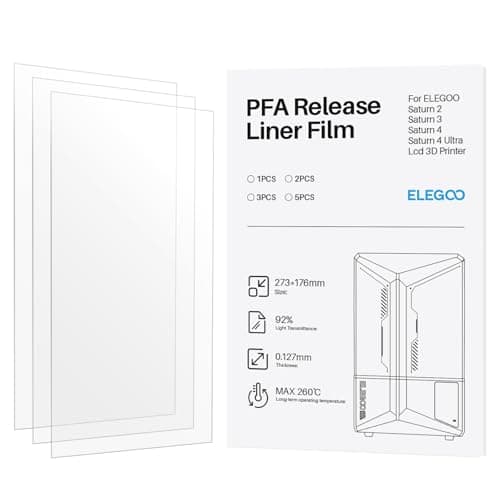
The clear film in the bottom of a resin vat is a consumable, and its life is measured in releases rather than months: ELEGOO rate theirs at up to 60,000. Every layer of every print spends one. Buy the film your vat is built for, then learn the signs that it is finished.
How this page is funded. Buy links go to Amazon and we earn a commission on qualifying purchases at no extra cost to you. Commission never decides an order or a score, we accept no free products or sponsored placements, and every roundup names something to skip. Full disclosure.
The picks, ranked
The picks, ranked
#
Product
Best for
Score
Price
1
ELEGOO PFA Release Liner Film 2.0ELEGOO publish dimensions, thickness, transmittance and a release count, which is more than almost anyone in this category does.0.127 mm, 92% UV transmittance, up to 60,000 releases
ELEGOO Stainless Steel Resin FunnelMost films die from a cured fragment being pressed into them. Straining resin back out of the vat removes the fragments before the plate does it for you.Stainless steel funnel and strainer
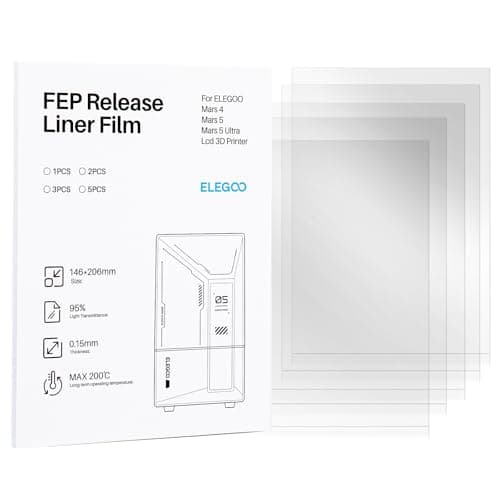
ELEGOO FEP Release Film for MarsThicker and tougher than the PFA films, at the cost of a little transmittance. The safe default if your machine shipped with FEP.0.15 mm, 206 x 146 mm, up to 60,000 releases
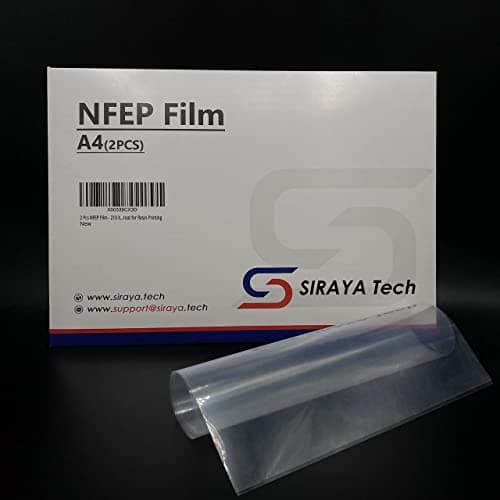
Siraya Tech nFEP Film, A4One A4 sheet covers several small vats. Siraya say plainly that nFEP is softer than FEP and easier to scratch, which is the trade for the better peel.A4 sheet, 125 micron, nFEP
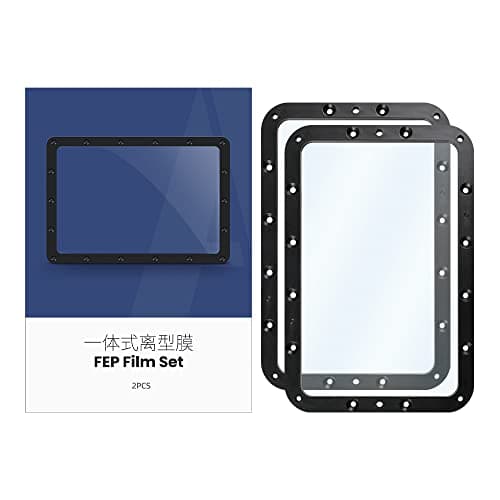
ANYCUBIC FEP Film for Photon Mono 2 and Mono 4The OEM part for an integrated vat assembly. Less flexible than a loose sheet and far less fiddly, which is the entire point.Pre-mounted integrated film, 2 per pack
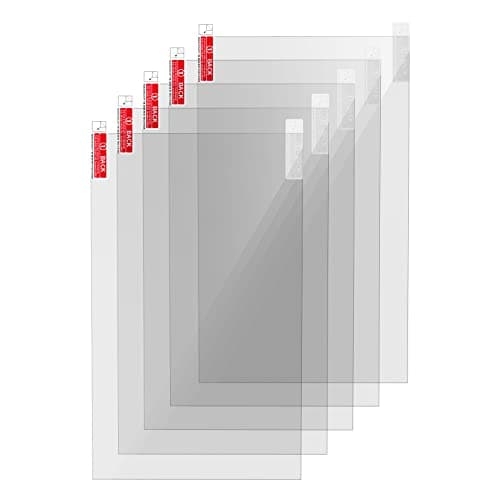
KOYOFEI LCD Screen Protector for SaturnWorth owning as leak insurance, and no substitute for the film itself. It protects the screen from a spill; it does nothing about the failed prints a tired film causes.LCD protective film, 5 per packSkip this
Live prices verified September 26, 2026. Scores are our own fit rating for the stated use, not a measurement and not a customer rating.
A resin printer vat being inspected on a bench.
Published film figures. Thickness and transmittance are the two specifications worth comparing.
Film
Type
Thickness
Size (mm)
Rated life
ELEGOO Saturn film
PFA
0.127 mm
273 x 176
Up to 60,000 releases
ELEGOO Mars film
FEP
0.15 mm
206 x 146
Up to 60,000 releases
Siraya Tech nFEP
nFEP
125 micron
210 x 297 (A4)
-
Published film figures. Thickness and transmittance are the two specifications worth comparing. 125 micron and 0.127 mm are effectively the same thickness written two ways. The 60,000 release figure is the useful one: a release is one layer, so a 2,000-layer print spends 2,000 of them. Figures from ELEGOO, ELEGOO, Siraya Tech, retrieved 2026-09-26.
What decides which film to buy
The film is the transparent sheet in the bottom of the resin vat. Light passes through it to cure each layer, and every layer then peels off it. That makes it the hardest-working consumable in resin printing and the one most likely to be blamed on the resin instead.
What your vat is built to take. Some vats hold a loose sheet clamped between frames; others take a pre-mounted film assembly you drop in whole. A loose A4 sheet cannot re-skin an integrated assembly, and buying the wrong one is the most common mistake in this category.
FEP or nFEP. Siraya describe their nFEP as offering better peel performance than standard FEP, and say in the same breath that it is softer and therefore easier to scratch Siraya Tech. That is the whole trade in one sentence.
Thickness. ELEGOO publish 0.15 mm for their Mars FEP and 0.127 mm for the Saturn PFA film ELEGOOELEGOO. Thinner transmits better and tears more easily; thicker is tougher and slightly dimmer.
Transmittance, where it is published. ELEGOO quote 92 percent UV transmittance for the Saturn film ELEGOO. More light through the film means shorter exposures for the same cure.
Exact dimensions. 273 x 176 mm for the Saturn film, 206 x 146 mm for the Mars one ELEGOOELEGOO. Films are machine-specific; a near-fit is a leak.
FEP, nFEP, PFA and ACF: the naming mess
Four names circulate for what looks like the same sheet, and only some of the difference is real.
FEP is the original fluoropolymer film, and what most machines shipped with. ELEGOO’s Mars film is FEP at 0.15 mm ELEGOO.
nFEP is marketed as the upgrade. Siraya say it was developed for laser SLA and large-format MSLA printers, offers excellent peel performance over standard FEP, and is softer and easier to scratch Siraya Tech.
PFA is what ELEGOO call their release liner for the Saturn line: 0.127 mm, 92 percent UV transmittance, resistant to corrosive chemicals and high temperatures ELEGOO. In practice it sits where nFEP sits.
ACF is a newer ELEGOO film sold for specific machines. If your printer has an ACF part number, buy that; the films are not interchangeable across their own lineup.
The practical upshot: do not shop by acronym. Shop by the part your machine’s maker lists for your vat, then compare thickness and transmittance between the options that fit.
When to replace it
ELEGOO rate both of their films at up to 60,000 releases ELEGOOELEGOO. A release is one layer lifting off the film, so the arithmetic is unforgiving: a 200 mm tall print at 0.05 mm layers is 4,000 layers and therefore 4,000 releases. Fifteen prints like that and you are at the rated life.
In practice the film usually goes before the counter does, for mechanical reasons. Replace it when you see any of these.
Cloudiness in the print area. A haze where prints have been peeling scatters light and lengthens your effective exposure — the part of the vat outside the print area stays clear, which makes the comparison easy.
Dents, dimples or stretch marks. Each one is a spot where a layer held on too hard. They distort the first layers of the next print.
Any scratch. Scratches start tears, and a tear in a full vat is a leak onto the LCD.
Slack tension. A film that no longer sounds like a drum when tapped will flex during peel and cost you dimensional accuracy.
A weld. If a failed layer cured to the film and you had to scrape it off, the film is done, however clear it looks.
Installing one without immediately ruining it
Tension matters more than torque. On a screw-frame vat, tighten in a star pattern in stages so the sheet pulls evenly. Uneven tension shows up as inconsistent first layers.
Do not crease it. A crease is a permanent optical defect and a stress line. Siraya specifically ask for caution when installing and cleaning nFEP because it scratches easily Siraya Tech.
Peel the protective liners. Both faces usually carry one, and printing through a liner is a rite of passage nobody enjoys twice.
Level the plate afterward. A new film changes the vat floor slightly, so re-level rather than trusting the old setting.
Never scrape with metal. Use a plastic scraper on the film side, always. The metal scraper is for the build plate.
What actually extends film life
Nothing on this page will keep a film alive as reliably as removing the debris that kills it. Cured fragments from a failed print stay in the resin, settle onto the film, and get pressed into it by the build plate on the next print.
Strain the resin back into the bottle after any failure, and periodically anyway. A stainless funnel with a mesh screen is a few dollars and it is the single most effective habit here.
Check the vat before every print. Look along the film at a low angle, not down through it.
Slow the lift speed on tall prints. Peel force is what stretches film, and lift speed is the setting that controls it — the exposure and motion settings are on resin print settings.
Do not store resin in the vat in daylight. Ambient UV cures a skin onto the film, and removing that skin is how films get scratched.
Keep a spare in the drawer. The replacement always becomes urgent mid-project; the wider consumable schedule is on when to replace printer consumables.
Handling, because this job is messy
Replacing a film means handling a vat of uncured resin. Formlabs’ guidance is explicit that liquid resin needs non-reactive nitrile or neoprene gloves and that it can cause skin irritation or an allergic skin reaction Formlabs. Do the job on a lined tray, not over a desk.
The old film, the wiped paper towels and the leftover alcohol are all contaminated: Formlabs treat liquid resin, including resin dissolved in solvent, as potential hazardous waste Formlabs. Cure the drips solid under UV before they go in the bin, and keep the rest for proper disposal. The full routine is on resin cleanup and resin safety.
What not to buy
A film sized for a different machine. Close is a leak. Check the dimensions against your vat, not the model name in the listing title.
A loose sheet for an integrated vat assembly. If your film arrived pre-mounted in a frame, buy that part.
A screen protector as a replacement for film. It protects the LCD from a spill and is worth having for that. It does not stop the failures a cloudy, dented film causes.
One single sheet. Films are cheap in packs of three or five and the job is not worth doing twice. Buy the pack.
Every pick, in detail
01
ELEGOO PFA Release Liner Film 2.0
ELEGOO
Saturn owners, and the best-documented film here · 8.6/10 our fit score
The best-documented vat film on the shelf: ELEGOO publish the size, the thickness, the transmittance and a release count instead of an adjective.
Published specifications for ELEGOO PFA Release Liner Film 2.0
ELEGOO rate their films at up to 60,000 releases, and one release is one layer — so a 4,000-layer print spends 4,000 of them. In practice replace on symptoms rather than a count: cloudiness in the print area, dents or stretch marks, any scratch, slack tension, or a layer that cured to the film.
+ − What is the difference between FEP and nFEP film?
nFEP is sold as the upgrade. Siraya Tech describe theirs as developed for laser SLA and large-format MSLA printers with better peel performance than standard FEP, and state that it is softer than FEP and therefore easier to scratch. ELEGOO's PFA release liner sits in the same category at 0.127 mm and 92 percent UV transmittance.
+ − What thickness FEP film should I use?
Whatever your machine's maker specifies. ELEGOO publish 0.15 mm for the Mars film and 0.127 mm for the Saturn PFA film, and Siraya's universal A4 nFEP is 125 micron. Thinner passes more light and tears more easily; thicker is tougher and slightly dimmer.
+ − Can I clean and reuse FEP film?
You can clean it, gently, and you should — but cleaning does not reverse damage. Siraya ask for caution when cleaning nFEP because it scratches easily. Use a plastic scraper only, never metal, and treat any scratch or weld as the end of that film's life.
+ − Does a screen protector mean I can leave the film longer?
No. A screen protector limits the damage if resin leaks onto the LCD, which makes it useful insurance. It has no effect on the print failures a hazed or dented film causes, because those happen above the screen rather than on it.