High speed PLA is reformulated to melt faster, so the hotend can push more plastic per second without under-extruding. That is a real difference, and it only pays off if your printer's flow rate, not your filament, was the bottleneck.
How this page is funded. Buy links go to Amazon and we earn a commission on qualifying purchases at no extra cost to you. Commission never decides an order or a score, we accept no free products or sponsored placements, and every roundup names something to skip. Full disclosure.
The picks, ranked
The picks, ranked
#
Product
Best for
Score
Price
1
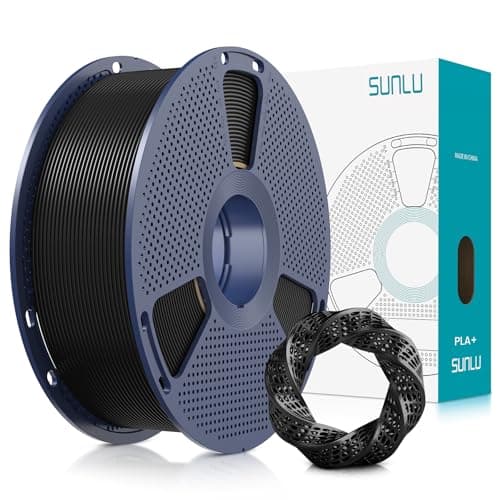
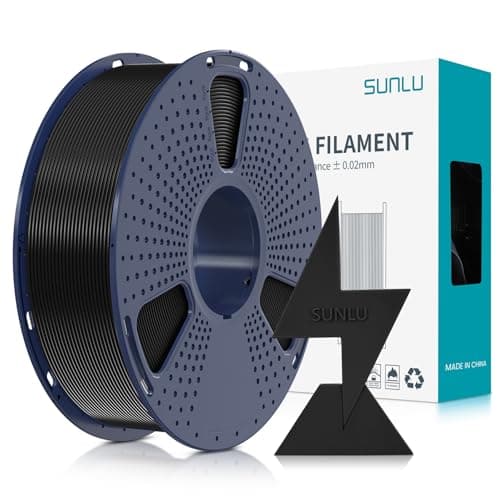
SUNLU High Speed PLASUNLU publish temperature bands tied to speed ranges rather than one number, which is exactly how a high-flow filament should be specified.200-215 C at 50-150 mm/s, up to 600 mm/s at 230-260 C
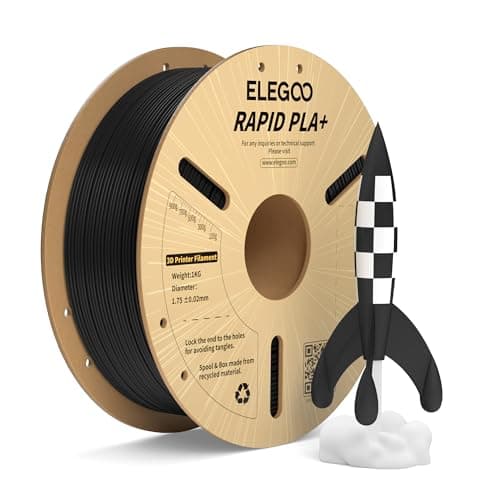
ELEGOO Rapid PLA+A PLA+ base means the parts are less brittle than plain PLA, which matters more than the last 50 mm/s for most people.PLA+ formulation, sold in 1 and 4 kg
OVERTURE High Speed PLACheap enough to be the default spool rather than the special one. Overture publish less detail than SUNLU about the speed bands.High speed PLA, 1 kg
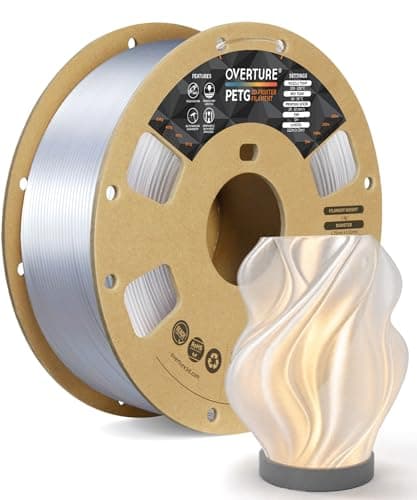
OVERTURE High Speed PETGPETG's heat resistance and toughness with a high-flow formulation. It is still PETG: slower than PLA and fussier about stringing.High speed PETG, transparent
SUNLU PLA+An excellent everyday spool that will under-extrude if you paste a high-speed profile onto it. The failure looks like gaps and weak layers.200-230 C, standard flowSkip this
Live prices verified September 21, 2026. Scores are our own fit rating for the stated use, not a measurement and not a customer rating.
A spool of PLA beside a freshly printed part.
Published temperature bands by speed. The point is that they are bands, not single numbers.
Spool
Slow band
Mid band
Fast band
Bed (C)
SUNLU High Speed PLA
200-215 C at 50-150
215-230 C at 150-300
230-260 C at 300-600
55-65
SUNLU Marble (high speed)
210-230 C at 60-150
-
230-260 C at 300-400
50-60
Prusa, PLA generally
185-235 C
-
-
50-60
Published temperature bands by speed. The point is that they are bands, not single numbers. The higher the speed, the hotter the nozzle has to run to melt the plastic in time. Copying the fast band onto a slow print gives you stringing and a glossy over-extruded surface instead. Figures from SUNLU, SUNLU, Prusa Research, retrieved 2026-09-21.
What high speed PLA actually changes
Printing faster means melting more plastic per second. The limit is volumetric flow — how many cubic millimeters per second your hotend can melt — and past that limit the extruder skips or the part under-extrudes no matter what the speed slider says.
High speed formulations attack that from the filament side: a faster melting polymer blend that reaches a printable viscosity sooner. SUNLU publish the consequence as temperature bands tied to speed: 200 to 215 C at 50 to 150 mm/s, 215 to 230 C at 150 to 300 mm/s and 230 to 260 C at 300 to 600 mm/s SUNLU. The same spool, three different correct temperatures.
Who actually benefits
High-flow hotends. Machines designed around fast printing can genuinely push past what standard PLA melts in time. This is the case the material was made for.
Large, simple parts. Speed gains land on long straight moves. A part covered in small details spends its time accelerating and decelerating, and the filament never becomes the limit.
Print farms and repeat jobs. Shaving a third off a six-hour print matters when you run it forty times.
Not miniatures. Fine detail wants slow outer walls regardless of what the spool can do; that case is on filament for miniatures.
Your printer is probably the limit
Three things cap real-world speed before the filament does, and none of them is fixed by buying a spool.
Volumetric flow. A standard hotend melts a few cubic millimeters per second; a high-flow one melts several times that. Slicers expose this as a maximum volumetric speed, and it is the number to raise carefully and test.
Acceleration and input shaping. On a printer that cannot corner fast, a higher speed setting produces ringing rather than a faster print.
Layer height and nozzle diameter. Both change flow far more than the speed number does. Prusa publish the usual layer limits relative to nozzle size Prusa Research, and the trade is on 3D printer nozzle sizes.
Cooling. Fast printing puts hot plastic down more often. Small parts printed fast need more cooling, not less, or the layers slump.
What speed costs
Surface finish, mostly. A part printed at 300 mm/s shows more ringing and rougher top surfaces than the same part at 60 mm/s, and no filament fixes that. Strength is the other trade: a hotter, faster extrusion bonds well, but the wider tolerance on flow at speed makes thin features less consistent.
The practical compromise most people land on is a fast infill and travel profile with slow outer walls. That keeps the finish and takes most of the time saving, and it works with any of the spools here.
The bed matters at speed too
SUNLU note that their high speed PLA needs glue on an unheated bed and none once the bed is at 55 to 65 C SUNLU. A fast first layer on a cold plate is the most common way a speed profile fails in the first two minutes; the fixes are on bed adhesion.
Calibrating for it properly
Raise maximum volumetric speed, not print speed. Then let the slicer work out what that means for each feature.
Run a temperature tower at your target speed. The correct temperature at 300 mm/s is not the one you found at 60.
Re-tune pressure advance or linear advance. This is what stops corners bulging when the flow changes quickly.
Check flow with a single-wall cube. Under-extrusion at speed is invisible in a preview and obvious in a measurement.
Keep it dry. Wet filament fails faster at high flow, because there is less time for steam to escape before the extrusion is laid down. The signs are on wet filament signs.
What not to expect
Stronger parts. High speed PLA is a flow reformulation, not a toughness upgrade. For that, a PLA+ base or another material entirely is the answer — PLA versus PLA+ covers it.
Heat resistance. It is still PLA, softening around 60 C Prusa Research.
A faster printer. If the machine cannot corner or melt faster, the filament changes nothing.
Better finish. Speed and surface quality trade against each other on every printer ever made.
Every pick, in detail
01
SUNLU High Speed PLA
SUNLU
The clearest published speed bands · 8.4/10 our fit score
The clearest published speed specification in this category: three temperature bands tied to three speed ranges.
Yes — it is formulated to melt faster so the hotend can push more plastic per second. SUNLU publish it as temperature bands tied to speed: 200 to 215 C at 50 to 150 mm/s, rising to 230 to 260 C at 300 to 600 mm/s. Whether that helps depends on whether your hotend was the limit.
+ − Can I print normal PLA at high speed?
Up to a point, and then it under-extrudes. Standard PLA has a lower flow ceiling, so a high-speed profile produces gaps, weak layers and a rough finish. Raise the temperature within the manufacturer's range and slow down if the surface degrades.
+ − Does high speed PLA make weaker parts?
Not inherently, but printing fast does make thin features less consistent and surfaces rougher. It is a flow reformulation rather than a strength one: if you want tougher parts, move to a PLA+ base or a different material.
+ − What limits 3D printing speed?
Volumetric flow at the hotend, acceleration and ringing, layer height and nozzle diameter, and part cooling — usually in that order. Filament is only the limit once the machine can melt and move faster than the plastic allows.