No. Prusa's material guide lists an enclosure as recommended for ABS, ASA, PC and nylon, and not for PETG. An enclosure helps marginally with large flat parts and can actively hurt small ones.
How this page is funded. Buy links go to Amazon and we earn a commission on qualifying purchases at no extra cost to you. Commission never decides an order or a score, we accept no free products or sponsored placements, and every roundup names something to skip. Full disclosure.
The picks, ranked
The picks, ranked
#
Product
Best for
Score
Price
1
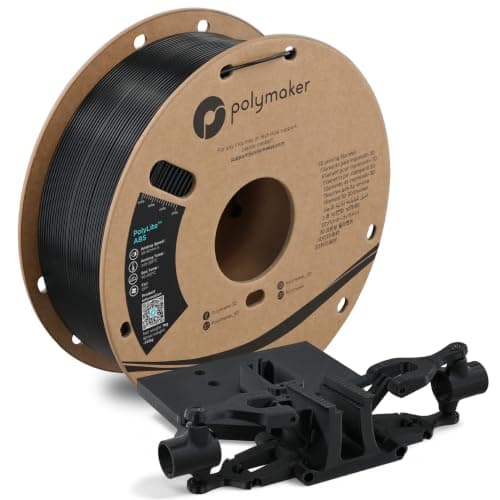
Polymaker PolyLite ABSThis is the material an enclosure is for. If you built one, this is what it unlocks.230-255 C nozzle, enclosure recommended
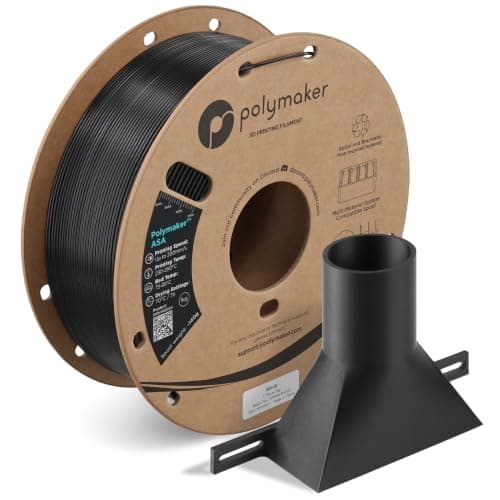
Polymaker PolyLite ASAEverything ABS does, plus UV stability, for a similar printing requirement. Usually the better use of an enclosure.UV resistant, enclosure recommended
Live prices verified October 17, 2026. Scores are our own fit rating for the stated use, not a measurement and not a customer rating.
Two printed plastic objects photographed side by side.
What the published guidance says
Prusa Research's filament material guide lists an enclosure column explicitly. ABS, ASA, PC and polyamide are marked as recommended. PETG, PLA, PP and flexible materials are marked as not required Prusa Research. That is not our opinion, it is the manufacturer's published position, and it is the same conclusion the per-material PETG page reaches Prusa Research.
The mechanism is warping. ABS and ASA shrink significantly as they cool, so a draft across a part causes uneven contraction and the corners lift off the plate Prusa Research. PETG shrinks far less, which is why it prints reliably on an open machine.
Where an enclosure does help PETG
Large flat parts. Anything with a big footprint has more accumulated contraction across it, and a stable ambient temperature reduces the corner lift you can occasionally get.
Cold or drafty rooms. A garage in winter is a different printing environment from a heated room. An enclosure evens that out.
Noise and dust. Not a print-quality benefit, but a real one.
Where an enclosure makes PETG worse
This is the part most enclosure discussions omit. PETG needs some part cooling — less than PLA, but not zero. An enclosure raises the ambient temperature inside it, which reduces the effectiveness of the part cooling fan.
On small parts and tall thin geometry, where each layer is short and the previous layer has little time to solidify, that can produce drooping, poor overhangs and a glossy over-melted surface. If you own an enclosure and print small PETG parts, opening the door is frequently the correct move.
What to fix instead
If PETG is not printing well on an open machine, the enclosure is almost never the missing piece. In order of likelihood:
The filament is wet. Prusa publish 55 C for six hours Prusa Research.
The plate is dirty, or the wrong surface for PETG.
Nozzle temperature is outside the useful part of the window.
Part cooling is set as if it were PLA.
All four are on the PETG settings page, and all four are cheaper to fix than building an enclosure.
What to build an enclosure for
If you want one, build it for the materials that genuinely need it. ASA is the strongest case: it is the correct outdoor material, Prusa recommend an enclosure for it, and it warps without one Prusa Research. The ASA page and the ABS page cover what changes when you have one. Ventilation matters at least as much as enclosure for those materials.
Every pick, in detail
01
Polymaker PolyLite ABS
Polymaker
When you actually need an enclosure · 7.8/10 our fit score
ABS worth printing only if you already have an enclosure and ventilation. Without both, buy ASA or PETG instead.
Published specifications for Polymaker PolyLite ABS
UV resistance is the entire point and it is real — Prusa contrast it directly with ABS, whose outdoor parts "turn yellowish and more brittle over time"
Warps less and smells less than ABS at the same temperatures
What it does not
Needs an enclosure and a hot bed; this is not a material for an open printer in a cold room
More expensive per kilogram than the PETG that would do the job for many outdoor parts
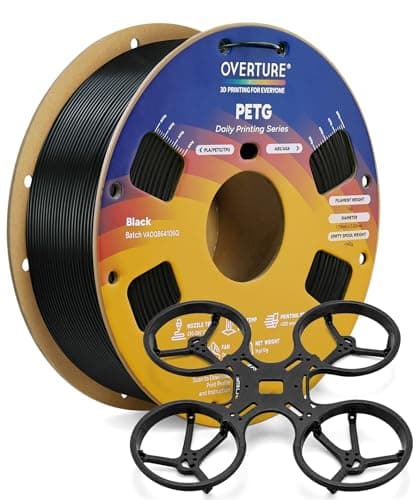
Marginally on large flat parts in a cold or drafty room. On small and tall parts it can make things worse by reducing effective part cooling. Prusa list no enclosure requirement for PETG.
+ − Why does my PETG warp if it does not need an enclosure?
PETG warps far less than ABS but not zero, and large flat parts accumulate contraction. Check plate cleanliness and first-layer adhesion first — a lifted corner is usually an adhesion problem rather than a thermal one in PETG.
+ − Which materials genuinely need an enclosure?
Prusa mark ABS, ASA, polycarbonate and polyamide as enclosure recommended. Those are the materials that shrink enough for a draft to lift a corner off the plate.