The material question has a short answer: PLA+ for most toys, PETG for the ones that get thrown, TPU for anything soft. The risks worth your attention are size, breakage and heat, and none of them is solved by choosing a fancier spool.
How this page is funded. Buy links go to Amazon and we earn a commission on qualifying purchases at no extra cost to you. Commission never decides an order or a score, we accept no free products or sponsored placements, and every roundup names something to skip. Full disclosure.
The picks, ranked
The picks, ranked
#
Product
Best for
Score
Price
1
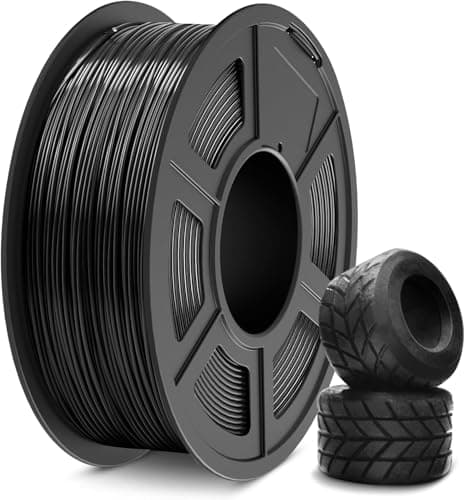
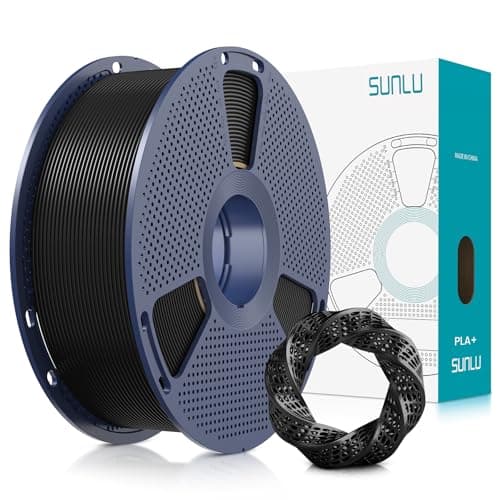
SUNLU PLA+Cheap, prints without an enclosure or fumes worth worrying about, and the toughened grade cracks less than plain PLA when a part is stepped on.185-235 C nozzle, no enclosure
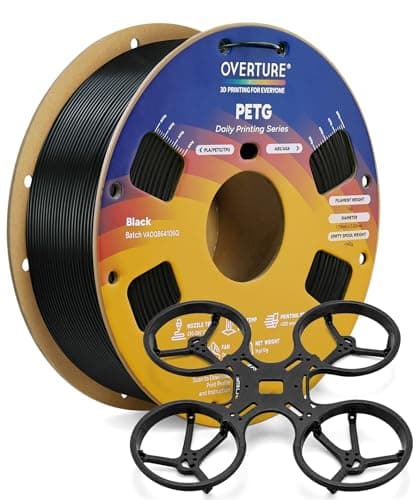
Overture PETGThe right answer for anything that will be dropped down stairs or left in a car. Tougher than PLA and far more tolerant of warm water.Noted for impact resistance
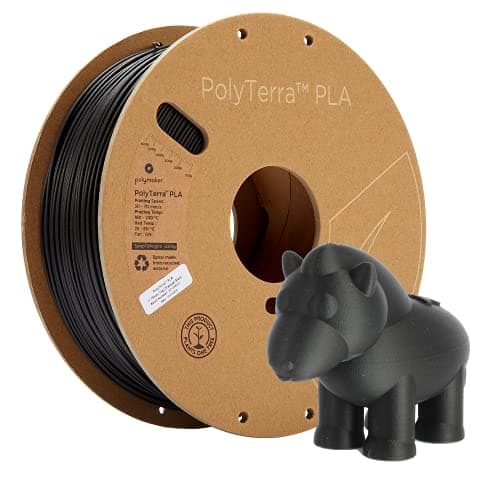
Polymaker PolyTerra PLAA matte surface hides layer lines well enough that the toy does not need painting, and not painting a child's toy removes a whole category of question.Matte finish at PLA prices
SUNLU TPU 95AFor wheels, bumpers and anything that would otherwise be a hard corner. Slow to print and worth it on a toy that gets swung around.95A, roughly 20-40 mm/s
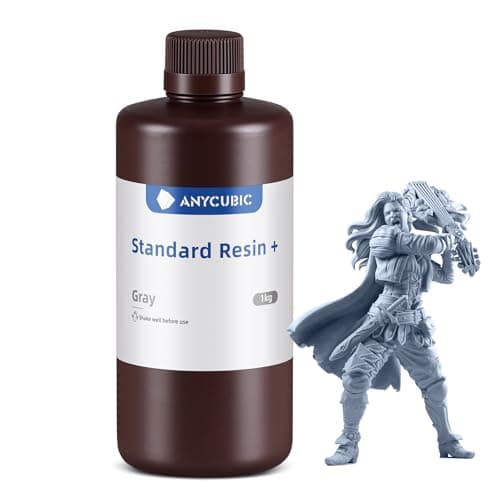
ANYCUBIC Standard Resin+Formlabs' own safety guidance treats liquid resin as a skin sensitizer, and cured parts can retain uncured resin in crevices. Wrong tool, wrong hands.Photopolymer resinSkip this
Live prices verified October 21, 2026. Scores are our own fit rating for the stated use, not a measurement and not a customer rating.
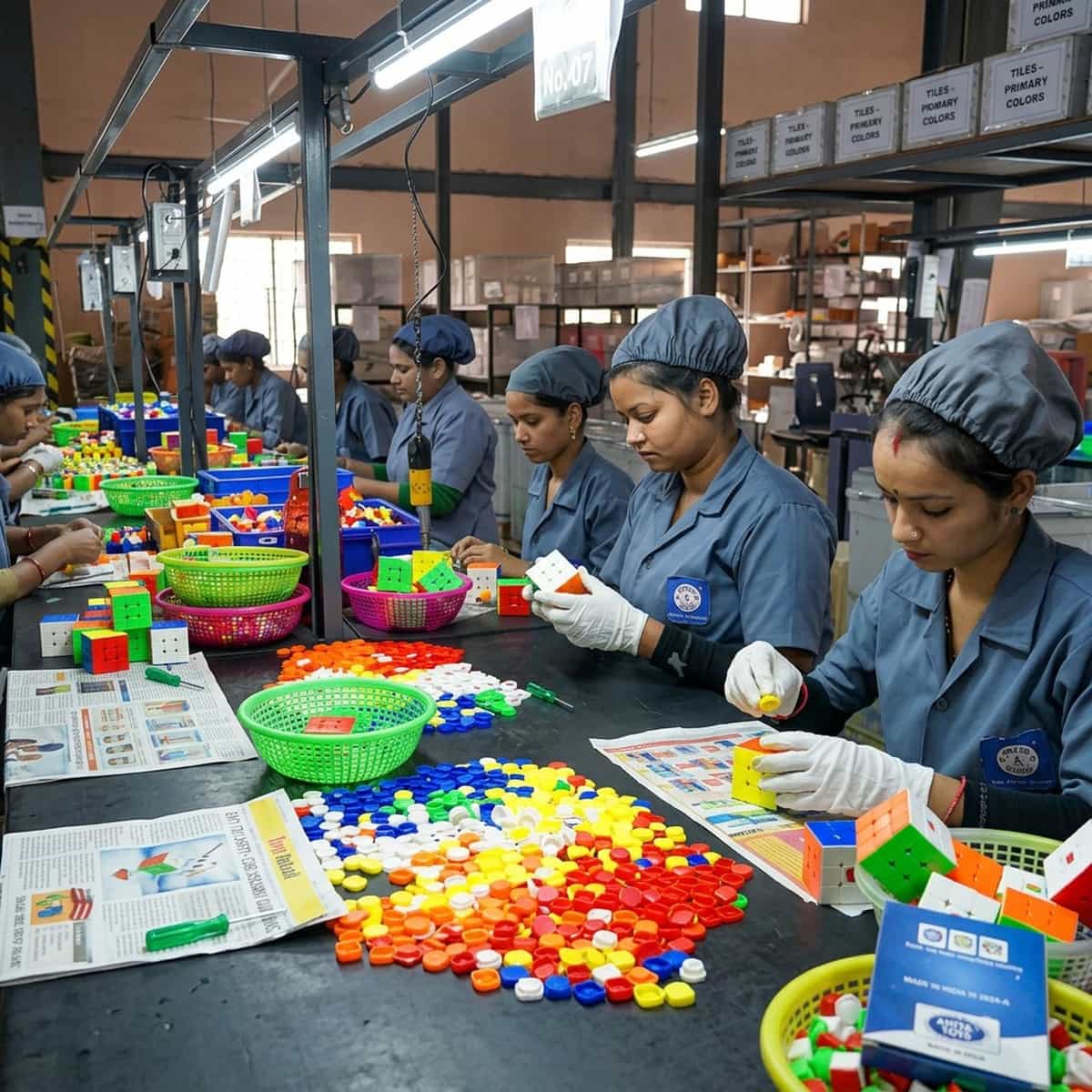
Colorful children's learning toys being assembled at a factory.
The risks that are real, and the one that is not
Most discussion of printed toys starts with the polymer, which is the least important variable. Four things actually decide whether a printed toy is a sensible object to hand a child, and only one of them is about filament.
Size, for children under three. The federal small parts rule exists because a small object can block an airway. The CPSC defines a small part as anything that fits, uncompressed and in any orientation, entirely inside a test cylinder sized to model the throat of a child under three U.S. Consumer Product Safety Commission. A printed toy for that age has to be too big to fit, and so does every piece it can break into.
How it breaks. A printed part fails along layer boundaries with little warning. The question is not whether it breaks but what it becomes: a part that snaps into two large blunt halves is a different object from one that shatters into shards. Toughened materials and thicker walls change this.
Heat. Prusa are explicit that PLA gets soft and deforms above about 60 C Prusa Research. A car in summer passes that. A dishwasher passes it. Both turn a toy into a distorted object with new sharp edges.
Hygiene. Layer lines are crevices. They hold what gets into them, and a printed surface cannot be scrubbed the way a molded one can. This is the same reasoning set out on is PETG food safe, and it applies to anything that goes near a mouth.
Design decides more than the spool does
Every rule below costs nothing and does more for safety than any material choice on this page.
No small detachable parts for under-threes. Print the toy as one piece, or make the joints permanent. Press-fit eyes, wheels and buttons come off.
Thick walls, generous fillets. Three or four perimeters rather than two, and rounded edges everywhere. A thin wall in PLA is the part that shatters.
No embedded magnets or batteries. Both are ingestion hazards that are far more serious than the plastic around them, and a printed housing is not a reliable retainer.
Print flat faces down. Layer orientation decides where a part snaps. Put the layers across the direction of the load, not along it.
Deburr every part. A stringing artifact or an elephant's-foot ridge is a sharp edge on something a child will grip hard.
Why PLA+ is the right default
PLA prints at 185 to 235 C on a 50 to 60 C bed with no enclosure Prusa Research, which matters in a house: an open printer running PLA in a living room is a different proposition from an open printer running ABS, which Prusa recommend enclosing Prusa Research. PLA is also the cheapest material here, and toys get printed in quantity.
The toughened PLA+ grades are the version to buy. They cost about what plain PLA costs and they are noticeably less brittle on thin sections, which is exactly the failure mode a toy sees. What they do not change is heat resistance — a PLA+ part deforms in a hot car exactly as PLA does. The distinction is covered on PLA versus PLA+.
When to step up to PETG
PETG is the material for toys that will be thrown, chewed on by a dog, left outside overnight or washed often. Prusa note it for impact resistance and publish 215 to 270 C at the nozzle with a 70 to 90 C bed Prusa Research, and its heat tolerance is meaningfully better than PLA's — enough that warm water does not distort it.
Two caveats. PETG is harder to finish smoothly, so expect more visible layer lines on a toy you are not painting. And food contact is a separate question from toughness: the polymer is not the problem, the printed surface is, which is the whole argument on is PETG food safe.
Soft parts, and why they are worth the print time
TPU turns hard corners into soft ones. Wheels that do not mark floors, bumpers on a ride-on toy, grips on a handle: all of them are better in a flexible material, and 95A is the grade a consumer printer handles. Prusa's flexible guidance puts printing at roughly 20 mm/s with 30 to 40 mm/s as the ceiling Prusa Research, so plan for a long print — the full page is best TPU filament.
One caution specific to children: a soft part is also a chewable part. TPU is not a teething material, it is not certified for mouth contact, and a soft printed part that can be bitten through becomes a small part. Keep flexible components on toys for older children.
Cleaning a printed toy without destroying it
Warm soapy water and a brush, then air dry. That is the whole method, and the two things to avoid are both temperature problems.
No dishwasher for PLA. Dishwasher cycles run above the temperature at which Prusa say PLA softens Prusa Research. The toy comes out warped and the warp creates edges that were not there before.
No boiling water, no sterilizing. The same problem, faster. If a toy needs to be sterilized, it should not be a printed toy.
Because printed surfaces cannot be scrubbed properly, treat a printed toy as replaceable rather than permanent. Reprinting is cheap, which is one of the genuine advantages here.
What we would not print for a child
Anything in resin. Formlabs' safety guidance treats liquid photopolymer as a skin sensitizer requiring gloves and ventilation Formlabs, and incompletely cured resin can remain in crevices on a finished part. Resin is for display models handled by adults — see resin safety.
ABS or ASA in an open room. Both are recommended to be enclosed Prusa Research, and neither offers anything a toy needs that PETG does not.
Carbon-filled filament. It buys stiffness a toy does not need, it makes parts more brittle in thin sections, and it wears brass nozzles measurably E3D. A stiffer toy that snaps into sharper pieces is a worse toy.
Painted finishes for the under-three age group. If the toy is going in a mouth, the paint is now part of the toy. A matte filament in the color you want removes the question.
Every pick, in detail
01
SUNLU PLA+
SUNLU
Most toys · 8.8/10 our fit score
The cheapest filament we would load without flinching, and the reason most people never need to spend more.
The polymer is not the concern; the object is. PLA is fine for a printed toy for a child old enough not to mouth it, provided the toy is too large to be a choking hazard, has thick walls and rounded edges, and is kept away from heat. PLA softens above about 60 C, so no dishwasher and no hot cars.
+ − PLA or PETG for kids' toys?
PLA+ for most toys, because it is cheap, prints easily and finishes well. PETG for anything that gets thrown, taken outside or washed often, because Prusa note it for impact resistance and it tolerates warm water far better than PLA.
+ − Can 3D printed toys go in the dishwasher?
Not in PLA. Dishwasher temperatures exceed the point at which Prusa say PLA softens and deforms. PETG survives a gentle cycle better, but warm soapy water by hand is the method that works for both and does not create new sharp edges.
+ − Are resin printed toys safe for kids?
No. Formlabs' safety guidance treats liquid resin as a skin sensitizer requiring gloves and ventilation, and a cured part can hold uncured resin in crevices and unwashed detail. Resin is for display pieces handled by adults, not for objects a child holds.