A castable resin exists to be destroyed: it prints the pattern, the pattern is invested in plaster, and the burnout turns it into a cavity for metal. Wax content and a published burnout schedule are what separate the ones that work from the ones that crack a flask.
How this page is funded. Buy links go to Amazon and we earn a commission on qualifying purchases at no extra cost to you. Commission never decides an order or a score, we accept no free products or sponsored placements, and every roundup names something to skip. Full disclosure.
The picks, ranked
The picks, ranked
#
Product
Best for
Score
Price
1
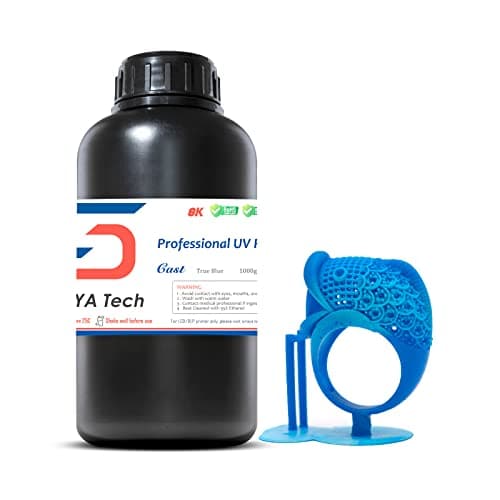
Siraya Tech CastThe one castable here with a real data sheet: wax content per color, shrinkage, hardness and the burnout ramp your caster will ask for.16-24% wax by color, 6% volume shrinkage
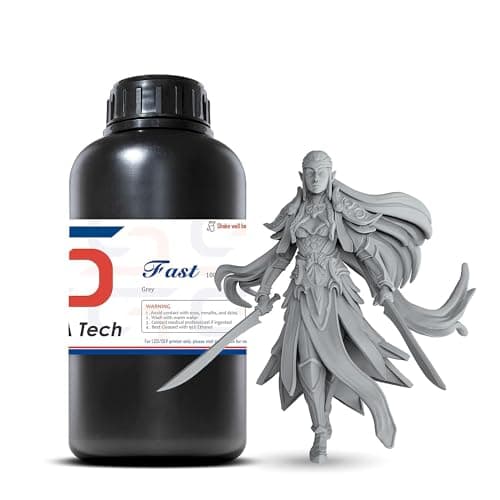
Siraya Tech Fast ABS-LikePrint the sizing and fit checks in a cheap standard resin. Castable is several times the price and softer to handle, so do not learn on it.Standard fast-printing resin
Wash and Cure StationA jewelry pattern is small, fragile and full of crevices. Consistent washing and controlled curing is the difference between a crisp pattern and a fuzzy one.Wash and UV cure in one unit
Phrozen AnyCastSold in 1 kg where much of this category ships 500 g, which lowers cost per gram. Phrozen publish less technical detail for it than Siraya do for Cast.405 nm, jewelry castable line
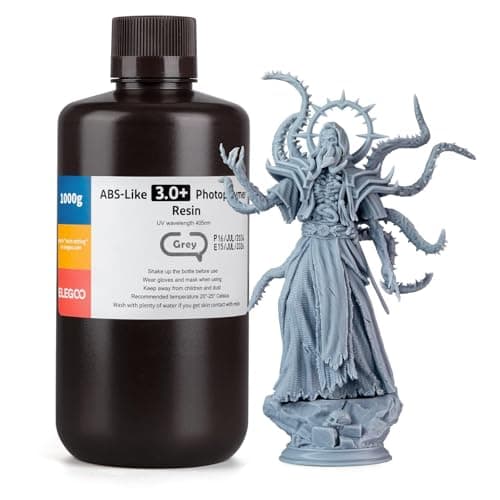
ELEGOO ABS-Like ResinTough and ABS-like resins are formulated to survive, which is the opposite of what burnout needs. They leave ash and can ruin the investment and the flask.Toughened display resinSkip this
Live prices verified October 21, 2026. Scores are our own fit rating for the stated use, not a measurement and not a customer rating.
A resin printer vat holding liquid photopolymer.
What castable resin is actually for
Castable resin is a consumable pattern material for lost-wax casting. The sequence is fixed: print the pattern, attach it to a sprue tree, invest the tree in a plaster-based investment, put the flask in a kiln and burn the pattern away, then pour molten metal into the cavity it leaves. The resin is never the product. Its whole job is to disappear cleanly.
That single fact explains every property difference between a castable and the resins on the rest of this site. A display resin is formulated to be hard, tough and stable. A castable is formulated to burn out completely at a temperature the investment tolerates, leaving as close to no ash as the chemistry allows. Those goals pull in opposite directions, which is why a castable pattern feels soft and fragile in the hand and why a tough resin is useless here.
Wax content is the trade you are making
Most modern castables are wax-loaded: the resin carries a percentage of wax that melts and flows out early in the burnout, leaving less material to be oxidized at high temperature. More wax generally means a cleaner burnout and a softer, more fragile green print.
Siraya Tech publish the loading per color for their Cast resin: 16 percent for Purple, 20 percent for Royal Blue and 24 percent for True Blue Siraya Tech. That is unusually specific for this category, and it turns a marketing distinction into a decision: the higher-wax color for chunky pieces where burnout cleanliness matters most, the lower-wax color for filigree that has to survive support removal without snapping.
What a published data sheet gives you
Siraya's data sheet for Cast is the reason it leads this page, because every figure on it answers a question a caster will ask.
Light source: 395 to 405 nmSiraya Tech. This is the standard consumer LCD wavelength, so any mainstream MSLA printer can run it.
Volume shrinkage: 6 percentSiraya Tech. Published, real, and the reason a ring printed to a nominal size comes back small. Size up deliberately and test with a printed sizer before committing a batch.
Hardness: 70D for Purple, 65D for True BlueSiraya Tech. The higher-wax color is the softer one, which is exactly the fragility trade described above.
Viscosity: 300 cps at 25 CSiraya Tech. Room temperature matters. In a cold workshop this resin is noticeably thicker than at 25 C, and thick resin does not flow back under the plate between layers, which shows up as failed small features.
A burnout schedule: from 50 C rising to 732 C by hour three, held there through hour five, then stepped down Siraya Tech. This is the document to hand your caster. A schedule that ramps too fast boils the pattern and cracks the investment before the wax has a chance to leave.
Phrozen's current jewelry castable, AnyCast, is sold as a 1 kg bottle for 405 nm printers and is aimed at the same lost-wax workflow Phrozen. It publishes less on its product page than Siraya do — no ash figure, no hardness, no shrinkage — so it is the choice when bottle size and price per gram matter more than paperwork.
Printing a pattern that will survive the process
Jewelry patterns are the hardest thing a consumer resin printer does: small, detailed, and made of a material chosen to be weak. A few practices carry most of the result.
Calibrate exposure on the actual resin. A castable behaves nothing like the gray display resin your profile was written for. Print an exposure test before the first real tree — the method is on resin print settings.
Support the sacrificial faces. Every support mark is a surface you will have to file on the metal casting, so put them where a jeweler would file anyway: inside a ring band, under a bezel, on the back.
Keep the workshop warm. Given the published viscosity figure, a cold room genuinely changes print quality. Let the bottle and the vat reach room temperature before starting.
Handle it like wax, not like plastic. A wax-loaded pattern snaps at thin prongs during cleanup far more readily than a display resin. Cut supports rather than twisting them off.
Washing and curing a castable
Uncured resin left in a crevice is extra material for the kiln to burn and extra ash in the mold, so washing has to be thorough. It also has to be gentle, because the pattern is soft: an ultrasonic bath long enough to strip a display model can round the detail off a filigree setting.
Curing is where castables differ most from everything else on this site. Where a display resin is post-cured hard, a pattern only has to hold its shape until it is invested — follow the curing guidance the resin's own maker publishes rather than reusing a display-resin profile, because the two are optimizing for different endings.
The safety and waste rules do not change: Formlabs' guidance treats liquid photopolymer as a skin sensitizer requiring gloves and ventilation Formlabs, and uncured resin and contaminated wash alcohol are chemical waste rather than drain waste Formlabs. The full workflow is on resin safety and the kit is on resin cleanup.
Can you cast from a PLA print instead?
Yes, and people do — it is a genuine technique rather than a myth, and it is why this page exists on a filament site. A PLA pattern printed on an ordinary FDM machine can be invested and burned out, and for chunky pieces with no fine detail it can work.
Two reasons it is the second choice for jewelry. First, resolution: an FDM print carries layer lines that no burnout removes, and the metal reproduces every one of them. Second, burnout behavior: PLA is not wax-loaded, so it has to be oxidized rather than melted out, and it generally needs a longer, hotter schedule than a wax-loaded castable — which is exactly the kind of change a casting house will refuse to make for one customer's flask. If you own the kiln and the piece is large, PLA is worth trying. If you are sending work out, buy the castable.
The category's real constraint is stock
Castable resin is a small, specialist market and lines come and go — Phrozen's older W-series castables have been through several generations and stock moves between regions. Buy enough for the project in one order, keep the data sheet with the bottle, and do not assume the same product will be available for the next batch. If consistency across a production run matters, that is another reason to standardize on a resin your caster already runs.
If the piece is meant to be worn as plastic rather than cast in metal, this is the wrong material entirely — weight, finish and skin contact decide that build instead, and they are covered on best filament for 3D printed jewelry.
Every pick, in detail
01
Siraya Tech Cast
Siraya Tech
A published burnout schedule · 8.7/10 our fit score
The castable resin with a real data sheet behind it, including the burnout schedule a caster will ask you for before they touch your tree.
Sold as a 1 kg bottle where much of the castable market is 500 g, which lowers the cost per gram
Phrozen's castable line has been through several generations, so profiles and community settings exist
What it does not
Phrozen do not publish ash content, hardness or shrinkage for AnyCast on the product page the way they did for the older W-series
Their own W20 castable is listed sold out on the US store, so stock across this category moves — check before planning a casting run
Any castable is a specialty purchase: without access to a burnout kiln and an investment caster, it prints worse than a standard resin and casts nothing
A resin formulated to burn out of an investment mold cleanly, so it can be used as a lost-wax pattern. It is destroyed by the process on purpose — the finished object is metal, not resin.
+ − Does wax content matter in castable resin?
Yes, and it is a trade. More wax generally burns out more cleanly and leaves a softer, more fragile printed pattern. Siraya Tech publish 16 percent for Cast Purple, 20 percent for Royal Blue and 24 percent for True Blue, which turns the choice into a decision rather than a guess.
+ − Why did my cast ring come out the wrong size?
Shrinkage, most likely. Siraya publish 6 percent volume shrinkage for Cast, and the investment and metal contribute their own changes on top. Print a sizer, cast it, and calibrate your own offset before producing a batch.
+ − Can I use a normal or tough resin for casting?
No. Standard and toughened resins are formulated to survive, not to disappear. They leave ash in the mold and can crack the flask, which is why casting houses ask which resin you used before they accept a tree.