A clear resin print comes off the plate translucent and slightly cloudy, because the surface is microscopically rough and the part is still curing. Clarity comes from the finishing, and the resin's real job is to not go yellow while you do it.
How this page is funded. Buy links go to Amazon and we earn a commission on qualifying purchases at no extra cost to you. Commission never decides an order or a score, we accept no free products or sponsored placements, and every roundup names something to skip. Full disclosure.
The picks, ranked
The picks, ranked
#
Product
Best for
Score
Price
1
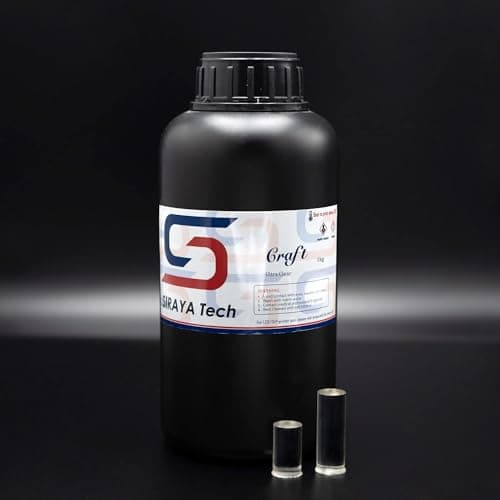
Siraya Tech Craft Ultra ClearSiraya publish hardness, impact, heat deflection and refractive index, and state plainly that high transparency comes with the use of a coating.82D hardness, 75 C HDT, refractive index 1.52
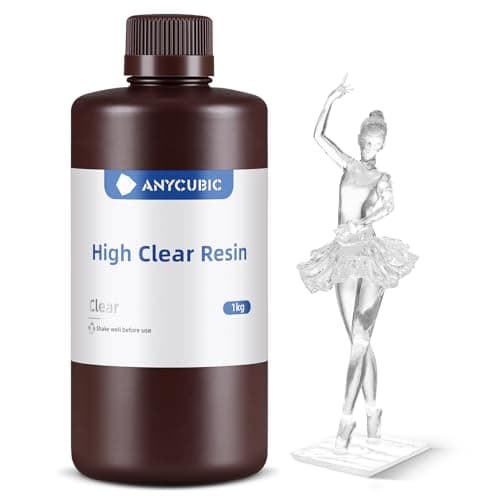
ANYCUBIC High Clear ResinANYCUBIC publish a transmission figure and a full mechanical table, plus exposure times. The clarity claim is explicitly tied to clear-coating too.92% light transmission, anti-yellowing package
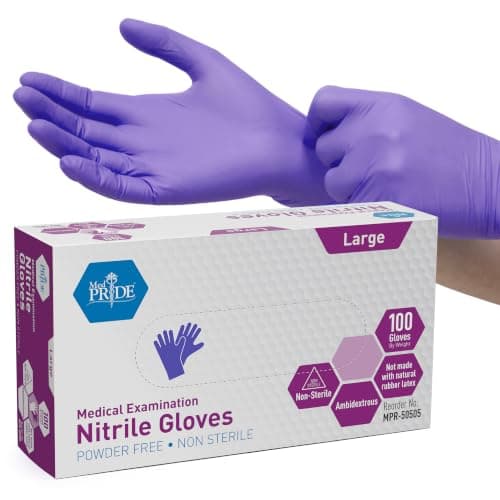
Nitrile Disposable GlovesLiquid resin is a skin sensitizer. Formlabs' own safety guidance is specific about non-reactive gloves, and clear resin is no gentler than any other.Nitrile or neoprene, per Formlabs
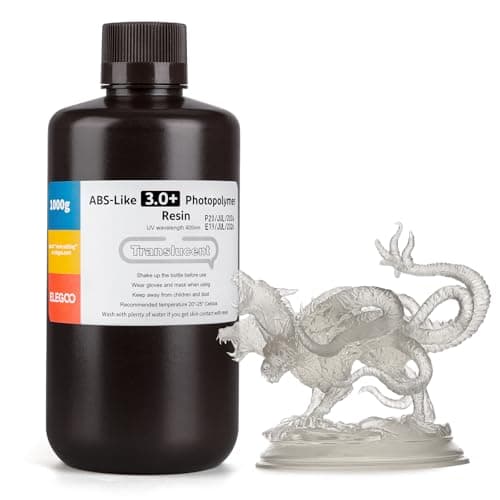
ELEGOO ABS-Like 3.0+ TranslucentNot optically clear, but far less brittle than a standard clear. The right pick when the part is handled rather than displayed.ABS-like toughness, translucent
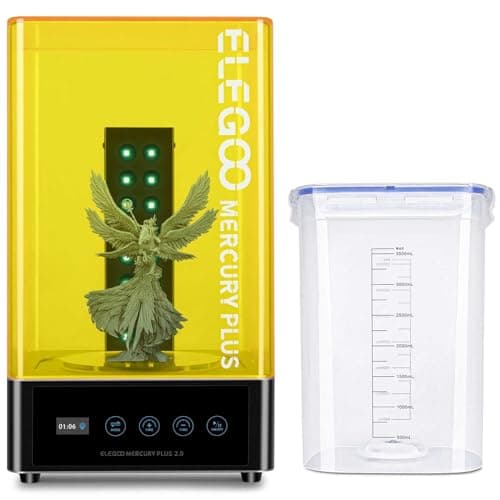
Wash and Cure StationResidue is the enemy of a clear part. A timed wash removes the variable that makes one print cloudy and the next one sharp.Solvent wash plus 405 nm cure
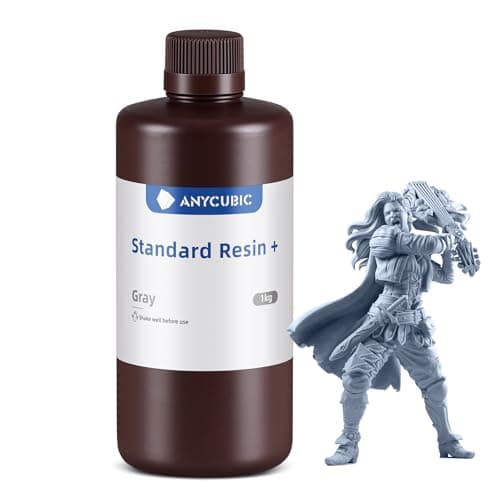
ANYCUBIC Standard Resin+A fine general resin that is not formulated against yellowing. Use it for prototypes and buy a clear-specific bottle for anything on display.Standard 405 nm resinSkip this
Live prices verified September 21, 2026. Scores are our own fit rating for the stated use, not a measurement and not a customer rating.
A clear resin print curing under a lamp.
Published figures for the two clear-specific resins here.
Resin
Hardness
Heat deflection
Elongation
Noted for
Siraya Tech Craft Ultra Clear
82D
75 C at 0.455 MPa
6%
Refractive index 1.52
ANYCUBIC High Clear
77-79 HD
-
14-18%
92% light transmission
Published figures for the two clear-specific resins here. Different test regimes, so these are not directly comparable. What they share is the important part: both makers tie their clarity claims to a clear coat rather than to the print alone. Figures from Siraya Tech, ANYCUBIC, retrieved 2026-09-21.
Why a clear print is not clear
Two things stand between a clear resin and a clear object. The first is surface roughness: every layer step and every support scar scatters light, so a part that is optically perfect inside still looks frosted. The second is the resin itself continuing to react — clear formulations are the ones that stay water-white instead of drifting amber as they age.
Both makers here are unusually honest about the first point. Siraya list high transparency “with the use of coating” as a key feature of Craft Ultra Clear Siraya Tech, and ANYCUBIC state that clarity is maintained when clear-coated ANYCUBIC. Sanding and a gloss coat are part of the process, not a workaround for a bad print.
What the published numbers tell you
ANYCUBIC publish 92 percent light transmission for High Clear, along with a mechanical table: 77 to 79 HD hardness, 28 to 38 MPa tensile strength, 14 to 18 percent elongation at break and 105 J/m Izod impact ANYCUBIC. Siraya publish 82D hardness, 38 MPa tensile, 25 J/m Izod, a 75 C heat deflection temperature at 0.455 MPa, 6 percent elongation and a refractive index of 1.52 Siraya Tech.
Read those two elongation figures together and the trade is obvious: the harder, clearer, more heat-resistant resin is also the more brittle one. For a trophy or a lens that never gets dropped, hardness wins. For dice or a prop that will be handled, the tougher option is worth the small loss in clarity — and the toughness ranking is on tough and ABS-like resin.
Printing for clarity
Orient so supports miss the show faces. Every support scar is a light-scattering site and sanding one out of a curved optical surface is miserable.
Print solid, or with thick walls. Internal cavities trap uncured resin, which cures later and unevenly.
Use the published exposures as a starting point. ANYCUBIC quote 20 to 40 seconds for the first layers and around 4 seconds for normal layers ANYCUBIC, then run an exposure test — clear resins are more exposure-sensitive than pigmented ones because light travels further through them.
Wash thoroughly and dry completely. ANYCUBIC specify 95 percent IPA for at least 3 minutes ANYCUBIC. Residue dries to a haze that no amount of curing fixes.
Cure gently and evenly. Over-curing is a common cause of yellowing in otherwise good clear prints. ANYCUBIC publish 405 nm at 3 minutes as their figure ANYCUBIC.
The finishing that actually produces clarity
Wet sand progressively. Start coarse enough to remove layer steps, then work up through the grits. Skipping steps leaves scratches that the coat magnifies.
Clear coat, or dip. A gloss clear fills the remaining micro-texture and matches the refractive index closely enough to make the surface behave like glass. Siraya’s 1.52 refractive index is in the same neighborhood as window glass Siraya Tech.
Keep it out of UV afterward. Yellowing is driven by light and oxygen; ANYCUBIC describe their anti-yellowing package as a UV absorber and antioxidant combination ANYCUBIC, which slows the process rather than stopping it.
Do not use a water-washable resin for optical parts unless you have tested it — the wash chemistry differs and so does the finish. Those resins have their own page: water washable resin.
Safety does not relax because the resin is pretty
Liquid resin can cause skin irritation and allergic skin reactions, and Formlabs’ guidance is specific: non-reactive nitrile or neoprene gloves, ventilation, and no skin contact Formlabs. Uncured resin and contaminated wash alcohol are chemical waste, not drain waste Formlabs.
Clear resin adds one wrinkle: it is much harder to see on a bench or a glove than a pigmented resin is. Wipe surfaces you think are clean, and keep the whole job on a tray. The full routine is on resin safety and resin cleanup.
What clear resin is genuinely good at
Lenses, light pipes and covers where the part is small and can be polished.
Trophies, display bases and paperweights, which is the classic use and where the yellowing question matters most.
Dice and gaming pieces, though a tougher translucent resin is often the better buy.
Prototype housings where you want to see inside the assembly before committing to an opaque part.
Every pick, in detail
01
Siraya Tech Craft Ultra Clear
Siraya Tech
Display pieces that must stay clear · 8.6/10 our fit score
The clear resin with a published refractive index, and a maker honest enough to tie the clarity claim to a coating.
Published specifications for Siraya Tech Craft Ultra Clear
Surface texture, usually, plus residue. Layer steps and support scars scatter light, and dried alcohol leaves a haze. Both Siraya and ANYCUBIC tie their clarity claims to a clear coat, so wet sanding and a gloss coat are part of the process rather than a rescue.
+ − Does clear resin turn yellow?
All photopolymers drift with light and oxygen; the clear-specific resins are formulated to slow it. ANYCUBIC describe an anti-yellowing agent, UV absorber and antioxidant package for High Clear. Keeping the finished part out of direct sunlight does more than any resin choice.
+ − Which clear resin is toughest?
Of the two clear-specific resins here, ANYCUBIC High Clear publishes the higher elongation at break, 14 to 18 percent against Siraya's 6 percent, and a 105 J/m Izod figure. Siraya's Craft Ultra Clear is harder and more heat resistant at 82D and 75 C.
+ − Do I need a wash and cure station for clear resin?
Not strictly, but consistency matters more here than with pigmented resin. ANYCUBIC specify at least three minutes in 95 percent IPA and around three minutes of 405 nm curing; doing that the same way every time is what stops one print coming out sharp and the next hazy.