PCTG is a copolyester like PETG with more of the ingredient that makes it tough. The material is real and the upgrade is real, but the label is not policed: several spools sold as PCTG use a resin close enough to PETG that you are paying a premium for a rename.
How this page is funded. Buy links go to Amazon and we earn a commission on qualifying purchases at no extra cost to you. Commission never decides an order or a score, we accept no free products or sponsored placements, and every roundup names something to skip. Full disclosure.
The picks, ranked
The picks, ranked
#
Product
Best for
Score
Price
1
3D-Fuel Pro PCTG3D-Fuel publish why their resin is high-CHDM and say outright that lower-CHDM competitors behave more like a nice PETG. That disclosure is the reason to start here.250-280 C nozzle, 80 C bed, dry at 70 C
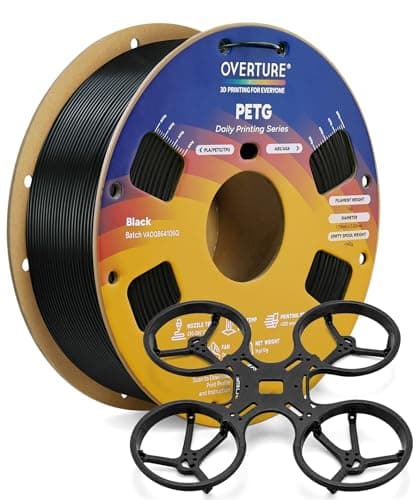
Overture PETGFor most brackets, enclosures and household parts, well-printed PETG does the job at a fraction of the price. This is the honest default.PETG, prints on anything
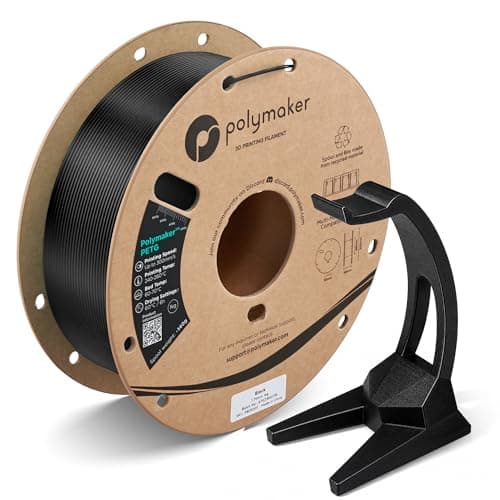
Polymaker PolyLite PETGBefore paying for a copolyester upgrade, print the part in a PETG you can trust. Half the time the upgrade was solving a settings problem.Published data sheet, wide window
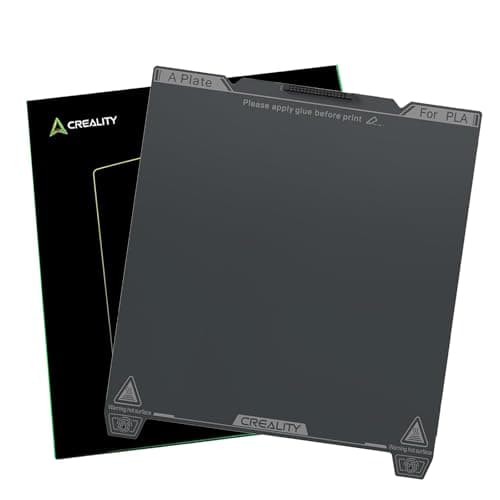
Smooth PEI Spring Steel PlatePETG and PCTG both bond aggressively to smooth PEI. Use glue as a release layer or print on textured, or the plate loses.Smooth PEI, needs a release layerSkip this
Live prices verified September 21, 2026. Scores are our own fit rating for the stated use, not a measurement and not a customer rating.
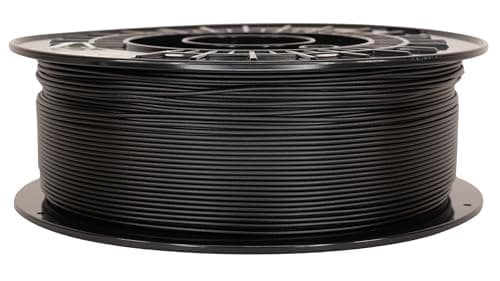
A spool of copolyester filament beside a printed part.
PCTG against the PETG it is sold as an upgrade to.
Material
Nozzle (C)
Bed (C)
Drying
Enclosure
3D-Fuel Pro PCTG
250-280
80 textured PEI
70 C, 6-8 h
Not needed
PETG, Prusa guide
215-270
70-90
55-65 C
Not needed
PCTG against the PETG it is sold as an upgrade to. PCTG's window sits at the top of PETG's and above it. A PETG profile is the right starting point, with the hotend raised and the fan turned down. Figures from 3D-Fuel, Prusa Research, Prusa Research, retrieved 2026-09-21.
What PCTG actually is
PETG and PCTG are the same family of copolyester, separated by how much CHDM — cyclohexane dimethanol — is in the resin. 3D-Fuel place their Pro PCTG about two thirds of the way from PETG toward Tritan, the copolyester used in reusable water bottles, and name CHDM as the component that provides impact toughness, chemical resistance, UV resistance, temperature resistance and lower moisture absorption 3D-Fuel.
That single sentence contains the whole buying decision, and it also contains the trap: CHDM content is a dial, not a switch. 3D-Fuel say plainly that many other PCTG filaments use a resin with a lower CHDM percentage, so those spools tend to be more like a really nice PETG than a true PCTG 3D-Fuel.
What decides whether you need it
Is the part failing in impact? This is PCTG’s strongest case. If your PETG brackets snap rather than bend, more CHDM is a real fix.
Does it meet chemicals? 3D-Fuel publish a resistance table covering alcohol cleaners, fuels and solvents, oils, harsh cleaners, mild acids and strong bases — with PCTG rated more resistant than PETG against sodium hydroxide 3D-Fuel. For a workshop part cleaned with IPA daily, that matters.
Does it need to be clear? Copolyesters print clearer than most filaments, and the same techniques apply as on clear PETG: fat layers, slow speeds, dry filament.
Can your hotend do 280 C? 3D-Fuel’s own profile advice is to start from a PETG profile and raise the hotend to 250 to 280 C 3D-Fuel, which is above where many PTFE-lined hotends should be running.
Is your PETG actually printing well? A wet spool or an uncalibrated flow rate produces weak parts in any copolyester. Fix that first; the settings are on PETG print settings.
Printing it
3D-Fuel give an unusually practical recipe for anyone without a ready-made profile: start from PETG, raise the hotend to 250 to 280 C, set a textured PEI bed to 80 C, drop cooling as low as possible, skip the enclosure or hold it at 45 C if it is heated, calibrate pressure advance, and enable a wipe after retraction 3D-Fuel.
Cooling is the counterintuitive one. Copolyesters bond better with less fan, and stringing is better solved with retraction tuning and dry filament than with airflow.
Drying still applies. 3D-Fuel publish 70 C for 6 to 8 hours, or 65 C for 8 to 12 hours if your dryer stops lower, and note that PCTG absorbs moisture more slowly than PETG but still absorbs it 3D-Fuel.
Mind the plate. Copolyesters bond hard to smooth PEI. A glue-stick release layer costs a dollar and saves a plate — the detail is on build plates.
No enclosure needed. That is the practical advantage over ABS, ASA and PC: PCTG gives you a toughness upgrade without a chamber.
PCTG against PETG, honestly
The site’s detailed head-to-head is on PETG versus PCTG, and the summary has not changed: the upgrade is real but narrow. You are buying impact toughness, slightly better clarity and better chemical resistance, for a higher price and a hotter hotend. Everything else about the two materials is close enough that a well-printed PETG part beats a badly-printed PCTG one.
What has changed is availability. A year ago the category was mostly unbranded listings; today at least one maker publishes a real technical argument for the resin they use, which makes the premium checkable rather than an act of faith.
Stiffness above toughness: a carbon-filled PETG gets there faster — see PLA-CF versus PETG-CF.
Pure cost per part: PETG, every time. The figures are on price per kg.
Every pick, in detail
01
3D-Fuel Pro PCTG
3D-Fuel
The PCTG with a published resin argument · 8.5/10 our fit score
The PCTG that explains its own resin. 3D-Fuel publish why high CHDM content matters and say outright that lower-CHDM competitors behave like a nice PETG.
In impact toughness and chemical resistance, yes, when the resin is genuinely high in CHDM. 3D-Fuel place their Pro PCTG about two thirds of the way from PETG toward Tritan and warn that lower-CHDM spools behave more like a very good PETG. For ordinary brackets and enclosures, PETG is still the sensible buy.
+ − What temperature do you print PCTG at?
3D-Fuel recommend starting from a PETG profile and raising the hotend to 250 to 280 C with a textured PEI bed at 80 C, cooling as low as possible, and no enclosure required. That is above where PTFE-lined hotends belong, so check yours first.
+ − Does PCTG need drying?
Yes, though less urgently than PETG. 3D-Fuel publish 70 C for 6 to 8 hours, or 65 C for 8 to 12 hours on a cooler dryer, and note PCTG absorbs moisture more slowly than PETG but still absorbs it. Store it sealed with desiccant.
+ − How do I know a spool is really PCTG?
Look for a specific technical claim about the resin rather than a comparison slogan. CHDM content, a published impact figure or a chemical-resistance table all indicate a maker who knows what is in the pellet. “Better than PETG” on its own is marketing.