Standard resin shatters and everyone discovers it the same way: a miniature falls off a shelf. ABS-like resins are toughened formulations that fix most of that, at the price of finer detail, a fresh exposure calibration and a little more money.
How this page is funded. Buy links go to Amazon and we earn a commission on qualifying purchases at no extra cost to you. Commission never decides an order or a score, we accept no free products or sponsored placements, and every roundup names something to skip. Full disclosure.
The picks, ranked
The picks, ranked
#
Product
Best for
Score
Price
1
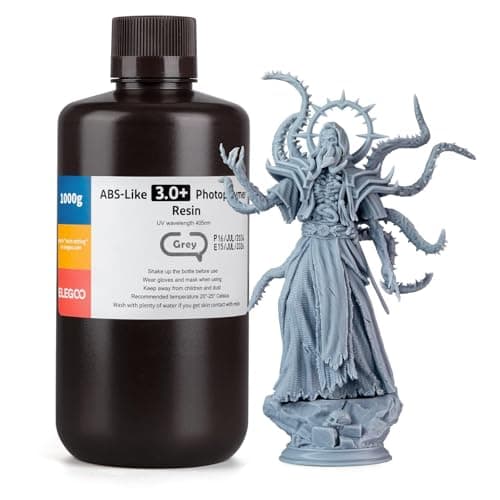
ELEGOO ABS-Like ResinParts survive a knock off a desk where standard resin shatters. It is not ABS and it is not filament-tough, but it ends the most common complaint about resin.Toughened photopolymer, 1 kg
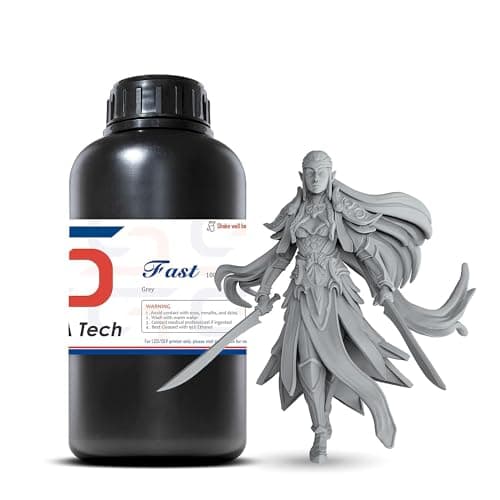
Siraya Tech Fast ABS-LikeAimed at shorter exposure times as well as toughness, which matters when a plate is a six-hour print rather than a two-hour one.Fast-printing ABS-like, 1 kg
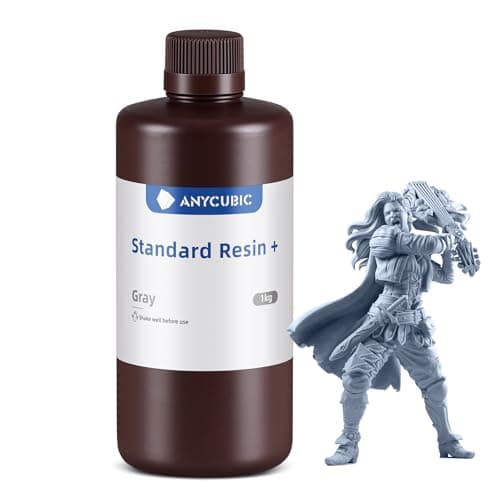
ANYCUBIC Standard Resin+Cheapest per bottle and the crispest detail of the three. Right for display pieces that never get handled, wrong for anything that does.405 nm standard resin
Nitrile Disposable GlovesFormlabs' guidance treats liquid photopolymer as a skin sensitizer. The resin you choose does not change the handling requirements at all.Powder-free nitrile, box of 100
Live prices verified September 13, 2026. Scores are our own fit rating for the stated use, not a measurement and not a customer rating.
A resin printer vat holding liquid photopolymer.
What "ABS-like" actually means
It is a marketing name, not a material standard. An ABS-like resin is a photopolymer formulated to behave more like a thermoplastic: less brittle, more willing to bend before it breaks, better at surviving a drop. There is no ABS in the bottle, and there is no shared specification behind the label — one brand's ABS-like and another's are different chemistries aimed at the same complaint.
That complaint is real and universal. Standard resin prints are hard, detailed and fragile: a thin sword snaps, a dropped bust explodes, and a functional part cracks under a load a PETG version would shrug off. Toughened grades exist because every resin owner runs into this in the first month.
The trade, in both directions
Toughness. The whole point. Toughened resins take a knock and flex slightly instead of shattering. They are still photopolymers — nothing here matches a printed nylon or even a PETG part for impact.
Detail. Standard resin generally resolves finer crisp edges. The difference is small and visible mostly on miniatures, where opacity and exposure matter as much as the formulation — the argument is on best resin for miniatures.
Exposure. Toughened resins usually want different exposure times from the standard resin whose profile you are using. Reusing an old profile is the most common reason a new bottle "prints badly".
Cost. ABS-like sits above standard per kilogram and below the specialist grades. Not a large gap on a single bottle; noticeable across a year.
Odor and viscosity. Vary by brand rather than by category. A thicker resin drains more slowly off supports and holds more in cupped geometry, which matters at cleanup.
Recalibrate exposure, every time
This is the practical heart of the comparison. Swapping to a toughened resin without re-running an exposure test produces under-cured, rubbery parts or over-cured, bloated detail, and people blame the resin for both.
Print an exposure test on the new bottle before anything you care about, and keep the profile with the bottle rather than in your head. Room temperature matters too: cold resin is thicker, flows back under the plate more slowly and fails small features. The method is on resin print settings.
When standard resin is the right answer
Display models that never leave the shelf. Maximum detail, minimum price, and nothing to survive.
Learning the machine. Calibration prints, test towers and the first dozen failures should not be printed in the expensive bottle.
Masters for molding. A master is handled gently once and copied; crisp detail beats toughness.
Anything you will paint heavily. Primer and paint hide the last few percent of resolution, but they do not make a fragile part strong — so this one cuts both ways.
When toughened is worth it
Tabletop miniatures that get played with. Weapons, antennae and outstretched arms are the parts that snap, and they snap in transit as often as in play.
Anything posted to someone. A courier will test your resin choice more thoroughly than you will.
Functional parts, within limits. Brackets, jigs and housings work in a toughened resin where standard would crack — but for a real mechanical part, filament is still the better tool, which is the argument on tough and functional resin and on filament versus resin.
Thin, unsupported geometry. Rigging, railings, spokes — anything where a standard-resin version would not survive support removal.
The handling rules do not change
Whichever bottle you buy, the workflow around it is identical and it is the part that actually carries risk. Formlabs' safety guidance treats liquid photopolymer as a skin sensitizer requiring gloves and ventilation Formlabs, and uncured resin plus contaminated wash alcohol are chemical waste rather than drain waste Formlabs.
Nitrile gloves, every session. Sensitization is cumulative and not reversible.
Ventilate, and cure fully. A tacky part is an uncured part, and uncured resin on a surface is resin on your hands later.
Dispose properly. Cure the waste solid before it goes anywhere near a bin; the full routine is on resin safety and the kit is on resin cleanup.
Water-washable is a cleanup choice, not a safety one. It removes the alcohol, not the sensitizer — see water washable resin.
Which to buy
If you own one bottle, make it a toughened one. It costs a little more and it fails less often in the way that makes people give up on resin printing. If you own two, keep a cheap standard bottle for calibration prints and display pieces, and the toughened one for anything that leaves the room.
Every pick, in detail
01
ELEGOO ABS-Like Resin
ELEGOO
The default toughened bottle · 8.6/10 our fit score
The default first bottle. Tougher than standard resin, cheap, and stocked everywhere.
Published specifications for ELEGOO ABS-Like Resin
No. It is a photopolymer formulated to behave more like a tough thermoplastic — less brittle, more willing to flex before breaking. The name is marketing, and there is no shared standard behind it, so two brands' ABS-like resins can be quite different.
+ − Does ABS-like resin lose detail?
A little. Standard resin usually resolves marginally crisper edges, and the difference shows up mostly on miniatures. In practice exposure calibration and resin opacity affect perceived detail more than the toughened formulation does.
+ − Do I need to change settings for ABS-like resin?
Yes — run a fresh exposure test. Toughened resins typically want different exposure times from the standard resin whose profile you were using, and reusing the old profile is the most common reason a new bottle appears to print badly.
+ − Is ABS-like resin safer to handle?
No. The handling requirements are identical: Formlabs treat liquid photopolymer as a skin sensitizer requiring gloves and ventilation, and uncured resin and contaminated alcohol are chemical waste regardless of which formulation they came from.