Low odor resins are real and worth buying if the printer shares a room with you. What they are not is a different hazard class: liquid photopolymer still needs gloves, ventilation and chemical-waste disposal, and a lot of the smell people blame on resin is the isopropyl alcohol next to it.
How this page is funded. Buy links go to Amazon and we earn a commission on qualifying purchases at no extra cost to you. Commission never decides an order or a score, we accept no free products or sponsored placements, and every roundup names something to skip. Full disclosure.
The picks, ranked
The picks, ranked
#
Product
Best for
Score
Price
1
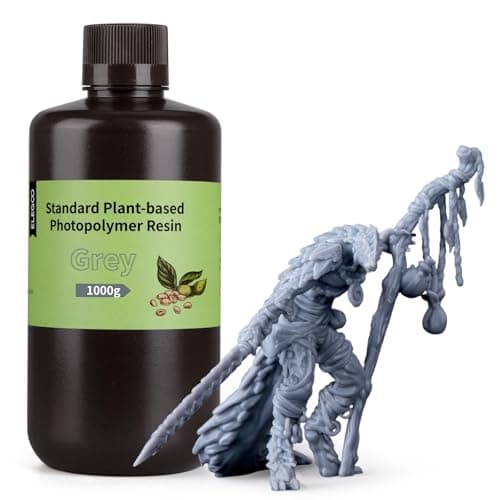
ELEGOO Standard Plant-Based ResinELEGOO describe it as made mainly from soybean with ultra-low odor and barely any pungent fumes, and publish a shrinkage figure rather than only adjectives.Soybean-based, BPA-free, 3.72% shrinkage
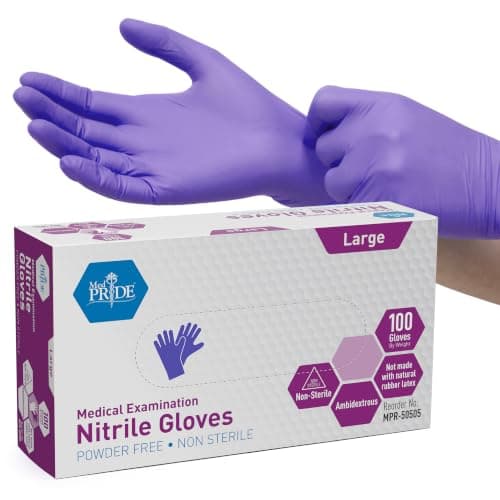
Nitrile Disposable GlovesFormlabs' guidance for liquid resin does not soften because a bottle says plant-based. Skin sensitization is the hazard, and it is unaffected by smell.Nitrile or neoprene, per Formlabs
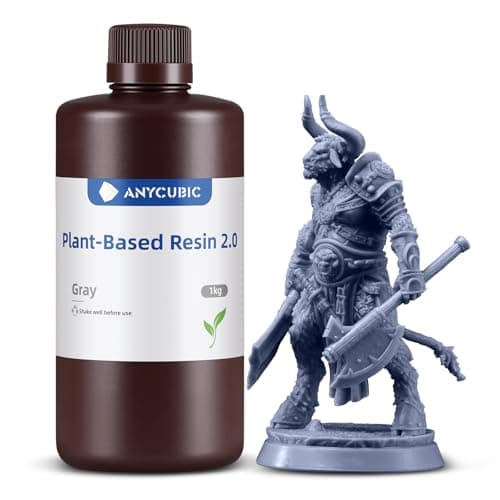
ANYCUBIC Plant-Based Rapid Resin 2.0Widely stocked and priced like an ordinary standard resin. ANYCUBIC publish less detail about the bio content than ELEGOO do.405 nm plant-based rapid resin, low odor
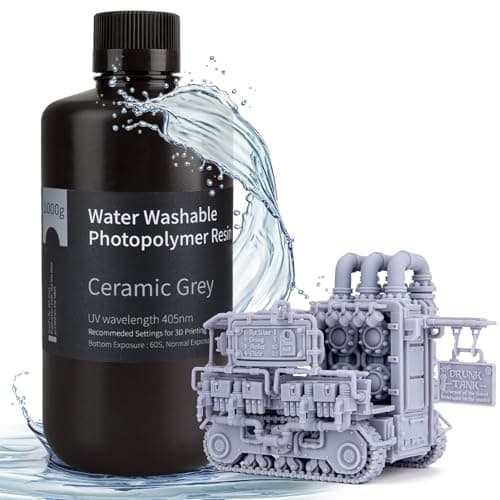
ELEGOO Water Washable ResinA gallon of isopropyl on an open bench smells more than most resins. Water washable removes it, and moves the disposal problem into the rinse water instead.Washes in water, not IPA
Removing the alcohol, which is often the real smell
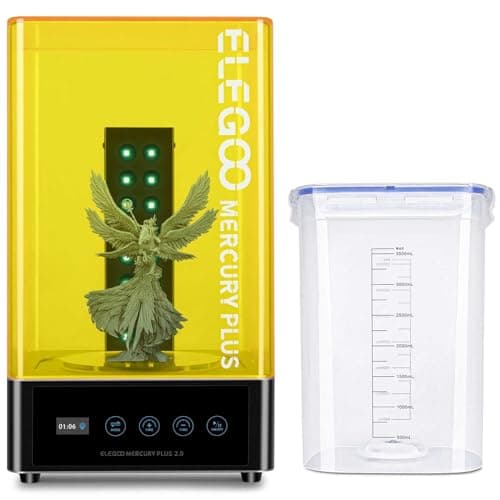
Wash and Cure StationAn open tub of alcohol in a bedroom is the worst version of this hobby. A closed station is a bigger improvement in air quality than changing resin.Enclosed wash plus 405 nm cure
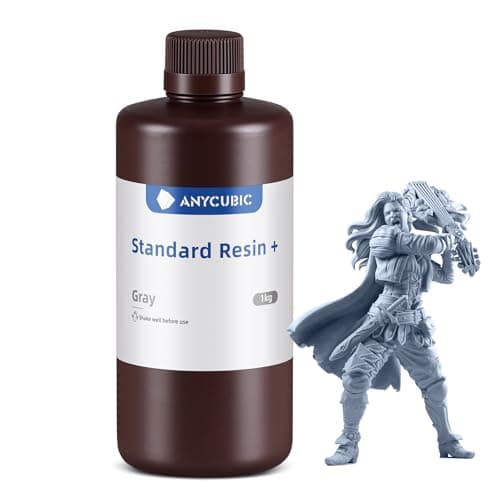
ANYCUBIC Standard Resin+A perfectly good resin, and the reminder this page exists for: whatever the bottle says about plant content or odor, the gloves, ventilation and waste rules are identical.Standard 405 nm resinSkip this
Live prices verified September 27, 2026. Scores are our own fit rating for the stated use, not a measurement and not a customer rating.
Resin bottles and gloves on a ventilated bench.
What a low odor label actually changes
Two things are being sold under these names, and only one of them is about your nose.
Bio content. ELEGOO describe their plant-based resin as made mainly from soybean, BPA-free, with ultra-low odor and barely any pungent fumes ELEGOO. The plant content is a formulation change; the low odor is the consequence people buy it for.
Perceived smell. That is worth money if the printer lives in a bedroom or a shared office. It is a comfort improvement and it is genuine.
What does not change is the hazard. Formlabs’ published safety guidance for liquid resin calls for non-reactive nitrile or neoprene gloves and warns that resin can cause skin irritation or an allergic skin reaction Formlabs, and they treat liquid resin — including resin dissolved in solvent — as potential hazardous waste Formlabs. Neither statement has an exemption for soybean.
The alcohol is usually the smell
Ask someone what resin printing smells like and they will describe two things at once: the resin in the vat and the isopropyl alcohol in the wash tub. The second one is often the stronger and it is the one nobody shops for.
Two fixes are cheaper than switching resin. Close the wash: a station with a lid keeps both the alcohol and the resin residue contained. Or remove the alcohol: water washable resins rinse in water instead, which our water washable resin page covers, including the catch — Formlabs treat resin dissolved in solvent as hazardous waste, and the rinse water inherits that status Formlabs.
What decides which bottle
Where the printer lives. A garage with a window needs nothing special. A bedroom needs a low odor bottle, a closed wash and ventilation regardless.
What the part has to do. These are standard-class resins. ELEGOO describe theirs as having low brittleness and strong tenacity with shrinkage as low as 3.72 percent ELEGOO, but if you need toughness the answer is on tough and ABS-like resin.
Whether you need clarity or flexibility. Both are separate formulations with their own pages: clear resin and flexible resin.
How you will wash and cure. Exposure times differ between resins, and swapping bottles without re-running a test is the most common reason a new resin appears to print badly — the method is on resin print settings.
What you can dispose of properly. Uncured resin and contaminated alcohol are chemical waste Formlabs, and a plant-based label does not put them down the drain.
Ventilation is not negotiable, and here is why
Smell and hazard are different measurements. A resin can be nearly odorless and still be a skin sensitizer, because the compounds that irritate skin are not necessarily the volatile ones you smell. That is precisely why Formlabs write their guidance around gloves, ventilation and contact avoidance rather than around odor Formlabs.
The practical setup does not change with the bottle: gloves on before the lid comes off, a tray under everything, airflow that goes outside rather than around the room, and cured waste in the bin while liquid waste waits for proper disposal. The full routine is on resin safety and resin cleanup.
Is plant-based better for the environment?
Partly, and less than the label implies. A soybean-derived monomer replaces some petrochemical content, which is a real change in the feedstock. It does not make the cured part compostable, it does not make the liquid safe to pour away, and it does not change how the waste is classified Formlabs.
The honest environmental win in resin printing is smaller than the label suggests and comes from elsewhere: fewer failed prints, less filtered-out sludge, and buying the right resin the first time rather than three bottles to find one. The filament equivalent of that argument is on filament recycling.
What to expect from the print
Standard-resin detail. These are general-purpose bottles; the sharpest miniature detail comes from the resins ranked on best resin for miniatures.
Normal exposure sensitivity. Run a test print when switching, because pigment and formulation both change cure time.
Normal brittleness. ELEGOO claim low brittleness for theirs ELEGOO, but a standard resin is still a standard resin: if parts snap, the fix is a tough formulation.
Less smell, not no smell. Low odor is a comparison, not an absence, and a badly ventilated room will still smell of printing.
Every pick, in detail
01
ELEGOO Standard Plant-Based Resin
ELEGOO
The documented low-smell bottle · 8.4/10 our fit score
The low-odor bottle with something published behind the claim: a soybean base, a BPA-free statement and a shrinkage figure.
Published specifications for ELEGOO Standard Plant-Based Resin
No. Formlabs' guidance for liquid photopolymer calls for non-reactive nitrile or neoprene gloves and warns of skin irritation and allergic skin reactions, and they treat liquid resin as potential hazardous waste. A plant-based feedstock changes the smell and some of the chemistry, not the handling rules.
+ − Do low odor resins actually smell less?
Yes, noticeably. ELEGOO describe their soybean-based resin as having ultra-low odor with barely any pungent fumes. The caveat is that much of the smell in a resin workspace comes from the isopropyl alcohol in the wash rather than the vat, so a closed wash station or a water washable resin may do more for the room.
+ − Can I skip ventilation with a low odor resin?
No. Odor and hazard are different measurements: a resin can be nearly odorless and still be a skin sensitizer, which is why Formlabs write their guidance around gloves, ventilation and avoiding contact rather than around smell.
+ − Is plant-based resin biodegradable?
Not in any practical sense. The feedstock is partly plant-derived, but the cured part is a thermoset photopolymer and the uncured liquid is still chemical waste — Formlabs treat liquid resin, including resin dissolved in solvent, as potential hazardous waste.