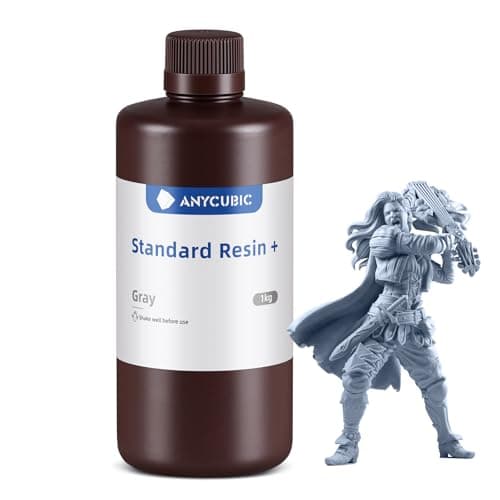
Start a Photon with ANYCUBIC Standard Resin+, for one concrete reason: ANYCUBIC publish a recommended-parameters table covering eighteen of their own machines, so your first print starts from the maker's numbers instead of a forum post. Then leave it for anything structural — their own published elongation at break is 12 to 16%, against 32% for Siraya Tech's Blu.
How this page is funded. Buy links go to Amazon and we earn a commission on qualifying purchases at no extra cost to you. Commission never decides an order or a score, we accept no free products or sponsored placements, and every roundup names something to skip. Full disclosure.
The picks, ranked
The picks, ranked
#
Product
Best for
Score
Price
1
ANYCUBIC Standard Resin+The published exposure table for your exact machine is the real feature, and it removes the worst part of a new printer. Cheap, crisp, and brittle by its own figures.Per-printer table, 18 machines
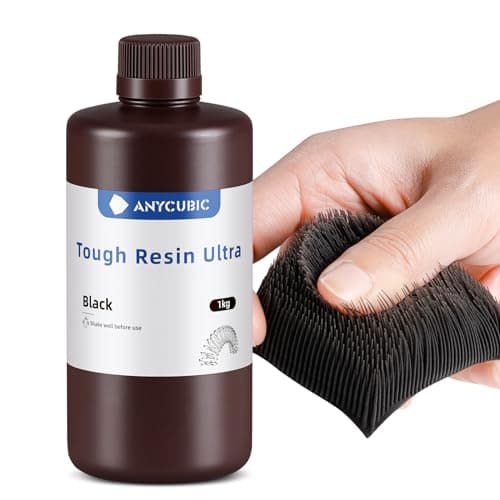
ANYCUBIC Ultra Tough ResinThe right next bottle inside the range when Standard would snap. Priced against the wider market rather than against ANYCUBIC's own Standard, so the budget advantage thins out.Impact-focused formulation
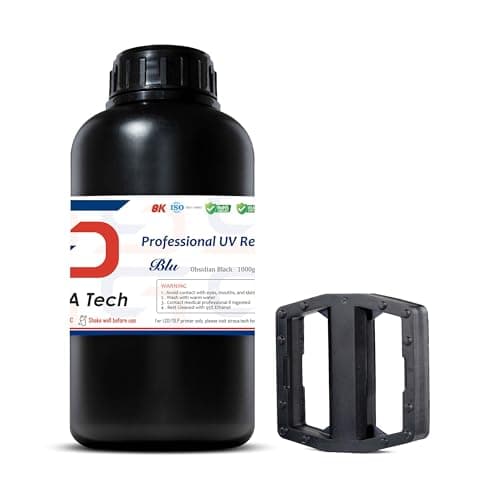
Siraya Tech BluTwice the published elongation of Standard with a mechanical table across five grades. Works in a Photon exactly as well as in any other 405 nm machine.32% elongation, full data sheet
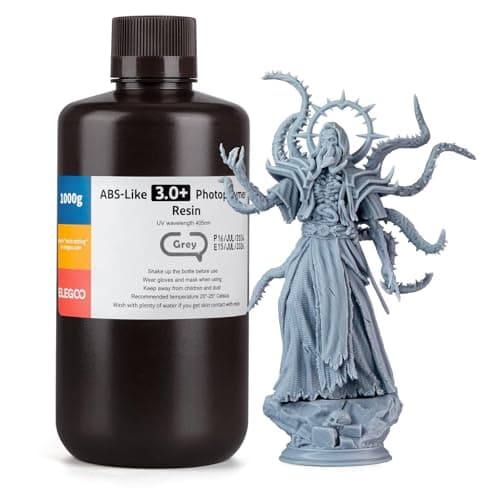
ELEGOO ABS-Like ResinNo lock-in to worry about, and it is the easiest resin in the category to actually buy. You trade ANYCUBIC's exposure table for better stock and better toughness.405 nm, widely stocked
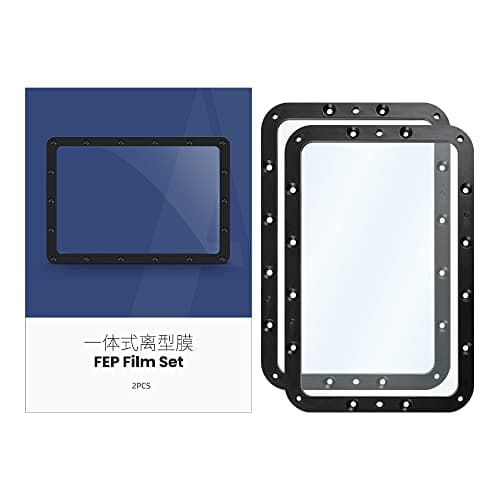
ANYCUBIC FEP Film for Photon Mono 2 and Mono 4The film is what fails, and it fails mid-print. Match the film to the machine name; buy it before the print you cannot afford to lose.Photon Mono 2 and Mono 4
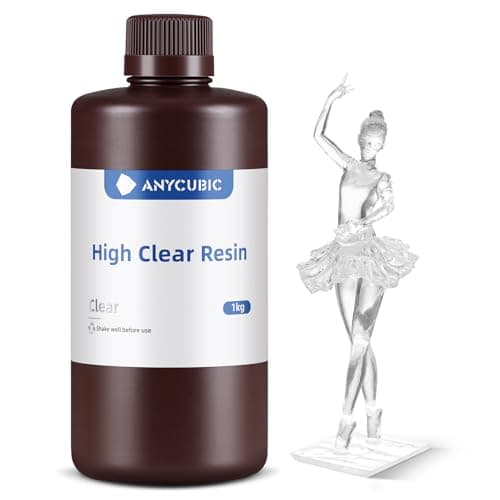
ANYCUBIC High Clear ResinA reasonable product at the wrong moment. Clear resin lets curing light travel further into the part than the slicer assumes, so it needs its own exposure work — not what you want while learning a new machine.Clear, needs own calibrationSkip this
Live prices verified October 30, 2026. Scores are our own fit rating for the stated use, not a measurement and not a customer rating.
A resin printer vat being inspected on a bench.
The reason to start with the house bottle
It is not chemistry. ANYCUBIC publish a recommended-parameters table covering eighteen of their own printers, giving layer thickness, exposure time, light-off time, bottom exposure time, bottom layer count and Z lift distance for each ANYCUBIC. Their general figures are a 20 to 40 second first layer and 2 to 3.6 seconds for normal layers, with a published post-process of washing for at least three minutes then curing for three minutes at 405 nm ANYCUBIC.
If you have just unboxed a Photon, that is the most valuable thing any resin maker gives you, and ELEGOO — the larger brand — do not give it ELEGOO. Starting from the maker’s own row for your exact machine is a materially better position than starting from a forum consensus.
And the reason to leave it
ANYCUBIC publish an elongation at break of 12 to 16% for Standard Resin ANYCUBIC. Siraya Tech publish 32% for Regular Blu Siraya Tech. Tensile strength is close between them — 40 to 50 MPa against 50 MPa — so the cheap resin is not weak. It is unforgiving: it reaches a similar load and then fails suddenly, without the deformation that would have warned you.
For a display print that distinction never comes up. For a clip, a hinge, a drone mount or a gaming piece that gets handled weekly, it is the only thing that matters, and the honest advice is to buy a tougher bottle rather than to print the cheap one thicker.
Credit where it is due: ANYCUBIC publishing the figure that reveals their own product’s limit is unusual, and it is why we are comfortable recommending the cheapest bottle on the shelf for the right job. Our ANYCUBIC review works through the full table.
Which bottle, by what you print
Learning the machine, test prints, display models: Standard Resin+. Published shrinkage of 4.5 to 5.5% ANYCUBIC is worth knowing if anything is dimensionally critical.
Models that get handled: Ultra Tough inside the brand, or ELEGOO ABS-Like if you would rather buy on availability.
Miniatures: an opaque gray, which is what Standard Resin+ offers cheaply. The optics argument is on best resin for miniatures.
Alcohol-free cleanup: ANYCUBIC’s water washable bottle, with the wastewater caveat on the water washable page.
Clear parts: High Clear, but not first. Clear resin needs its own exposure calibration and cheap clears yellow — see best clear resin.
Films and the thing that ends prints
Replace the release film before it fails rather than after. ANYCUBIC sell film sets by machine, and the pre-mounted FEP assembly for the Photon Mono 2 and Photon Mono 4 is the one most Photon owners need: matching the machine name is the whole sizing exercise, and the integrated design removes the tensioning ritual. They publish no thickness or transmittance figure for it, which is worth knowing if you were hoping to compare it against a loose film. Our FEP film page covers tensioning, which decides how long a film lasts far more than brand does.
Storage, which costs you bottles if you ignore it
ANYCUBIC’s own storage instruction is short: keep it at room temperature, away from light ANYCUBIC. The fuller published guidance is Formlabs’ — 10 to 25 C, out of sunlight, and an opaque container for long-term storage Formlabs — and it matters more for resin than for filament because resin genuinely expires. We cover the signs and the lot-number reading on does resin expire.
Unchanged by brand
Nitrile or neoprene gloves every time, ventilation, and a disposal plan. ANYCUBIC describe Standard Resin as low odor and safe to use; treat odor and hazard as separate questions, because sensitization to liquid photopolymer accumulates over months regardless of smell Formlabs. The safety page is the short version done properly.
Verdict for a Photon owner
Buy Standard Resin+ for the first bottle and use ANYCUBIC’s per-machine row as your starting exposure — that table is a genuine advantage and nobody else in this price bracket offers it. Move to Ultra Tough or ELEGOO ABS-Like once prints start getting handled, and to Siraya Tech Blu when a print has a job. Keep a spare film for your machine, and keep the bottles out of the light.
Every pick, in detail
01
ANYCUBIC Standard Resin+
ANYCUBIC
Best first bottle for a Photon · 8.3/10 our fit score
The cheapest resin we would recommend, and the right choice when detail matters more than durability.
Published specifications for ANYCUBIC Standard Resin+
+ − What is the best resin for an ANYCUBIC Photon Mono?
ANYCUBIC Standard Resin+ to start, because ANYCUBIC publish a recommended-parameters table covering eighteen of their machines and that gives you a maker-sourced starting point rather than a forum guess. Move up to Ultra Tough or ELEGOO ABS-Like once your prints get handled, and to Siraya Tech Blu for anything structural.
+ − Can I use ELEGOO resin in an ANYCUBIC printer?
Yes. Both brands sell 405 nm photopolymer and every mainstream masked-LCD printer emits at 405 nm, so there is no compatibility problem — ELEGOO list their resin as compatible with all LCD, MSLA and DLP printers. What you give up is ANYCUBIC’s per-machine exposure table, so expect to spend a test print finding your numbers.
+ − What exposure time should I use on an ANYCUBIC printer?
Start from ANYCUBIC’s own table for your machine, which covers eighteen models with layer thickness, exposure, light-off time, bottom exposure, bottom layer count and Z lift. Their general figures are 20 to 40 seconds for the first layer and 2 to 3.6 seconds for normal layers. Then run an exposure test, because screen age and room temperature shift it.
+ − Is ANYCUBIC resin good enough for functional parts?
Standard Resin+ is not, by ANYCUBIC’s own published 12 to 16% elongation at break — it fails suddenly rather than bending first. Their Ultra Tough is the in-brand answer. For a part where a failure costs real money, Siraya Tech publish 32% elongation and a full mechanical table, which is the comparison worth making.