This was the original filament decision and it has largely been overtaken. In almost every case where someone is weighing PLA against ABS, the right answer is a third material.
How this page is funded. Buy links go to Amazon and we earn a commission on qualifying purchases at no extra cost to you. Commission never decides an order or a score, we accept no free products or sponsored placements, and every roundup names something to skip. Full disclosure.
The picks, ranked
The picks, ranked
#
Product
Best for
Score
Price
1
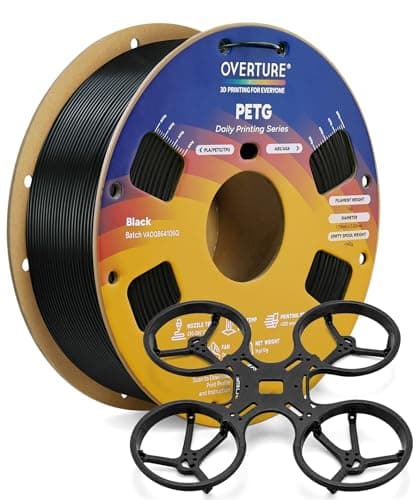
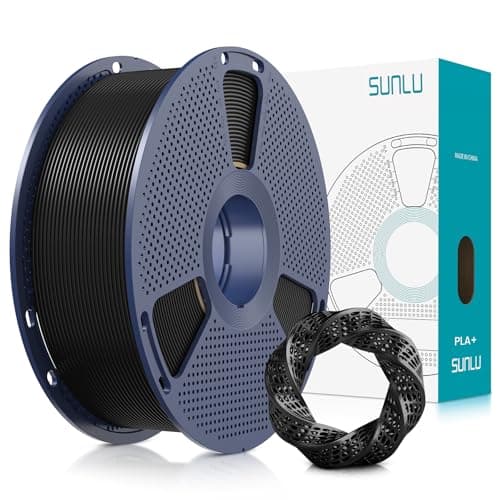
SUNLU PLA+A toughened PLA answers the impact complaint that used to send people to ABS.Toughened PLA+ grade
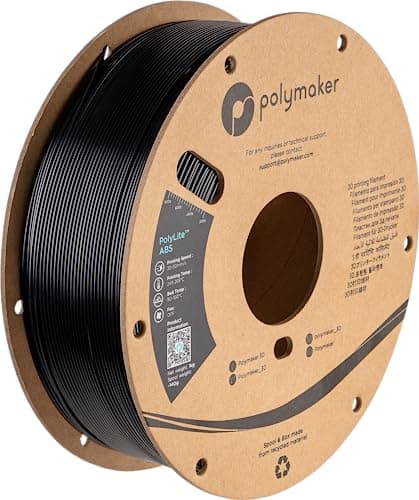
Polymaker PolyLite ABSWorth it for acetone vapor smoothing and legacy designs. Outside those, ASA does the job better.230-255 C, enclosure recommendedSkip this
Published printing parameters by material, from Prusa Research's filament material guide. Ranges are the manufacturer's published envelopes, not a recommendation for your specific spool — every brand publishes its own narrower window inside these. Figures from Prusa Research, retrieved 2026-09-01.
Why this comparison used to matter
For years these were the two filaments. PLA was easy and weak, ABS was difficult and tough, and every printed part was a choice between them. Most of the internet's 3D printing advice was written in that era and a lot of it is still circulating.
Two things changed. PETG arrived and gave most of ABS's practical toughness with none of its printing requirements. And ASA became widely available, doing everything ABS does plus surviving sunlight.
The differences, for completeness
Printing: PLA at 185 to 235 C with no enclosure Prusa Research; ABS at 230 to 255 C with a 95 to 110 C bed and an enclosure recommended Prusa Research.
Impact: ABS clearly better. PLA shatters.
Heat: ABS clearly better. PLA sags at temperatures a parked car reaches.
Stiffness: PLA better.
Detail and overhangs: PLA better, and it is not close.
Ventilation: ABS produces styrene and ultrafine particles; PLA does not require ventilation in the same way.
Smell: ABS is unpleasant to be in a room with.
Where ABS still wins
Acetone vapor smoothing. ABS dissolves in acetone, which produces a sealed glossy surface no other common material can reach without sanding. If that finish is what you want, ABS is the material and there is no substitute.
Beyond that: existing designs that specify it, and processes built around it. Both are real but neither is a reason to start with ABS today.
PLA also got better
The PLA in that historic comparison was plain PLA. Toughened PLA+ grades are noticeably less brittle on impact at the same price, which removes the most common reason people went to ABS in the first place.
They do not raise heat resistance — that remains PLA's hard limit, and it is why heat is the one case where PLA genuinely cannot be patched. The plus is explained on PLA versus PLA+.
The decision, restated
Easy, cheap, indoor, static: PLA.
Gets handled or dropped: PETG, or a toughened PLA first.
Gets hot or lives outdoors: ASA if you have an enclosure, PETG if you do not.
Needs acetone smoothing: ABS.
Every pick, in detail
01
SUNLU PLA+
SUNLU
The PLA side, improved · 9.0/10 our fit score
The cheapest filament we would load without flinching, and the reason most people never need to spend more.
UV resistance is the entire point and it is real — Prusa contrast it directly with ABS, whose outdoor parts "turn yellowish and more brittle over time"
Warps less and smells less than ABS at the same temperatures
What it does not
Needs an enclosure and a hot bed; this is not a material for an open printer in a cold room
More expensive per kilogram than the PETG that would do the job for many outdoor parts
Tougher and more heat tolerant, harder to print, and it needs an enclosure and ventilation. For most people PETG delivers the practical advantages of ABS without the requirements.
+ − Should I still use ABS?
For acetone vapor smoothing, yes. For legacy designs that specify it, yes. Otherwise ASA does what ABS does and also survives sunlight, for the same printing requirements.
+ − Does PLA+ close the gap to ABS?
On impact, meaningfully. On heat, not at all — a PLA+ part sags at the same temperature a PLA part does. Heat is the one PLA limitation that no grade fixes.